
Del i serien Urban Life, Landscape and Policy
Politics of Staying Put
Condo Conversion and Tenant Right-to-Buy in Washington, DC
Inbunden, Engelska, 2016
1 279 kr
Beställningsvara. Skickas inom 5-8 vardagar. Fri frakt för medlemmar vid köp för minst 249 kr.
Finns i fler format (1)
When cities gentrify, it can be hard for working-class and low-income residents to stay put. Rising rents and property taxes make buildings unaffordable, or landlords may sell buildings to investors interested in redeveloping them into luxury condos. In her engaging study The Politics of Staying Put, Carolyn Gallaher focuses on a formal, city-sponsored initiative-The Tenant Opportunity to Purchase Act (TOPA)-that helps people keep their homes. This law, unique to the District of Columbia, allows tenants in apartment buildings contracted for sale the right to refuse the sale and purchase the building instead. In the hands of tenants, a process that would usually hurt them-conversion to a condominium or cooperative-can instead help them. Taking a broad, city-wide assessment of TOPA, Gallaher follows seven buildings through the program’s process. She measures the law’s level of success and its constraints. Her findingshave relevance for debates in urban affairs about condo conversion, urban local autonomy, and displacement.
Produktinformation
- Utgivningsdatum2016-03-15
- Mått152 x 229 x 25 mm
- Vikt499 g
- FormatInbunden
- SpråkEngelska
- SerieUrban Life, Landscape and Policy
- Antal sidor284
- FörlagTemple University Press,U.S.
- ISBN9781439912645
Tillhör följande kategorier
Hoppa över listan



Mer från samma författare
Key Concepts in Political Geography
Carolyn Gallaher, Carl T Dahlman, Mary Gilmartin, Alison Mountz, Peter Shirlow
Inbunden, 2009
3 779 kr
Hoppa över listan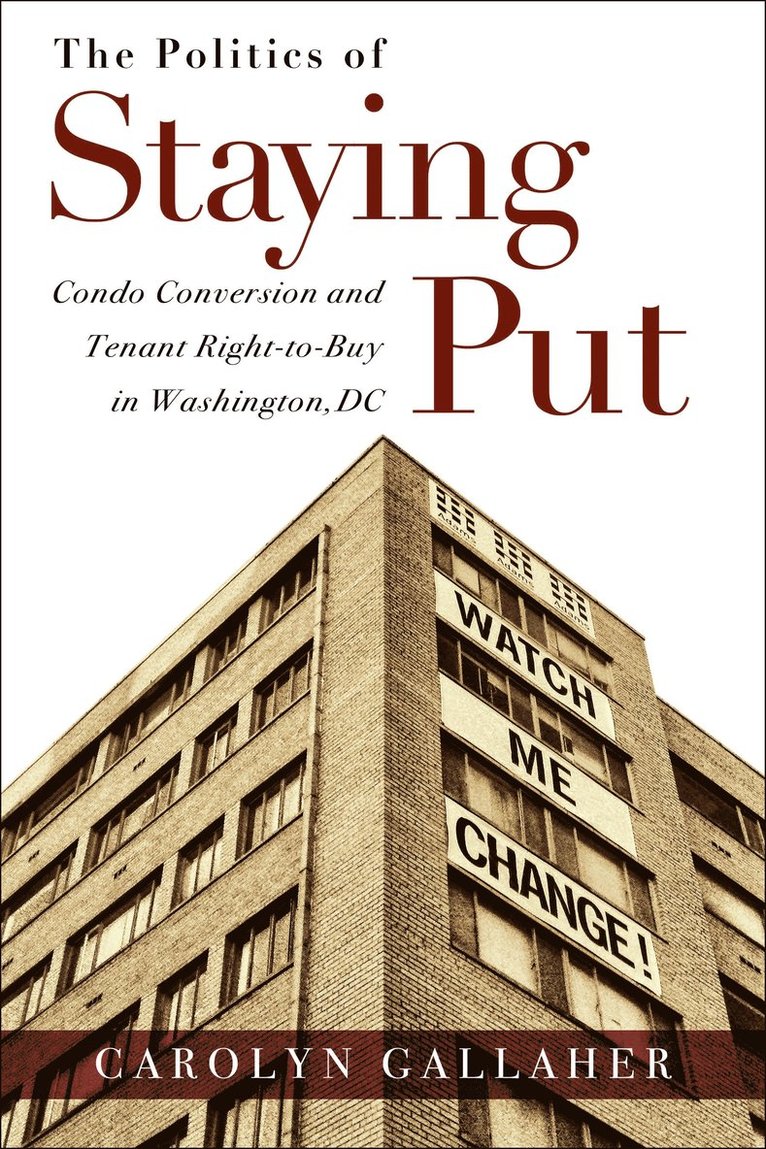



Du kanske också är intresserad av
Key Concepts in Political Geography
Carolyn Gallaher, Carl T Dahlman, Mary Gilmartin, Alison Mountz, Peter Shirlow
Inbunden, 2009
3 779 kr
- Nyhet
Del 3
- Nyhet
Del 11
- Nyhet
Domino : Dåren, domaren och den välkammade mannen från pirayaministeriet
Håkan Nesser
Inbunden, 2026
289 kr329 kr