Introduction to Dialectics
AvTheodor W. Adorno,Theodor W. (Frankfurt School) Adorno,Theodor W Adorno,Christoph Ziermann
339 kr
Skickas . Fri frakt för medlemmar vid köp för minst 249 kr.
Finns i fler format (1)
Produktinformation
- Utgivningsdatum2017-02-10
- Mått152 x 229 x 36 mm
- Vikt522 g
- FormatHäftad
- SpråkEngelska
- Antal sidor336
- FörlagJohn Wiley and Sons Ltd
- ISBN9780745679440
Tillhör följande kategorier
Theodor Adorno (1903-1969), a prominent member of the Frankfurt School, was one of the most influential thinkers of the 20th century in the areas of social theory, philosophy and aesthetics.
- ContentsEditor�s ForewordLECTURE ONEPrejudices against the dialectic the double character of the dialectic the dialectic as method of articulating the Ideas (Plato) the order of concepts expresses the order of things the vital nerve of the dialectic the dialectic as necessary �exaggeration� the positivist element of the dialecticLECTURE TWO�The movement of the concept� (Hegel) the dialectic hypostasizes the identity of thought and being Hegel�s dialectic as the union of identity and non-identity non-identity in the process, identity in the result introduction to the dialectic as a model of dialectic the movement of the concept is not sophistical the movement of the concept as the path of philosophical science the object of knowledge is internally dynamic the movement of the object is not arbitrary the metaphysical concept of truth Ð the inevitable reification of truth historical movement is not the movement of being but is concrete Ð the dialectic is not a philosophy of foundations the temporal core of dialecticLECTURE THREECritique of prima philosophia matter no first principle either Ð Hegel�s dialectic also a preservation of first philosophy all determination implies mediation the movement of the concept is no external contribution of thought a sophistical displacement of meaning in Gehlen the whole is the true solely as the result of all mediations Ð the idea of an open dialectic the whole is neither a pantheistic totality of nature nor a seamless unity �the truth is essentially result� individual phenomena only intelligible in terms of the whole recourse to the whole is mediated through the self-movement of the individual the concept of the whole as already givenLECTURE FOURThe traditional concept of system: derivation of the whole from one fundamental principle the dialectical concept of system determinate negation contradiction in Kant contradiction in Hegel antithesis arises from thesis the measure of the absolute lies in objectivity dialectical criticism is necessarily immanent refutation of a thought as development of the thought the emergent absolute is essentially temporal the interaction of theory and practice - the truth as result is concreteLECTURE FIVEThe charge of universal rationalization dialectical thought is not rationalistic thought the dispute over rationalism conceptual thought is indispensable the truth moment of irrationalism the irrational as a moment of ratio suffering and happiness are immanent to thought being in itself, being for itself, being in and for itself relationship of thesis, antithesis, synthesis dialectical method concerns the contradictory life of the object the dialectic not immune to ideological abuseLECTURE SIXDialectical method not a formal conceptual schema the objectivation of truth every true thought becomes untrue once it is isolated the triadic schema irrelevant in Hegel the charge of universalizing contradiction contradiction is not a first principle Hegel�s critique of Kant�s transcendental dialecticLECTURE SEVENHegel�s dialectical principle of development is a principle of real being dialectic in Kant is only the negative side of the critique of reason the positive moment of the critique of reason reflection as the principle of the speculative self-knowledge of reason knowledge of knowledge also the principle of substantive knowledge dialectic and formal logic the �example� in Hegel logical form of the judgement and the �emphatic concept� dialectical contradiction expresses the disparity of thought and worldLECTURE EIGHTDialectic names the negative state of the world by its proper name contradiction not only in thought, but is objective Ð contradiction as principle of diremption is also the principle of unity dialectic as union of the a priori and experience the objective order of the world also conceptual in character coercive character of dialectic the systematic claim of dialectic dialectical contradiction in Hegel�s political philosophy dialectical system not a seamless deductive structure the concept of experience in HegelLECTURE NINEThe paradoxical task of knowledge: identifying the non-identical identity of thought and being (Hegel) non-identity and contradiction not resolvable in thought (Marx) the materialist priority of being over consciousness is problematic the whole and the parts presuppose one another the materialist critique of literature cannot proceed from unmediated instances of particular experience (Benjamin) dialectical materialism is not vulgar materialism the charge of metaphysically hypostasizing the totality (Weber)LECTURE TENKnowledge of the social whole precedes individual experience prior awareness of the whole not unique to human beings rejection of Hegel�s attempted restoration of immediate experience the congruence of whole and parts as result of a process intuition theory neither static nor complete the danger of a dogmatic ossification of dialectic (Lukács) tracing knowledge back to origins is undialectica survival of obsolete philosophical notions in the individual sciencesLECTURE ELEVENTerminological remarks on the concept of role neither whole nor part enjoys priority over the other metaphysics as science of the ultimate ground origin as merel beginning (Hegel) the ontological appropriation of Hegel �abstract� in Hegel the dialectic not a dynamic ontology �being� in Hegel philosophy of immediacy as regress to mythology dialectic and positivism the �natural� appearance of a reified worldLECTURE TWELVEAffinity between dialectic and positivism the constitutive distinction of essence and appearance dialectic exposes the apparent immediacy of ultimate givens the Darmstadt investigation motivational analysis in industrial sociology opinion research, empirical and critical transition from positivism to dialectic contradiction in the given as the principle of dialectical movementLECTURE THIRTEENScientific method in Descartes rationalism as the will to control nature the postulate of self-evidence (Descartes) a hermeneutic intervention self-evidence as a form of ultimate metaphysical grounding evidence of sense-perception already mediated the order of knowing, the order of the known experience and conceptuality emphasis on analysis destroys the crucial interest of knowing philosophy of nature and natural science philosophy always bound to the material knowledge of the sciencesLECTURE FOURTEENAnalysis alone yields no knowledge the universal concretized through the particular attitude of dialectic to the concept of development the family not merely a remnant society not an organism, but antagonistic in character knowledge as a continuity of steps the unity of society constituted by discontinuity the presumption of continuity is merely affirmative �enthusiasm� a necessary moment of knowledge the positive aspect of continuityLECTURE FIFTEENThe coercive character of logic immanent and transcendent critique mobility of thought is not an evasion contradictions are constitutive against relativism dialectical cognition of the particular object requires explicit self-reflection the charge of groundlessness a sociological excursus on the mobility of thought the substance of philosophy lies in the vital source of its concepts arrested movement in Heraclitus and HegelLECTURE SIXTEENThe dogmatic character of the axiom of completeness the fulfilment of this demand in German Idealism dialectical clarification of the objective by recourse to models �ideal types� in Weber �intuition of essences� in Husserl thinking in models labyrinthine communication in literary works (Kafka, Balzac, von Doderer) historical transformations in the concept of systemLECTURE SEVENTEENConsciousness as unifying principle in the modern conception of system critique and renewal of the concept of system in 19th century contemporary appeal of the concept of system the spectral afterlife of the concept of system the need for system and the closed experience of the world no categorical continuum amongst the particular sciences (Talcott Parsons) apologetic character of the functionalist concept of system �frame of reference� the logic of science and debased metaphysics complement one another today dialectic a beneficent anachronismLECTURE EIGHTEENDichotomous consciousness dialectical mediation not a matter of Both/And mediation as the critical self-reflection of extremes role of Either/Or in the social sciences dialectic and the negative concept of truth values are neither transcendent nor merely relative the criterion of truth is immanent to the object the dialectic is not a matter of �standpoints� dialectic furnishes no recipes definition as logical formLECTURE NINETEENThe limits of deixis and definition with respect to the concept the concept is not a tabula rasa concept and constellation life and fluidity of the concept as the object of dialectic verbal definitions and philosophical definitions philosophical definition requires prior knowledge of the matter in question it extends concepts into force fields abbreviation as specific feature of philosophical definition operational definitions in the particular sciences forfeiting the synthetic moment of knowledge operational definitions and their field of application dialectic as a critical mediation of realism and nominalism truth moment of the phenomenological analysis of meaningLECTURE TWENTYDialectical articulation of concepts as constellation and configuration the order of ideas in Plato as an expression of the social division of labour the exposition of the matter in question not external exposition guarantees the objectivity of knowledge contradiction in the identifying judgement as starting point of dialectic truth and untruth of the logical judgement form subjective synthesis and objective reference in the judgement an immanent critique of logic the phenomenological critique of inference surrender of logical subordination as index of dialectical thought is knowledge possible without assuming the identity of subject and object?Adorno�s Lecture NotesAbbreviationsEditor�s NotesIndex
"Despite Adorno’s abiding suspicion of easy communicability, he was fully capable of explaining complex ideas lucidly and accessibly, never more so than in the lecture hall. There can be few concepts that demand as much careful exposition as 'dialectics,' whose multiple uses and frequent abuses have frustrated countless attempts to render it comprehensible. Still fewer exponents of dialectical thought have been as skilled in unpacking its meaning, while at the same time performatively demonstrating its virtues, as Adorno."—Martin Jay, University of California, Berkeley"The twenty lectures that Adorno held in 1958 constitute the first comprehensive articulation of his thinking. The challenge to which he responds is that of wresting conceptual thinking from its narcissistic tendencies, as outlined in Dialectics of Enlightenment. 'Suffering and Happiness,' he insists, must be recognized as 'the immanent substance of dialectics'. Adorno’s effort to turn thinking inside-out by revealing the affective origin of its transformative potential, remains his most enduring legacy."—Samuel Weber, Northwestern University"one of the most lucid and accessible introductions to Hegel"—Dublin Review of Books
Mer från samma författare
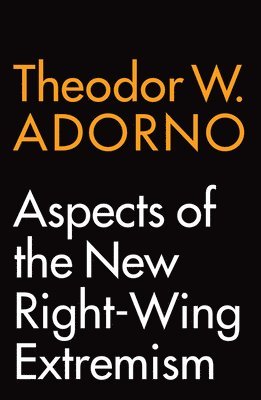
Aspects of the New Right-Wing Extremism
Theodor W. Adorno, Theodor W. (Frankfurt School) Adorno
119 kr
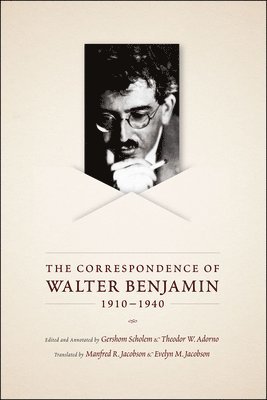
Correspondence of Walter Benjamin, 1910-1940
Walter Benjamin, Walter (Frankfurt School) Benjamin, Gershom Scholem, Theodor W. Adorno, Theodor W. (Frankfurt School) Adorno
379 kr
Du kanske också är intresserad av
Introduction to Dialectics
Theodor W. Adorno, Theodor W. (Frankfurt School) Adorno, Theodor W Adorno, Christoph Ziermann
959 kr
Nachgelassene Schriften. Abteilung IV: Vorlesungen
Theodor W. Adorno, Theodor W. Adorno Archiv, Christoph Ziermann
809 kr
Correspondence
Theodor W. Adorno, Siegfried Kracauer, Theodor W. (Frankfurt School) Adorno, Theodor W Adorno
319 kr
Aesthetics
Theodor W. Adorno, Theodor W. (Frankfurt School) Adorno, Theodor W, Adorno, Theodor W Adorno, Eberhard Ortland
429 kr
Lectures on Negative Dialectics
Theodor W. Adorno, Theodor W. (Frankfurt School) Adorno, Theodor W Adorno, Rolf Tiedemann
339 kr
Current of Music
Theodor W Adorno, Theodor W. Adorno, Robert Hullot-Kentor, Theodor W. (Frankfurt School) Adorno, Theodor W Adorno
519 kr
Aesthetics
Theodor W. Adorno, Theodor W. (Frankfurt School) Adorno, Theodor W Adorno, Eberhard Ortland
959 kr
Correspondence, 1939 - 1969
Theodor W. Adorno, Gershom Scholem, Theodor W. (Frankfurt School) Adorno, Theodor W Adorno, Asaf Angermann
309 kr