Beställningsvara. Skickas inom 5-8 vardagar. Fri frakt för medlemmar vid köp för minst 249 kr.
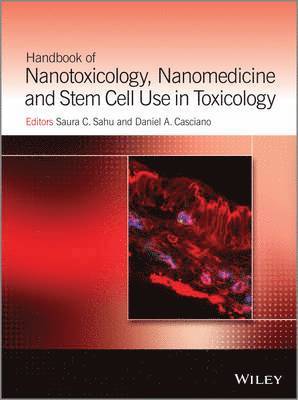
This book addresses all the current, up-to-date developments in this scientific discipline. Liver is the chief metabolizing site in the body, and thus, it is a major target organ for drug and chemical toxicity. Therefore, hepatotoxicity is an important endpoint in the safety evaluation of drugs and chemicals. Contributions from leading investigators in hepatotoxicity research address current developments in this scientific discipline and discuss use of current cutting edge technology such as microarrays in hepatotoxicity thus providing a better understanding of hepatotoxins, their interactions and mechanisms of action.This valuable authoritative source of information is the first book to address this topic for nearly ten years, making it an essential resource for readers from a wide range of disciplines such as toxicology, pharmacology, hepatology, drug toxicity and food science.
Dr. Sahu is the US Editor for the Journal of Applied Toxicology.
Contributors xiPreface xviiAcknowledgements xixSection 1 Models for Hepatotoxicity Testing1 Current in vitro Models to Study Drug-Induced Liver Injury 3Julio C. Davila, Jinghai J. Xu, Keith A. Hoffmaster, Peter J. O’Brien and Stephen C. Storm2 Utilization of an in vitro Hepatotoxicity Test in the Early Stage of Drug Discovery 57Ikuo Horii, Hiroshi Yamada, Rie Kikkawa, Toshinori Yamamoto, Tamio Fukushima and Kaori Tomizawa3 Use of Hepatocytes for Characterizing a Candidate Drug’s Metabolism and Drug Interaction Potential 69Srikanth C. Nallani, John M. Strong and Shiew Mei Huang4 Human-Based in vitro Experimental Systems for the Evaluation of Human Drug Safety 89Albert P. li5 Hepatocytes as a Model for Screening Food-Related Hepatotoxins and Studying Mechanisms of their Toxicity 105Saura C. Sahu6 Some Experimental Models of Liver Damage 119Pablo MurielSection 2 Hepatocyte Cultures7 Application of Short- and Long-Term Hepatocyte Cultures to Predict Toxicities 141Gregor Tuschl, Jens Hrach, Philip G. Hewitt and Stefan O. MuellerSection 3 Biomarkers of Hepatotoxicity8 Biomarkers of Mycotoxin Exposure in Liver Toxicity 177Angela J. HarrisSection 4 Mechanisms of Hepatotoxicity9 Mechanisms of Toxic Liver Injury 191Nora Anderson and Jürgen Borlak10 A Role of Cytochrome P450 in Quinone-Induced Hepatotoxicity 287Yasuhiro Ishihara and Norio Shimamoto11 A Mechanistic View of Troglitazone Hepatotoxicity 299Rawiwan Maniratanachote and Tsuyoshi Yokoi12 Role of the Kupffer Cell in Hepatotoxicity and Hepatocarcinogenesis 313James E. Klaunig, Stacy M. Corthals, Lisa M. Kamendulis and Binu K. Philip13 Sinusoidal Cells in Liver Injury and Repair 341Carol R. Gardner and Debra L. Laskin14 Cytokines in Liver Diseases 371Pablo Muriel15 Bile Acids as Modulators of Apoptosis 391Rui E. Castro, Susana Solá, Clifford J. Steer and Cecília M.P. Rodrigues16 Drug-Induced Intrahepatic Cholestasis by Interaction with the Hepatic Bile Salt Export Pump (BSEP) 421Christoph Funk, Johannes Noé, Renée Portmann, Ruben Alvarez-Sánchez, Florian Klammers, Christiane Lamy, Axel Paehler and Michael PantzeSection 5 Genomics of Hepatotoxicity17 Application of Toxicogenomics in Predicting Hepatotoxicity – Potentials and Challenges 449Wen Lin, Guoxiang Shen, Tin Oo Khor and Ah-Ng Tony Kong18 Genomic Profiling of Liver Injury 465Kevin Gerrish and David E. Malarkey19 Use of DNA Arrays in Understanding Hepatic Test Systems 489Angela J. Harris and Daniel A. Casciano20 Prediction of Hepatotoxicity Based on the Toxicogenomics Database 507Tetsuro Urushidani21 Relationship between N-acetyltransferase-2 Gene Polymorphism and Isoniazid-Induced Hepatotoxicity 531Yasuo Shimizu, Kunio Dobashi and Masatomo MoriSection 6 Gender Differences in Hepatotoxicity22 Human and Animal-Based Differences in Hepatic Xenobiotic Metabolism and Toxicity 539Peter J. O’Brien, Katie Chan and Raymond J. PoonSection 7 Hepatotoxicity and Hepatocarcinogenicity23 Hepatotoxicity in Oncology Drug Development 565Wei Chen, Kenneth Hastings and John K. Leighton24 The Potent Rat Hepatocarcinogen Methapyrilene: An Hypothesis Regarding its Hepatotoxicology 577Daniel A. CascianoSection 8 Hepatotoxicity and Botanical Supplements25 Botanical Supplements and Hepatotoxicity 591Shabana Khan, Ikhlas Khan and Larry WalkerSection 9 Risk Analysis of Hepatotoxins26 Physiologically Based Pharmokinetic Modeling and Risk Assessment of Hepatotoxicants 609Kannan KrishnanIndex 635
"This provides valuable insight into the current and future directions of research in this field and wil be a valuable resource of up-to-date information for toxicologists, risk assessors, and regulators in academia, industry and government." (Doody's, August 2008)