
Heidegger on Literature, Poetry, and Education after the �Turn�
At the Limits of Metaphysics
Häftad, Engelska, 2019
949 kr
Beställningsvara. Skickas inom 10-15 vardagar. Fri frakt för medlemmar vid köp för minst 249 kr.
Finns i fler format (1)
Offering new and original readings of literature, poetry, and education as interpreted through the conceptual lens of Heidegger’s later philosophy of the "Turn", this book helps readers understand Heidegger’s later thought and presents new takes on how to engage the themes that emerged from his later writing. Suggesting novel ways to consider Heidegger’s ideas on literature, poetry, and education, Magrini and Schwieler provide a deep understanding of the "Turn," a topic not often explored in contemporary Heideggerian scholarship. Their inter- and extra-disciplinary postmodern approaches offer a nuanced examination, taking into account Heidegger’s controversial place in history, and filling a gap in educational research.
Produktinformation
- Utgivningsdatum2019-12-10
- Mått152 x 229 x 14 mm
- Vikt453 g
- FormatHäftad
- SpråkEngelska
- SerieRoutledge International Studies in the Philosophy of Education
- Antal sidor234
- FörlagTaylor & Francis Ltd
- ISBN9780367885625
Tillhör följande kategorier
Hoppa över listan

Mer från samma serie
Robert Grosseteste and Theories of Education
Jack P. Cunningham, Steven Puttick
Inbunden, 2019
3 219 kr
Hoppa över listan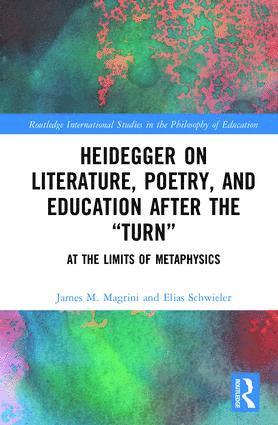
Du kanske också är intresserad av
Heidegger on Literature, Poetry, and Education after the �Turn�
James M. Magrini, Elias Schwieler
Inbunden, 2017
3 699 kr
Del 18
Del 18
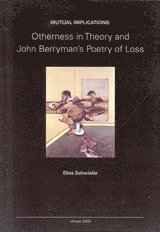
Mutual implications : otherness in theory and John Berryman's poetry of loss
Elias Schwieler
Häftad, 2003
309 kr