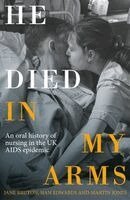
‘He died in my arms is a devastating, essential act of remembrance. These histories display the dignity and compassion of nurses who cared with extraordinary courage during Britain’s AIDS crisis. Unflinching, tender and deeply humane – this book demands to be read.’Tristan Barber, Chair of the British HIV Association‘The voices in this extraordinary book are authentic witnesses from the community of nurses who cared for people with HIV/AIDS. They represent the professional commitment, personal development and true vocation seen in those remarkable early years. Profoundly moving, they share telling details while emphasising the centrality of patients throughout. The commentary sensitively weaves the powerful and well-balanced oral histories together.’Professor Tony Pinching, Clinical Immunologist‘The intimate accounts shared are harrowing, inspiring, heart-wrenching and uplifting all at once, immersing the reader in the emotional reality of working, living and dying in the brutal early era of HIV/AIDS. Powerful.’Professor Yvonne Gilleece, University Hospitals Sussex NHS Foundation Trust‘An insightful, heartbreaking and inspiring book about the forgotten story of HIV nurses at the beginning of the pandemic, drawn from compelling and moving first-person accounts.’Rob Perks, Secretary of the Oral History Society‘He died in my arms is powerful, poignant and engaging. It brings to life the voices and experiences of nurses who, at a time when many were judging and discriminating against patients with HIV, sacrificed, innovated and provided the care, compassion and dignity in death that was so needed and valued.’Angelina Namiba, HIV activist‘A vital and deeply moving tribute to the nurses who met fear and stigma with courage, compassion and care. He died in my arms is essential reading and an important act of remembrance.’Marc Tweed, Terrence Higgins Trust‘A moving and powerful tribute to the nurses who redefined HIV care. What resonated most strongly with me was the way the book captures healthcare at its very best: compassionate, courageous and unapologetically human.’Michelle Croston, Lead HIV Nurse and Host of HIV Matters Podcast‘A powerful and vital book that accurately reflects the raw truth of nursing during the early years of the epidemic. It beautifully documents how nurses stepped into the unknown with immense compassion, redefining palliative and clinical practice under extraordinary pressure, while facing overwhelming loss, fear and stigma side by side with their patients. It is a testament to the profound effect HIV nurses had in pioneering a new approach to care that was patient-driven and person-centred.’Linda Panton, HIV Clinical Nurse Specialist‘This is such an important book from Jane Bruton, Siân Edwards and Martin Jones, who describe how the work of HIV nurses in the early days of the HIV/AIDS pandemic in the UK helped to change the way nursing was practised throughout our National Health Service. A MUST READ.’Jonathan Blake, diagnosed with ‘a virus' (then with no name) in October 1982‘This is beautifully written, and for anyone who remembers these years it can’t help but bring tears to your eyes, as much from the joy and determination as the sadness. For a patient it is an insight into what the nurse was thinking as you were being angry, lost or upset, as well as when they were making you laugh while cleaning a nasty smelling wound.’Robert James, haemophiliac diagnosed with HIV in the mid-1980s‘A powerful and moving testimony documenting the profound impact nurses have had on the lives of HIV/AIDS patients. In receipt of HIV care myself since sixteen, this incredible oral history has reaffirmed my belief that HIV nurses are pure magic. I challenge anyone to finish chapter four without crying buckets.’Nathaniel J. Hall, award-winning storyteller and HIV activist‘This important book shines a much-needed spotlight on the nurses who worked at the coalface of the HIV and AIDS epidemic in Britain. Emotionally rich, intellectually rigorous and profoundly human, it is a vital contribution to the literature on HIV and AIDS in the UK.’George J. Severs, Senior Researcher, Geneva Graduate Institute