
Del i serien Indiana University Press (IPS)
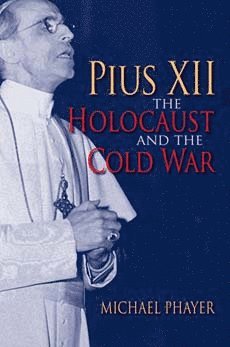
Catholic Church and the Holocaust, 1930-1965
Häftad, Engelska, 2001
399 kr
Beställningsvara. Skickas inom 10-15 vardagar. Fri frakt för medlemmar vid köp för minst 249 kr.
"Phayer offers exactly what was needed. . . . A fair and even-tempered account of a volatile subject." —Kirkus Reviews"An important addition to the literature of the Holocaust." —Publishers Weekly"Very valuable . . . a fine and judicious book." —István Deák, The New York Review of Books"Phayer has written a singularly important book on the role of the Catholic Church in both the Holocaust and its aftermath, up to and including Vatican II. Diligently researched and documented, judicious in its conclusions, comprehensive in its scope, compassionate and humane in its outlook, this book is an indispensable resource." —Richard L. Rubenstein"Phayer's study of [the Catholic Church] as an actor in the tumultuous history of the [20th century] will serve as a model for other historians." —Donald J. Dietrich, Boston CollegePhayer's book, particularly strong on German source material, is at pains to list Pius's strong points his piety, his loathing of Hitler, the instances of personal warmth, the occasions when he criticized Nazism. Phayer examines not only Pius's actions but those of other leading Catholics, and his study extends beyond the end of World War II to follow the evolution of official Catholic thinking during the rebuilding of Germany, the cold war, and the gradual theological reforms that led to Vatican II. This enables Phayer to show how the church completely reversed its position relative to the Jews, but it also gives him a more thorough reading of Pius XII's overall record. It is a damning and convincing verdict that emerges." —Commonweal
Produktinformation
- Utgivningsdatum2001-05-22
- Mått156 x 235 x 23 mm
- Vikt567 g
- FormatHäftad
- SpråkEngelska
- SerieIndiana University Press (IPS)
- Antal sidor328
- FörlagIndiana University Press
- ISBN9780253214713
- UtmärkelserShort-listed for National Jewish Book Award (Holocaust) 2000
Tillhör följande kategorier
Hoppa över listan





Du kanske också är intresserad av
- Nyhet
Del 3
Del 2
- Nyhet
- Nyhet
Del 11
- Nyhet
Del 6
- Nyhet
Del 4
- Nyhet
Del 1