
Del 87 i serien Cambridge Studies in Medieval Literature
Boccaccio and the Invention of Italian Literature
Dante, Petrarch, Cavalcanti, and the Authority of the Vernacular
Häftad, Engelska, 2016
689 kr
Beställningsvara. Skickas inom 10-15 vardagar. Fri frakt för medlemmar vid köp för minst 249 kr.
Giovanni Boccaccio played a pivotal role in the extraordinary emergence of the Italian literary tradition in the fourteenth century, not only as author of the Decameron, but also as scribe of Dante, Petrarch and Cavalcanti. Using a single codex written entirely in Boccaccio's hand, Martin Eisner brings together material philology and literary history to reveal the multiple ways Boccaccio authorizes this vernacular literary tradition. Each chapter offers a novel interpretation of Boccaccio as a biographer, storyteller, editor and scribe, who constructs arguments, composes narratives, compiles texts and manipulates material forms to legitimize and advance a vernacular literary canon. Situating these philological activities in the context of Boccaccio's broader reflections on poetry in the Decameron and the Genealogy of the Gentile Gods, the book produces a new portrait of Boccaccio that integrates his vernacular and Latin works, while also providing a new context for understanding his fictions.
Produktinformation
- Utgivningsdatum2016-09-01
- Mått153 x 230 x 15 mm
- Vikt400 g
- FormatHäftad
- SpråkEngelska
- SerieCambridge Studies in Medieval Literature
- Antal sidor262
- FörlagCambridge University Press
- ISBN9781316619698
Tillhör följande kategorier
Hoppa över listan
Mer från samma serie
Del 94
Del 14
Del 38
Del 25
Sciences and the Self in Medieval Poetry
James Simpson, Alastair Minnis, Patrick Boyde
Häftad, 2005
889 kr
Del 36
Del 22
Del 31
Lies, Slander and Obscenity in Medieval English Literature
Edwin David Craun, Alastair Minnis, Patrick Boyde
Häftad, 2005
849 kr
Del 39
Del 44
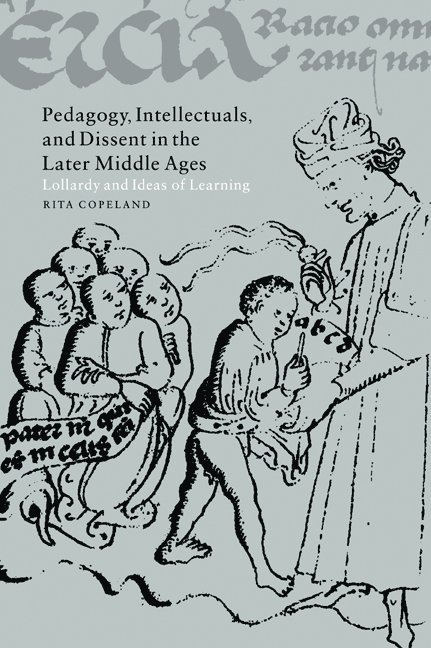
Pedagogy, Intellectuals, and Dissent in the Later Middle Ages
Rita Copeland, Alastair Minnis
Häftad, 2005
849 kr
Del 37
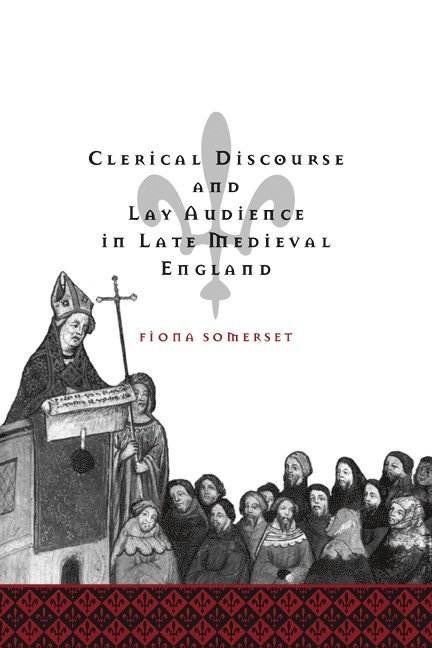
Clerical Discourse and Lay Audience in Late Medieval England
Fiona Somerset, Alastair Minnis, Patrick Boyde
Häftad, 2005
669 kr
