
Beyond Words
Philosophy, Fiction, and the Unsayable
Häftad, Engelska, 2024
679 kr
Beställningsvara. Skickas inom 10-15 vardagar. Fri frakt för medlemmar vid köp för minst 249 kr.
Finns i fler format (1)
It is commonplace to regard many great works of literature—poems, dramas, works of fiction—as in some sense philosophical. Yet ever since Plato, there has been a tension between the kind of abstract theorizing that goes on in philosophy and the focus on concrete particulars that occurs in poetry and fiction. Beyond Words: Philosophy, Fiction, and the Unsayable elaborates on and addresses this Platonic tension, asking in what sense, if any, literature in the form of poetry, drama, short stories, and novels can contribute significantly to our philosophical understanding. Timothy Cleveland suggests there is something in certain poems, novels, and stories that makes them especially suited to expanding our awareness and understanding into the nature of things otherwise unsayable and unconceived. Such literary works show us something that a theoretical—scientific or philosophical—discourse cannot literally say.
Produktinformation
- Utgivningsdatum2024-02-02
- Mått151 x 227 x 11 mm
- Vikt227 g
- FormatHäftad
- SpråkEngelska
- Antal sidor140
- FörlagBloomsbury Publishing Plc
- ISBN9781793614865
Tillhör följande kategorier
Hoppa över listan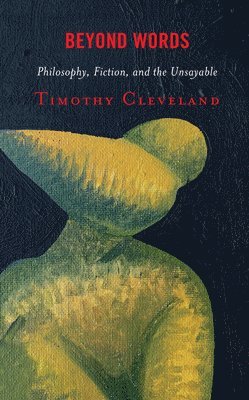




Du kanske också är intresserad av
- Nyhet
Del 3
- Nyhet
Del 11
Del 1
- Nyhet
Del 4
- Nyhet
Del 6
Del 3
Del 2