
When the Future Disappears
The Modernist Imagination in Late Colonial Korea
Inbunden, Engelska, 2014
1 769 kr
Beställningsvara. Skickas inom 3-6 vardagar. Fri frakt för medlemmar vid köp för minst 249 kr.
Taking a panoramic view of Korea's dynamic literary production in the final decade of Japanese rule, When the Future Disappears locates the imprint of a new temporal sense in Korean modernism: the impression of time interrupted, with no promise of a future. As colonial subjects of an empire headed toward total war, Korean writers in this global fascist moment produced some of the most sophisticated writings of twentieth-century modernism. Yi T'aejun, Ch'oe Myongik, Im Hwa, So Insik, Ch'oe Chaeso, Pak T'aewon, Kim Namch'on, and O Changhwan, among other Korean writers, lived through a rare colonial history in which their vernacular language was first inducted into the modern, only to be shut out again through the violence of state power. The colonial suppression of Korean-language publications was an effort to mobilize toward war, and it forced Korean writers to face the loss of their letters and devise new, creative forms of expression. Their remarkable struggle reflects the stark foreclosure at the heart of the modern colonial experience.Straddling cultural, intellectual, and literary history, this book maps the different strategies, including abstraction, irony, paradox, and even silence, that Korean writers used to narrate life within the Japanese empire.
Produktinformation
- Utgivningsdatum2014-11-04
- Mått152 x 229 x 22 mm
- Vikt556 g
- FormatInbunden
- SpråkEngelska
- SerieStudies of the Weatherhead East Asian Institute, Columbia University
- Antal sidor304
- FörlagColumbia University Press
- ISBN9780231165181
- UtmärkelserCommended for James B. Palais Book Prize 2016
Tillhör följande kategorier
Hoppa över listan



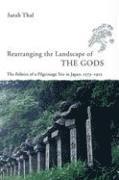





Mer från samma serie
Knowledge of Nature and the Nature of Knowledge in Early Modern Japan
Federico Marcon
Häftad, 2017
509 kr
Hoppa över listan







Du kanske också är intresserad av
- Nyhet
- Nyhet
Del 3
- Nyhet
- Nyhet
Del 7
- Nyhet
Del 6
- Nyhet
Del 11
- Nyhet
Del 4
- Nyhet
Del 3
- Nyhet
Del 1