
Viktor Shklovsky’s Heritage in Literature, Arts, and Philosophy
Häftad, Engelska, 2022
759 kr
Beställningsvara. Skickas inom 10-15 vardagar. Fri frakt för medlemmar vid köp för minst 249 kr.
Finns i fler format (1)
This book examines the heritage of Victor Shklovsky in a variety of disciplines. To achieve this end, Slav N. Gratchev and Howard Mancing draw upon colleagues from eight different countries across the world—the United States, Canada, Russia, England, Scotland, the Netherlands, Norway, and China—in order to bring the widest variety of points of view on the subject. Viktor Shklovsky’s Heritage in Literature, Arts, and Philosophy is more than just another collection of essays of literary criticism: the editors invited scholars from different disciplines—literature, cinematography, and philosophy—who have dealt with Shklovsky’s heritage and saw its practical application in their fields. Therefore, all of these essays are written in a variety of humanist academic and scholarly styles, all engaging and dynamic.
Produktinformation
- Utgivningsdatum2022-03-04
- Mått154 x 219 x 21 mm
- Vikt426 g
- FormatHäftad
- SpråkEngelska
- Antal sidor308
- FörlagBloomsbury Publishing Plc
- ISBN9781498597944
Tillhör följande kategorier
Hoppa över listan

Mer från samma författare
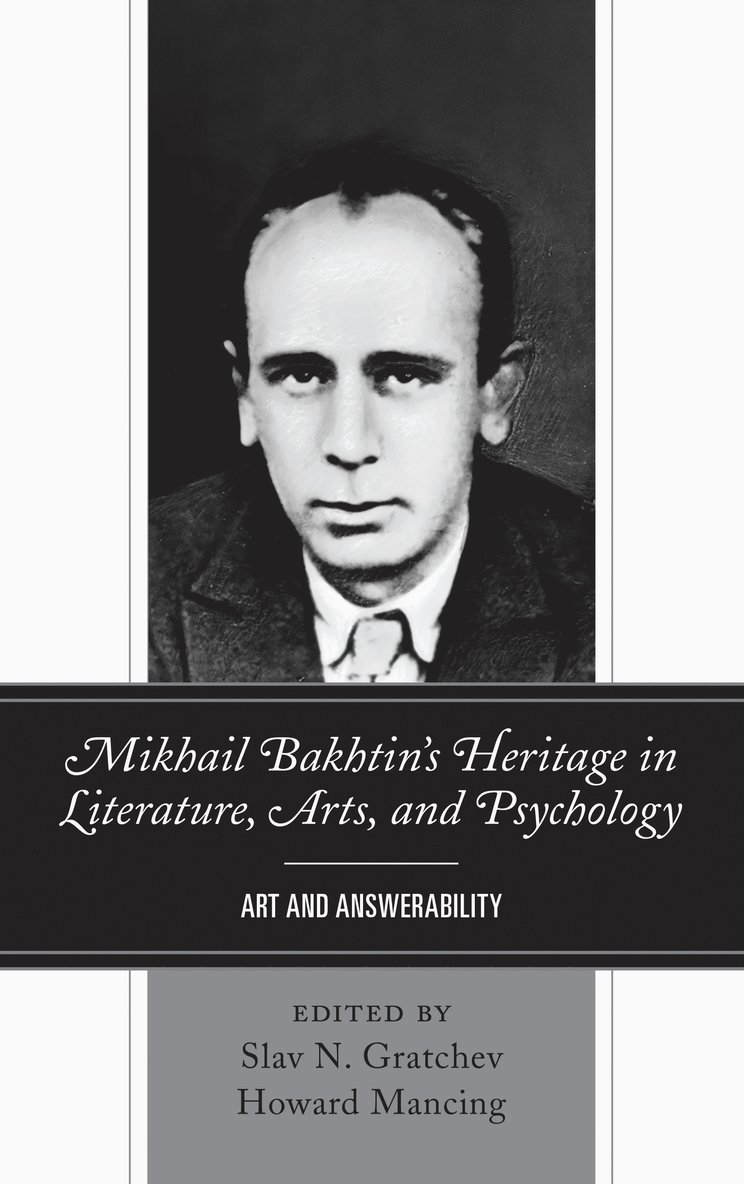
Mikhail Bakhtin’s Heritage in Literature, Arts, and Psychology
Slav N. Gratchev, Howard Mancing
Häftad, 2020
889 kr
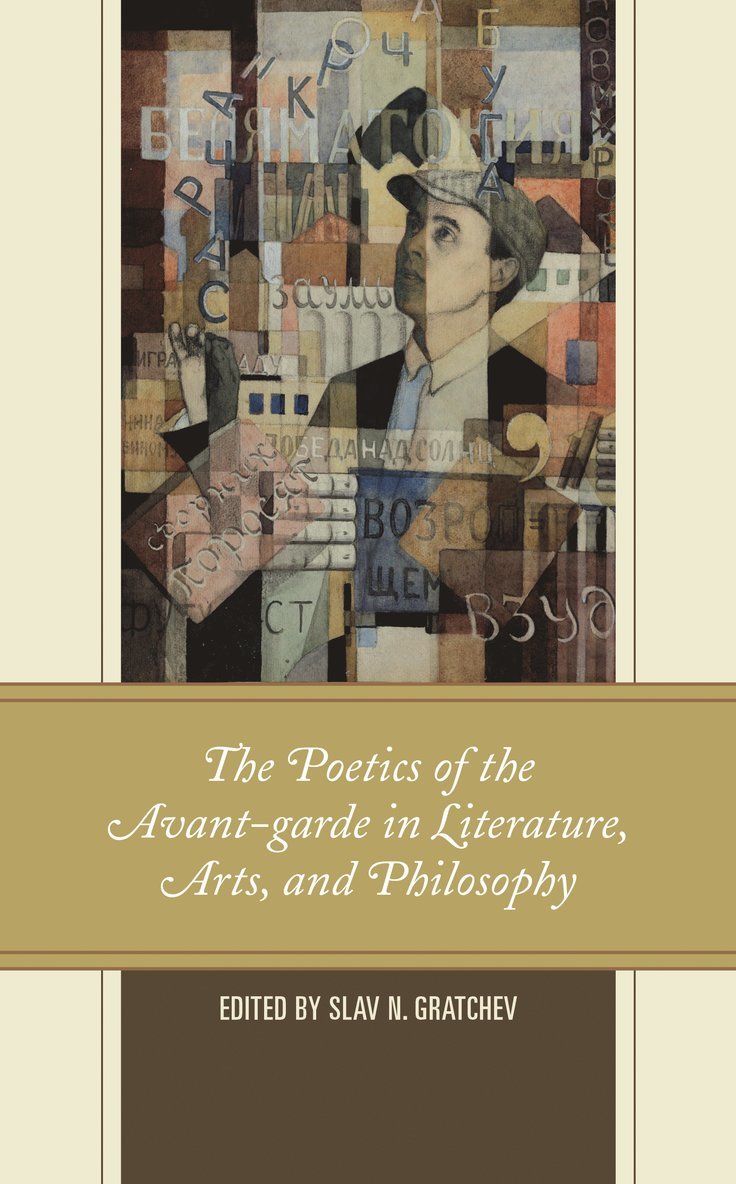
Poetics of the Avant-garde in Literature, Arts, and Philosophy
Slav N. Gratchev
Inbunden, 2020
1 979 kr
Hoppa över listan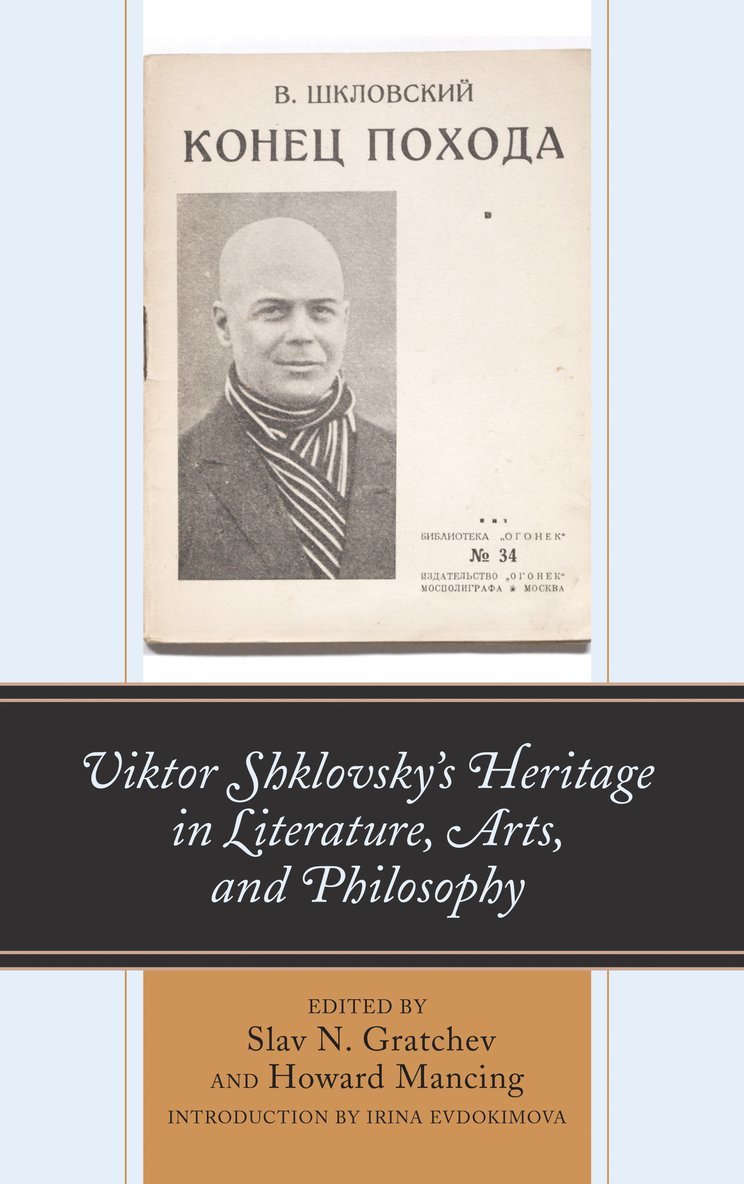
Du kanske också är intresserad av
Viktor Shklovsky’s Heritage in Literature, Arts, and Philosophy
Slav N. Gratchev, Howard Mancing
Inbunden, 2019
1 989 kr
Mikhail Bakhtin’s Heritage in Literature, Arts, and Psychology
Slav N. Gratchev, Howard Mancing
Häftad, 2020
889 kr
Poetics of the Avant-garde in Literature, Arts, and Philosophy
Slav N. Gratchev
Inbunden, 2020
1 979 kr