
Trusting Teachers with School Success
What Happens When Teachers Call the Shots
Inbunden, Engelska, 2012
1 589 kr
Beställningsvara. Skickas inom 10-15 vardagar. Fri frakt för medlemmar vid köp för minst 249 kr.
Finns i fler format (1)
Lately, our nation’s strategy for improving our schools is mostly limited to “getting tough” with teachers. Blaming teachers for poor outcomes, we spend almost all of our energy trying to control teachers’ behavior and school operations. But what if all of this is exactly the opposite of what is needed? What if teachers are the answer and not the problem? What if trusting teachers, and not controlling them, is the key to school success?Examining the experiences of teachers who are already trusted to call the shots, this book answers: What would teachers do if they had the autonomy not just to make classroom decisions, but to collectively—with their colleagues—make the decisions influencing whole school success? Decisions such as school curriculum, how to allocate the school budget, and whom to hire.Teachers with decision-making authority create the schools that many of us profess to want. They individualize learning. Their students are active (not passive) learners who gain academic and life skills. The teachers create school cultures that are the same as those in high-performing organizations. They accept accountability and innovate, and make efficient use of resources. These promising results suggest: it’s time to trust teachers.
Produktinformation
- Utgivningsdatum2012-10-18
- Mått157 x 237 x 25 mm
- Vikt517 g
- FormatInbunden
- SpråkEngelska
- Antal sidor254
- FörlagBloomsbury Publishing Plc
- ISBN9781610485098
Tillhör följande kategorier
Hoppa över listan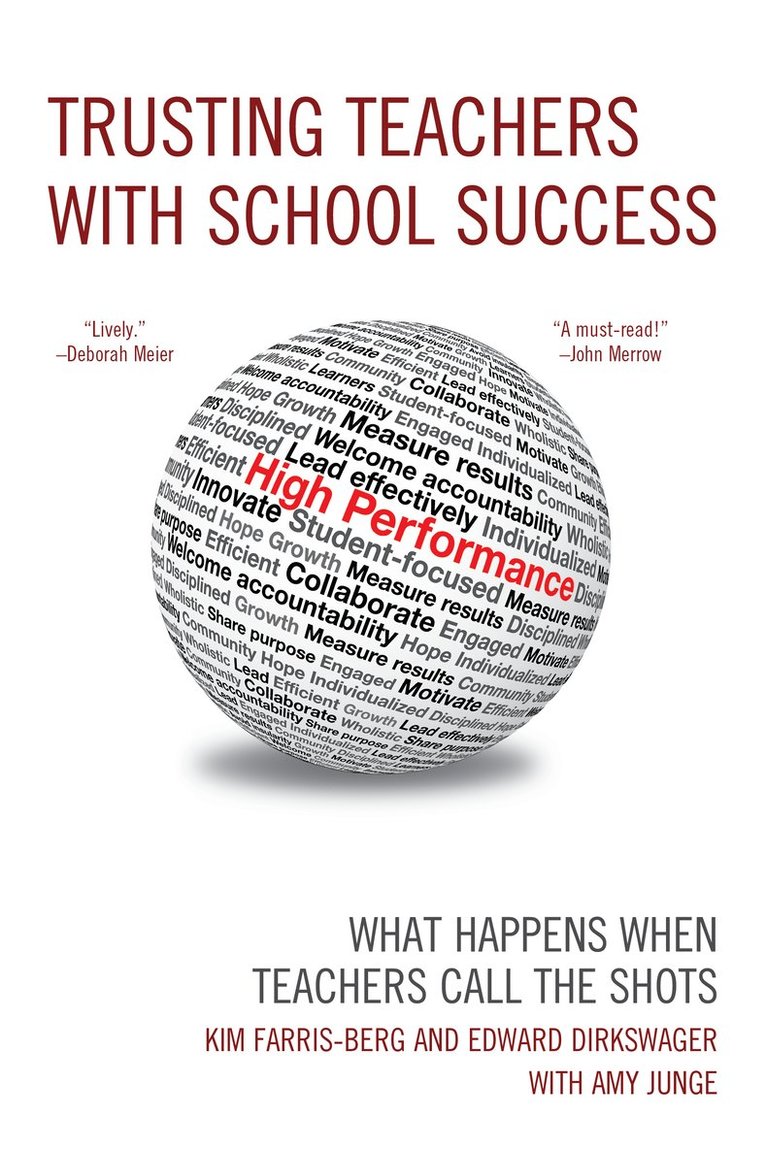









Du kanske också är intresserad av
Del 1
- Nyhet
Del 3
- Nyhet
Del 11
Del 2
- Nyhet
- Nyhet
Del 6
- Nyhet
Del 4
Del 1
Del 3