
Trial by Jury in India
A History: 1862-1973
Häftad, Engelska, 2026
909 kr
Kommande
This is the first book-length study on the history of the trial by jury in India, filling a major gap in the histories of law, colonialism, and empire as well as the history of the jury trial. James Jaffe adopts a legal-historical approach to tell the story of the English jury trial in India, from its introduction in the 1860s to its abolition in the 1970s, its backers and detractors (including K.N. Katju and Gandhi, respectively), and how the debate reflected wider political and social concerns, in colonial and postcolonial Britain and India.
Produktinformation
- Utgivningsdatum2026-10-31
- FormatHäftad
- SpråkEngelska
- Antal sidor300
- FörlagCambridge University Press
- ISBN9781009787024
Tillhör följande kategorier
Hoppa över listan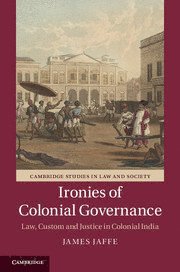
Mer från samma författare
Coal in Victorian Britain, Part II, Volume 4
John Benson, James Jaffe, Keith Gildart
Inbunden, 2012
4 049 kr
Coal in Victorian Britain, Part II, Volume 5
John Benson, James Jaffe, Keith Gildart
Inbunden, 2012
3 629 kr
Coal in Victorian Britain, Part II, Volume 6
John Benson, James Jaffe, Keith Gildart
Inbunden, 2012
2 819 kr
Hoppa över listan


Du kanske också är intresserad av
Coal in Victorian Britain, Part II, Volume 5
John Benson, James Jaffe, Keith Gildart
Inbunden, 2012
3 629 kr
Coal in Victorian Britain, Part II, Volume 4
John Benson, James Jaffe, Keith Gildart
Inbunden, 2012
4 049 kr
Coal in Victorian Britain, Part II, Volume 6
John Benson, James Jaffe, Keith Gildart
Inbunden, 2012
2 819 kr
- Nyhet
Del 3
- Nyhet
Del 4
- Nyhet
Del 11
- Nyhet