Del 45 i serien Studies in Critical Social Sciences
Toward a Dialectic of Philosophy and Organization
3 779 kr
Beställningsvara. Skickas inom 5-8 vardagar. Fri frakt för medlemmar vid köp för minst 249 kr.
Finns i fler format (1)
Produktinformation
- Utgivningsdatum2012-08-22
- Mått155 x 235 x 28 mm
- Vikt1 680 g
- FormatInbunden
- SpråkEngelska
- SerieStudies in Critical Social Sciences
- Antal sidor394
- FörlagBrill
- ISBN9789004224681
Tillhör följande kategorier
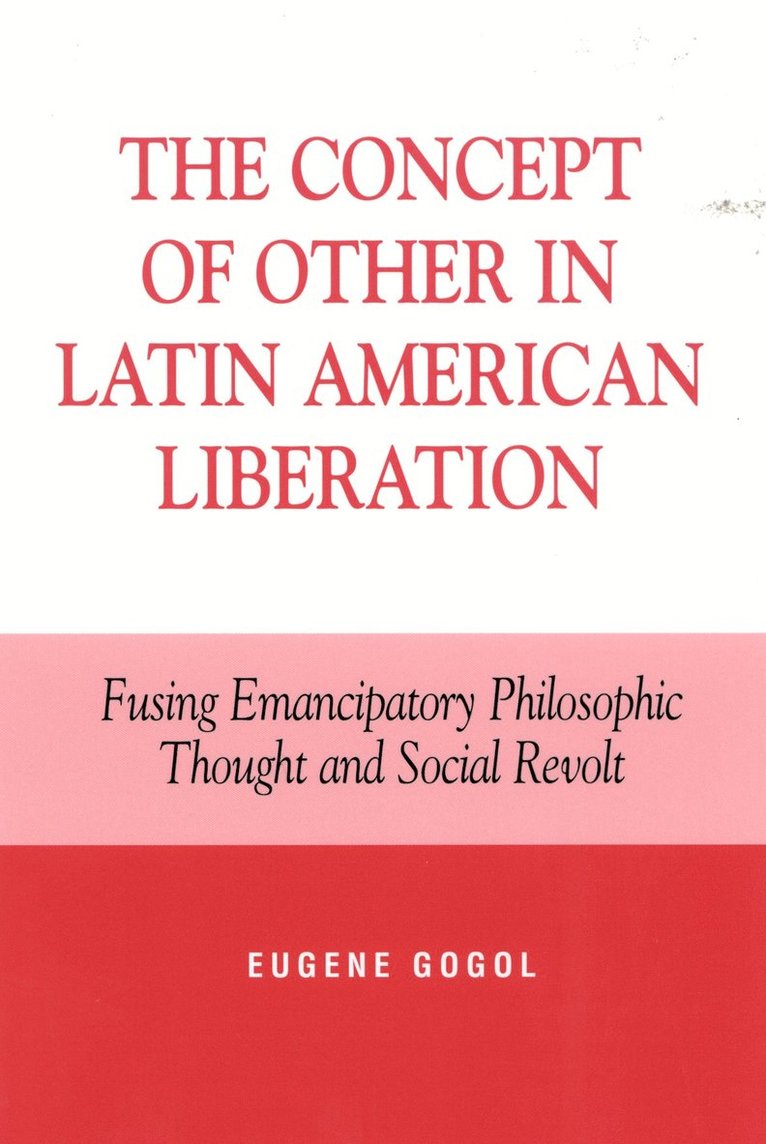
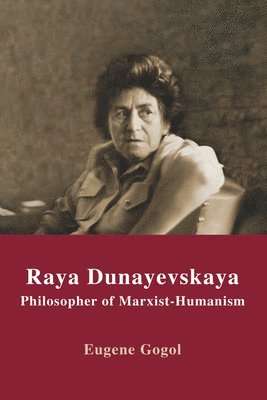
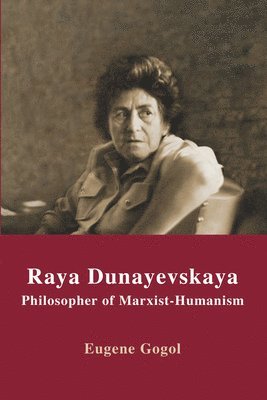
Eugene Gogol is a Marxist-Humanist activist-writer. His books include The Concept of Other in Latin American Liberation and Raya Dunayevskaya: Philosopher of Marxist-Humanism.
- Introduction: Philosophy, Organization, and the Work of Raya DunayevskayaI. The Contradictory Reality of the Present Moment and Its Relation to a Dialectic of Philosophy and OrganizationII. The Project of Dunayevskaya: Dialectics of Organization and PhilosophyIII. The Form for the Present StudyPrologue: The Dialectic in Philosophy ItselfI. What Is Hegel’s Journey of Absolute Spirit?II. Why a Negation of the Negation?III. Can We See Hegel’s Absolutes, Not as a Closed Totality, but As New Beginning?PART I: ON SPONTANEOUS FORMS OF ORGANIZATION VS. VANGUARD PARTIES1: Marx’s Concept of Organization: From the Silesian Weavers’ Uprising to the First Years of the International Workingmen’s AssociationI. A Preliminary Note—Marx: Revolutionary Organization and the Organization of ThoughtII. 1843-52, Critique of Ideas/Tendencies—and the Movement of the WorkersIII. From the Early 1850s to the Early 1860s: A Brief Note on Marx’s Organization of Thought and the “Party” IV. A New Organizational Form: Marx and the International Working Men’s Association2: The Commune of Paris, 1871: Mass Spontaneity in Action and Thought; Responsibility of the Revolutionary Intellectual: The Two-War Road Between Marx and the CommuneI. A Non-State State: The Paris Commune as a Form of Workers’ Rule II. The Civil War in France— Drafts and Address, and the French Edition of CapitalIII. The Commune Deepens Marx’s Concept of Organization-- The First International After 1871Appendix: Marx excerpts from first and second drafts of The Civil War in France3: The Second International, The German Social Democracy, and Engels after Marx—Organization without Marx’s Organization of ThoughtI. A Preliminary Note on LassalleII. Fetishism of Organization: The Second International and the Germany Social DemocracyIII. Engels’ Relation to German Social Democracy and to Marx’s Marxism: What Tactics? What Theory? What Philosophy?Appendix: “The Interlude that Never Ended Organizationally”Forms of Organization and Struggle in Revolutionary Russia4: The 1905 Russian Revolution: Mass Proletarian Self-Activity and Its Relation to the Organizational Thought of Marxist RevolutionariesI. 1905 in Life and in Books: New Forms of Struggle; New Forms of OrganizationII. Lenin, Trotsky, Luxemburg: Attitudes Toward and Theoretical Ramifications of 1905, Particularly with Regard to Revolutionary Organization5: The Russian Revolution of 1917 and BeyondI. February-October, 1917: Forms of Organization From Below; Developments and Struggles Within BolshevismII. Russia post-October: Workers, Bolsheviks and the State—New Beginnings and Grave Contradictions in the Revolution6: Out of the Russia Revolution: Legacy and Critique—Luxemburg, Pannekoek, TrotskyI. Luxemburg and Two Revolutions—Russia, 1917-18; Germany, 1918-19II. Pannekoek’s Council CommunismIII. In Exile: A Brief Note on Trotsky’s Concept of Revolutionary Organization and View of Proletarian Subjectivity7: Organizational Forms from the Spanish RevolutionI. The Revolution Begins and DevelopsII. The Communist Party Works to Dismantle the Revolution8: The Hungarian Workers’ Councils in the Revolution: A Movement from Practice that Is a Form of Theory Prelude: East Germany, 1953 I. The First DaysII. The Turning PointIII. The Counter-Revolution and the Proletarian ResponseIV. Postscript: East Europe post-Hungary 1956—Resistance-in-Permanence; Contradictions WithinPART II: HEGEL AND MARX9: Can “Absolute Knowing” in Hegel’s Phenomenology Speak to a Dialectic of Organization and Philosophy?I. A Note on Hegel’s Method in Absolute KnowledgeII. Marx’s “Critique of the Hegelian Dialectic”III. Spirit’s Journey in Absolute Knowledge: Externalization (Entäusserung) and Recollection/Inwardization (Erinnerung)IV. The Dialectic in Philosophy Itself: Does It Bring Forth a Dialectic of Organization?—A Reading of Absolute Knowing from Dunayevskaya10: Rereading Marx’s Critique of the Gotha Program TodayAppendix: Marx on Necessity, Freedom, Time and LaborPART III: HEGEL AND LENIN11: Lenin and Hegel—The Profound Philosophic Breakthrough that Failed to Encompass Revolutionary OrganizationI. IntroductionII. A Preliminary Note on Lenin’s Philosophic Exploration of HegelIII. A Brief Survey of Dunayevskaya’s Explorations of Lenin’s Hegelian Vantage Point Prior to 1985-87.IV. Dunayevskaya’s ‘Changed Perception of Lenin Philosophic Ambivalence’: Fusing a mid-1980s Vantage Point with a 1953 Philosophic BreakthroughV. Organizational Ramifications12: Hegel’s Critique of the Third Attitude to Objectivity—Its Relation to OrganizationI. Introduction: The Three Attitudes to Objectivity II. Dunayevskaya’s 1961 Reading of the Third Attitude to ObjectivityIII. Dunayevskaya’s New 1986 Reading of the Third Attitude to ObjectivityPART IV: DIALECTICS OF ORGANIZATION AND PHILOSOPHY IN POST-WORLD WAR II WORLD: THE WORK OF RAYA DUNAYEVSKAYA13: Moments in the Development of Dunayevskaya's Marxist-HumanismI. A Preliminary Note on War and Revolution as Turning Points for Radical Thought: The Moment of the Theory of State-Capitalism as Needed Ground for Marxist-HumanismII. Dunayevskaya's Letters on Hegel's Absolutes, May 12 and 20 1953: “The Philosophic Moment of Marxist-Humanism”III. The Organization of Thought which Determines Organizational Life: Developing Marxist-Humanism and News and Letters CommitteesIV. Dunayevskaya’s Presentation on Dialectics of Organization and Philosophy, June 1, 1987—A New Philosophic Category and a Challenge for News and Letters PraxisAppendices: 1) Dunayevskaya Letter on Meeting a Cameroonian Revolutionary; 2) Andy Philips on Dunayevskaya's Participation in 1949-50 Miners' General Strike; 3. Preamble to the Original Constitution of News and Letters Committees, 1956PART V: CONCLUSION14: What Philosophic-Organizational Vantage Point Is Needed?I. Recent Challenges to Hegel’s Dialectics of NegativityII. What Is the Dialectic of Marx’s Capital?III. Once Again Hegel’s Dialectic of Negativity—Its Concretization/Praxis as Organizational Expression; Its Meaning for TodayBibliograhyIndex
"Gogol’s argument is urgent and single-minded, and his materials refreshingly original. [A] wonderful book." – Ben Watson, in: Radical Philosophy 182 (Nov/Dec 2013)"Toward a Dialectic ought to be taken as an important contribution to an on-going project to reveal the logic of the development of emancipatory organization." – Andy Blunden, in: Marx & Philosophy (31 January 2013)
Mer från samma författare
Russia: From Proletarian Revolution To State-capitalist Counter-revolution
Raya Dunayevskaya, Eugene Gogol
Häftad, 2018
579 kr
Mer från samma serie
- Nyhet
Hybrid Identities: Theoretical And Empirical Examinations
Keri Smith, Keri E. Iyall Smith, Patricia Leavy, Keri E Iyall Smith
Häftad, 2009
529 kr
Dialectic Of Solidarity: Labor, Antisemitism, And The Frankfurt School
Mark Worrall
Häftad, 2009
459 kr
Liberal Modernity And Its Adversaries: Freedom, Liberalism And Anti-liberalism In The 21st Century
Milan Zafirovski
Häftad, 2009
649 kr
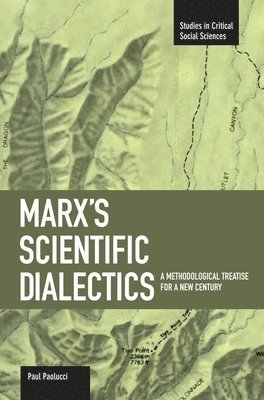
Marx's Scientific Dialectics: A Methodological Treatise For A New Century
Paul Paolucci, Paul Paolucci
Häftad, 2009
459 kr
Imperialism, Neoliberalism, And Social Struggles In Latin America
Richard A. Dello Buono, Richard A. Dello Buono, José Bell Lara, Richard A Dello Buono
Häftad, 2009
459 kr
Du kanske också är intresserad av
Russia: From Proletarian Revolution To State-capitalist Counter-revolution
Raya Dunayevskaya, Eugene Gogol
Häftad, 2018
579 kr
Omvårdnadens grunder - paket
Sofia Almerud, Annica Backman, Anna-Karin Edberg, Anna Ehrenberg, My Engström, Katarina Göransson, Lena Marmstål Hammar, Stefan Nilsson, Lars Wallin, Helle Wijk, Joakim Öhlén, Lilas Ali, Anette Alvariza, Ann-Christine Andersson, Pia Andersson, Anna Anåker, Charlotta van Eggermont Arwidson, Margareta Asp, Åsa Audulv, Malin Axelsson, Mariette Bengtsson, Eva Benzein, Lena Berg, Monica Bergqvist, Eva-Karin Bergström, Ida Björkman, Catrin Björvell, Angela Bång, Carina Bååth, Josefin Bäckström, Karin Bölenius, David Edvardsson, Rakel Eklund, Inger Ekman, Mirjam Ekstedt, Ann Catrine Eldh, Karin Enskär, Sofia Erestam, Anneli Eriksson, Henrik Eriksson, Marie Ernsth Bravell, Jan Florin, Anna Forsberg, Henrietta Forsman, Anette Forss, Mio Fredriksson, Febe Friberg, Maria Grandahl, Tanja Gustafsson, Agneta Gånemo, Elizabeth Hanson, Malin Hansson, Amanda Hellström, Ingela Henoch, Inger Jansson, Maria Jirwe, Lena Johansson, Pauline Johansson, Unn-Britt Johansson, Birgitta Kerstis, Ann-Sofie Källberg, Ulrika Källman, Anita Kärner Köhler, Cecilia Larsdotter, Margret Lepp, Maria Lindström Nilsson, Mikael Lundmark, Anneli Löf, Lennart Magnusson, Catharina Melander, Jenny Milton, Beata Molin, Annika Nordin, Maria Norinder, Sepideh Olausson, Carina Persson, Kerstin Prignitz Sluys, Josefin Rahmqvist, Birgit Holritz Rasmussen, Anneli Ringblom, Karin C. Ringsberg, Ann Rudman, Ann-Marie Rydholm Hedman, Silje Rysst, Lars Sandman, Regina Santamäki Fischer, Britt-Inger Saveman, Johanna Sjömar, Karin Stenzelius, Anna Strömberg, Annelie J. Sundler, Märtha Sund Levander, Kristina Svantesson, Anna Swall, Susanne Syrén, Pia Tingström, Johanna Ulfvarson, Sara Wallström, Albert Westergren, Lena Wiklund Gustin, Ulrika Winblad
Häftad, 2025
1 569 kr