
The Limits of Attention
Temporal Constraints in Human Information Processing
Häftad, Engelska, 2001
2 129 kr
Beställningsvara. Skickas inom 7-10 vardagar. Fri frakt för medlemmar vid köp för minst 249 kr.
Finns i fler format (1)
For psychologists and cognitive neuroscientists interested in 'attention', the issue of the 'limits' of our attentional mechanisms is one of great importance and topicality- what are the temporal constraints when we attend to and process information How well can we switch our attention from one task to another, or from one sensory modality to another? In what circumstances can the presentation of one stimulus prevent the recognition of a further stimulus? By seeking answers to such questions, we can learn a great deal about the systems underlying such attentional processes, develop more accurate models of our attentional mechanisms, and even get closer to answering some of the many outstanding questions about consciousness itself. In The limits of attention, Kimron Shapiro whose own work on the 'attentional blink' is central to this debate, has brought together a high quality team of attention researchers to discuss and debate these issues, key to the study of attention. This is an important book for cognitive psychologists, cognitive neuroscientists, and philosophers.
Produktinformation
- Utgivningsdatum2001-10-18
- Mått169 x 241 x 15 mm
- Vikt512 g
- FormatHäftad
- SpråkEngelska
- Antal sidor260
- FörlagOUP OXFORD
- ISBN9780198505150
Tillhör följande kategorier
Hoppa över listan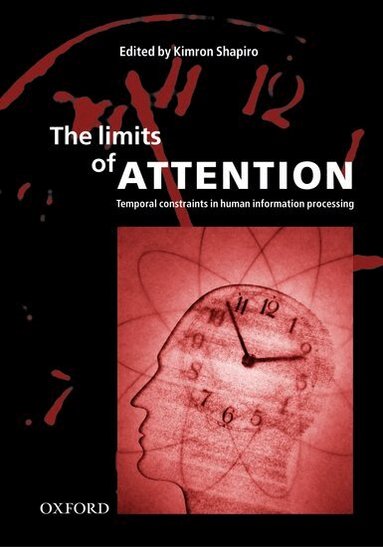









Du kanske också är intresserad av
- Nyhet
Del 6
- Nyhet
Del 3
- Nyhet
Del 7
- Nyhet
Del 4
- Nyhet
- Nyhet
Del 11
- Nyhet
- Nyhet
Del 3
- Nyhet