
Del 30
Del i serien St Andrews Series
Age of Aryamehr
Late Pahlavi Iran and its Global Entanglements
Häftad, Engelska, 2024
409 kr
Skickas . Fri frakt för medlemmar vid köp för minst 249 kr.
The history of Pahlavi Iran has traditionally been written as prologue to the 1979 Iranian Revolution and firmly located within a national historical context. However, the reign of the last Shah of Iran, Mohammad Reza Pahlavi (1941-1979), in fact marked the high-point of Iran’s global interconnectedness. Never before had Iranians felt the impact of global political, social, economic, and cultural forces so intimately in their national and daily lives, nor had Iranian actors played such an important global role, on battlefields, barricades, and in board rooms far beyond Iran’s borders.Engaging with a national historical narrative, The Age of Aryamehr writes Iran into the global history of the 1960s and 1970s, so as to understand the transnational connections that in many ways formed modern Iran.
Produktinformation
- Utgivningsdatum2024-11-21
- Mått156 x 216 x 25 mm
- Vikt384 g
- FormatHäftad
- SpråkEngelska
- SerieSt Andrews Series
- Antal sidor291
- FörlagGINGKO
- ISBN9781914983283
Tillhör följande kategorier
Hoppa över listan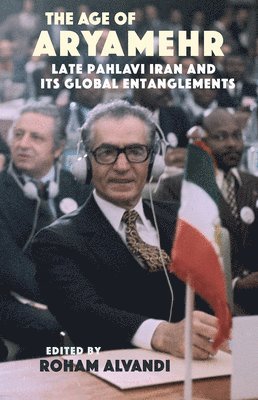







Du kanske också är intresserad av
Del 30
- Nyhet
Del 3
- Nyhet
Del 4
- Nyhet
Del 11
- Nyhet
- Nyhet
Del 6