Del i serien ISTE Invoiced
Testing Innovation Digital Modes and Models
Think Innovation through Games
2 439 kr
Beställningsvara. Skickas inom 5-8 vardagar. Fri frakt för medlemmar vid köp för minst 249 kr.
Produktinformation
- Utgivningsdatum2026-06-12
- Vikt975 g
- FormatInbunden
- SpråkEngelska
- SerieISTE Invoiced
- Antal sidor528
- FörlagISTE Ltd
- ISBN9781836690825
Tillhör följande kategorier
Camille Aouinaït is a researcher at Agroscope, the Swiss Center of Excellence for Agricultural Research, Switzerland. Her research focuses on open innovation, innovation ecosystems, knowledge transfer and support in the implementation of innovation in agri food firms and value chains, and the agricultural ecosystem.Dimitri Uzunidis is a professor of innovation economics and management, and the Honorary President of the Research Network on Innovation, France. His research focuses on innovation systems.
- Author Biographies xviiIntroduction xxvCamille AOUINAÏT and Dimitri UZUNIDISPart 1. The Importance of Information, Digital Technology and Innovation 1Chapter 1. Information Inflation and Digital Transformation: A Strategic Perspective 3Jean-Louis MONINO1.1. Introduction 31.2. Inflation and digital technologies: the DIKW model for understanding and analysis 91.3. Understanding information inflation 151.4. Digital strategies against information inflation 191.5. Case studies 221.6. Conclusion 251.7. References 28Chapter 2. Connectivity and Competitiveness: The Stakes of 5G for Organizations 33Jean-Louis MONINO2.1. Introduction 332.2. From analog to mobile Internet 352.3. The deployment of 5G 392.4. The diffusion of 5G and its potential for change 442.5. 5G: a global affair!. 482.6. 5G in France 542.7. 5G: meeting the challenges 552.8. Conclusion 622.9. List of websites 66Chapter 3. Challenges and Prospects for the Development of Quantum Technologies 69Laurent ADATTO3.1. Introduction 693.2. Analysis of the core elements of quantum physics in quantum technologies 703.3. Structural differences between classical computers and quantum computers 723.4. Study of issues related to quantum investments 763.5. Conclusion 873.6. References 88Contents ixChapter 4. QuAI: Cognitive AI for Trust, Consensus, Sustainability and Security 91Florin PAUN, Ingrid VAILEANU-PAUN, Crenguta LEAUA, Thomas O'NEAL, Alex JASO and Laurent CHAUDRON4.1. Introduction 914.2. How was the QuAI conceptualized as a response to Condorcet's paradox and Arrow's incompleteness theorem 954.3. Open qualification models and tools in alignment with the evolution of economic models: the example of the deeptech start-up Xvaluator, the first QuAI tool and its clients and personalized functionalities 1154.4. Perceived impacts at the micro-, meso- and macro-economic levels of using QuAI approaches. Extra-financial value and the economic impact multiplier 1214.5. Conclusion 1304.6. References 133Chapter 5. The Hackathon: A Catalyst for Collaborative Creativity to Innovate 139Dave MOBHE BOKOKO5.1. Introduction 1395.2. Creativity in the service of innovation 1415.3. Hackathon and collaborative creativity 1495.4. Critical discussion on Hackathon in practice 1575.5. Conclusion 1605.6. References 161Chapter 6. Kolòn-Inspired Platform for Making and Innovation in Communities of Practice 167Valérie PAYEN JEAN BAPTISTE, Kalliopi BENETOS, Pierre SCHALLUM, Diane-Gabrielle TREMBLAY, Laurent MOCCOZET, Valéry PSYCHÉ, Jocelyne KISS and Giulia ORTOLEVA6.1. Introduction 1676.2. Methodological approaches. 1716.3. Application of the results in the design of the digital platform 1736.4. Alignment of results with the kolòn model and its contribution to innovation 1776.5. Limitations and perspectives 1816.6. Conclusion 1826.7. References 183Chapter 7. Wargame: A Classic Serious Game, Vector of Innovation 187Stéphane GORIA7.1. (Recent) history of wargaming and professional wargames 1877.2. Definitions and current implementations of wargames 2017.3. Qualification criteria, current uses and the future of wargames 2107.4. References 211Chapter 8. Generative AI: From Disruptive Innovation to Disruptive Risks 217Vipin MOGHA and Arvind ASHTA8.1. Introduction 2178.2. Literature review: innovation and risk 2198.3. Case study: the risks introduced by AI 2208.4. New risks introduced by GenAI 2318.5. Copyright ambiguity 2348.6. Energy and computational costs 2348.7. Dynamic system vulnerabilities 2348.8. Discussion 2358.9. Conclusion 2378.10. References 238Part 2. Real-World Applications: Achievements and Perspectives 247Chapter 9. Cultivating Trust and Innovation in New Ways of Working 249Sandrine VIRGILI, Frédéric BORNAREL and Hélène DELACOUR9.1. Introduction 2499.2. Organizational distrust and RTO 2519.3. Remote work and the destruction of innovation potential 2579.4. A new collaborative model for remote work – a new form of trust? 2649.5. Conclusion 2709.6. References 271Chapter 10. A Framework for Understanding Multiple Dimensions of Agility and Resilience in Industry 5.0 277Marcos LIMA, Patricia BAUDIER, Marie HAIKEL-ELSABEH and Michel DALMAS10.1. Introduction 27710.2. Theoretical background 28010.3. Methodology 28510.4. Results and discussion 29010.5. Conclusions 29210.6. Acknowledgments 29510.7. References 296Chapter 11. Pandemic-Driven Pharma Transformation Through Open Innovation Dynamics 301Laurent ADATTO, Camille AOUINAÏT, Son Thi Kim LE and Michelle MONGO-DESAGE11.1. Introduction 30111.2. Theoretical analyses of open innovation: concepts, typology, and drivers in Covid-19 vaccine development 30311.3. Open innovation in the pharmaceutical industry 30611.4. Discussion 31411.5. Conclusion 32111.6. References 322Chapter 12. AI and Defense Innovations: Theoretical Propositions and Illustrations 327Pierre BARBAROUX12.1. Introduction 32712.2. AI-based innovation in aerospace and defense industries: dimensions and propositions 33012.3. Research methodology and interpretive case studies 33412.4. Results and empirical validity of the innovation model 33912.5. Conclusion and future research 34212.6. References 343Chapter 13. Performativity and Science Fiction According to the French Army 347Thomas MICHAUD13.1. Introduction 34713.2. The public scenarios of the Red Team 34913.3. Institutional science fiction, between utopia and dystopia 35313.4. A speculative and strategic imaginary 35813.5. The ideology of science fiction and prophetism 36013.6. Dysperformative fictions 36013.7. Innovism: a pragmatic imaginary in the service of innovation 36213.8. Dysperformativity of the diegesis and performativity of the novum 36513.9. Conclusion: the Red Team, a group of paradoxical prophets? 36713.10. References 369Chapter 14. New Space: The Force Awakens 373Christophe BÉNAROYA and Victor DOS SANTOS PAULINO14.1. Introduction 37314.2. Characterization of New Space 37514.3. The six constitutive disruptions of New Space 37614.4. From New Space disruptions to new challenges 38514.5. Conclusion 38614.6. Acknowledgments 38714.7. References 387Chapter 15. The Imaginary of Space Capitalism in Science Fiction 391Thomas MICHAUD15.1. Introduction 39115.2. New Space in science fiction 39215.3. Space Truckers (1996) and the interplanetary transport sector 39615.4. Space Sweepers (2021) and the myth of the capitalist heavenly city 39715.5. Venom (2018) and the myth of the post-humanist capitalist enterprise 39915.6. Darius Tanz, New Space billionaire of the series Salvation 40215.7. Spatial science fiction, an element of soft power 40315.8. The imaginary in space capitalism 40615.9. References 407Chapter 16. Digitalization in Agriculture: Toward an Agroecological Transformation? 409Eléonore SCHNEBELIN16.1. Introduction 40916.2. What is digital agriculture? 41116.3. Conceptual and methodological approach 41316.4. Uses of digital technology in farming systems 41616.5. Perceptions of digital technology and projects of sector organizations 42116.6. Digital technology and the agroecological transition 42216.7. Conclusion 42516.8. References 426Chapter 17. AI for Technological Innovation in Agriculture? A Revolution! 429Didier LEBERT17.1. Introduction 42917.2. Structural models of technological diffusion 43017.3. Data and results 43617.4. Conclusion 44617.5. References 448List of Authors 451Index 455
Mer från samma författare
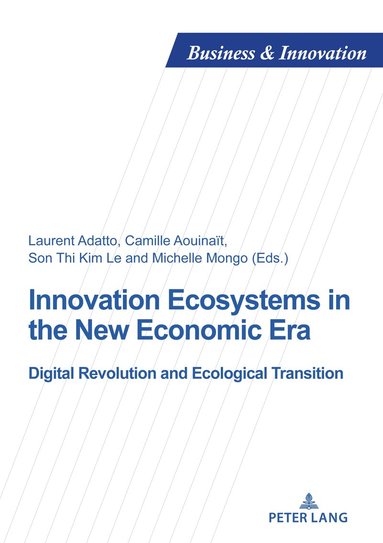
Innovation Ecosystems in the New Economic Era
Laurent Adatto, Camille AOUINAÏT, Son Thi Kim LE, Michelle Mongo
Häftad, 2023
809 kr
Mer från samma serie
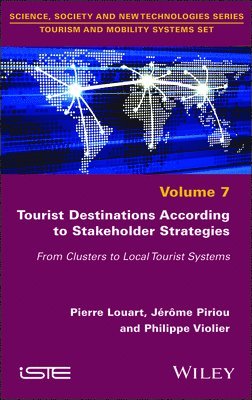
Tourist Destinations According to Stakeholder Strategies
Pierre Louart, Jérôme Piriou, Philippe Violier
Inbunden, 2024
2 379 kr
Nanotechnologies and Nanomaterials Applied to Chemical Sensors and Biosensors
Pierre Camille Lacaze, Benoît Piro, Jean-Christophe Lacroix
Inbunden, 2024
2 309 kr
Smart Grids and Buildings for Energy and Societal Transition
Benoît Robyns, Laure Dobigny, Dhaker Abbes, Benoit Durillon, Hervé Barry, Christophe Saudemont
Inbunden, 2024
2 379 kr
Optimization in the Agri-Food Supply Chain
Mayssa Koubaa, Mayssa Koubaa, Mohamed Haykal Ammar, Diala Dhouib, Sirine Mnejja
Inbunden, 2024
2 309 kr
Advanced Studies in the Mathematical Theory of Scattering, Volume 3
Jean-Michel L. Bernard
Inbunden, 2025
2 289 kr
Towards a Unification of the Laws of Physics in Classical Fields Theory
Jean-Paul Caltagirone
Inbunden, 2026
2 309 kr
Du kanske också är intresserad av
Innovation Ecosystems in the New Economic Era
Laurent Adatto, Camille AOUINAÏT, Son Thi Kim LE, Michelle Mongo
Häftad, 2023
809 kr
- Nyhet
- Nyhet
- Nyhet
- Nyhet
- Nyhet
- Nyhet