
Del i serien Studies in Death, Materiality and the Origin of Time
Taming Time, Timing Death
Social Technologies and Ritual
Inbunden, Engelska, 2013
3 509 kr
Beställningsvara. Skickas inom 10-15 vardagar. Fri frakt för medlemmar vid köp för minst 249 kr.
Departing from a persisting current in Western thought, which conceives of time in the abstract, and often reflects upon death as occupying a space at life's margins, this book begins from position that it is in fact through the material and perishable world that we experience time. As such, it is with death and our encounters with it, that form the basis of human conceptions of time. Presenting rich, interdisciplinary empirical studies of death rituals and practices across the globe, from the US and Europe, Asia, The Middle East, Australasia and Africa, Taming Time, Timing Death explores the manner in which social technologies and rituals have been and are implemented to avoid, delay or embrace death, or communicate with the dead, thus informing and manifesting humans' understanding of time. It will therefore be of interest to scholars and students of anthropology, philosophy, sociology and social theory, human geography and religion.
Produktinformation
- Utgivningsdatum2013-05-23
- Mått156 x 234 x 24 mm
- Vikt657 g
- FormatInbunden
- SpråkEngelska
- SerieStudies in Death, Materiality and the Origin of Time
- Antal sidor286
- FörlagTaylor & Francis Ltd
- ISBN9781409450689
Tillhör följande kategorier
Hoppa över listan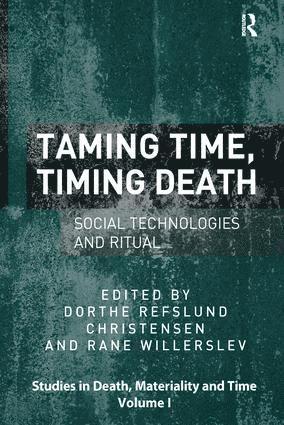


Du kanske också är intresserad av
Enterprising Initiatives in the Experience Economy
Britta Timm Knudsen, Dorthe Refslund Christensen, Per Blenker
Häftad, 2024
829 kr
Enterprising Initiatives in the Experience Economy
Britta Timm Knudsen, Dorthe Refslund Christensen, Per Blenker
Inbunden, 2014
3 219 kr