
Speculative Anthropology
A Literary History of Contamination
Häftad, Engelska, 2026
739 kr
Beställningsvara. Skickas inom 5-8 vardagar. Fri frakt för medlemmar vid köp för minst 249 kr.
Finns i fler format (1)
Anthropology’s keen interest in fiction can be traced to the discipline’s so-called ‘literary turn’ in the 1980s and 90s, instigated by James Clifford and George Marcus’ groundbreaking anthology Writing Culture (1986). But the close connection between anthropology and literature goes back to pioneer anthropologists like Bronislaw Malinowski and Claude Lévi-Strauss, who were also prominent writers. The discussion continues, and ‘literary anthropology’ is now a well-established sub-field that addresses literary studies as well as creative writing. Yet, anthropology’s courting of literature has largely remained unanswered. Some famous authors have a background in anthropology, such as Kurt Vonnegut, Ursula K. Le Guin and Amitav Ghosh, but few – one of the exceptions being Ghosh – have reflected on the relationship between the two practices, let alone consciously attempted to fuse them.Speculative Anthropology: A Literary History of Contamination explores the ‘intersection’ between anthropology and literature from the literary side, with the perspective of the writer, rather than the critic. The title is inspired by Argentinian author Juan José Saer’s tentative definition of ‘fiction’ as ‘speculative anthropology’ and Ghanaian British philosopher Kwame Anthony Appiah’s similarly tentative proposal for a literary tradition of ‘contamination’, going back to Roman playwright Terence’s fusion of comedy and tragedy. In this pioneer monograph, Oscar Hemer reinterprets Appiah’s ‘contamination’ as genre crossing and mixing, not between different literary genres but between fiction and discursive forms of writing – anthropological as well as philosophical and historical. His tentative ‘canon of contamination’ explored in this volume includes, among others, Montesquieu’s Persian Letters, the ‘self-ethnographies’ of Michel Leiris and Édouard Glissant, Jorge Luis Borges’s ‘fictional essays’, César Aira’s ‘freaked-out ethnography’, Chris Kraus’s ‘theoretical fiction’, Zoë Wicomb’s spectral South African history – and the exemplary philosophy-by-fiction of J.M. Coetzee.
Produktinformation
- Utgivningsdatum2026-04-15
- Mått156 x 234 x 16 mm
- Vikt427 g
- FormatHäftad
- SpråkEngelska
- Antal sidor302
- FörlagSean Kingston Publishing
- ISBN9781912385782
Tillhör följande kategorier
Hoppa över listan


Mer från samma författare
Conviviality at the Crossroads
Per-Markku Ristilammi, Maja Povrzanovic Frykman, Oscar Hemer
Häftad, 2020
819 kr
Conviviality at the Crossroads
Per-Markku Ristilammi, Maja Povrzanovic Frykman, Oscar Hemer
Inbunden, 2020
909 kr
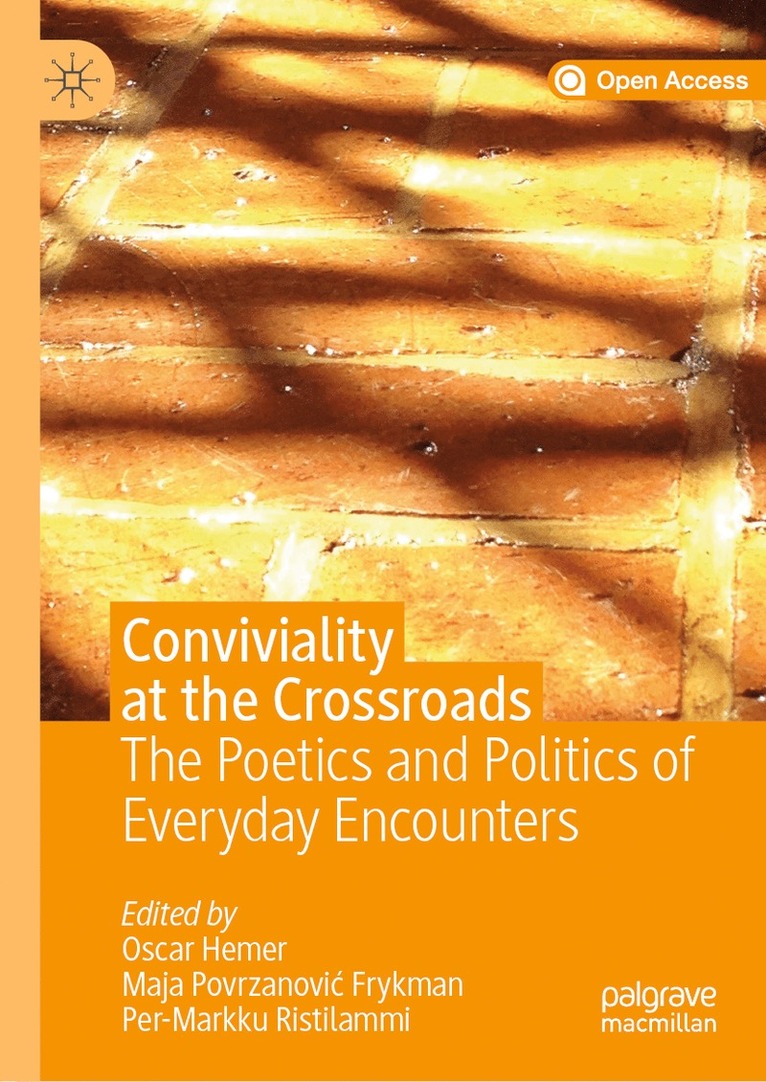
Conviviality at the Crossroads
Oscar Hemer, Maja Povrzanović Frykman, Per-Markku Ristilammi
Inbunden, 2019
409 kr
Conviviality at the Crossroads
Oscar Hemer, Maja Povrzanović Frykman, Per-Markku Ristilammi
Häftad, 2020
409 kr
Hoppa över listan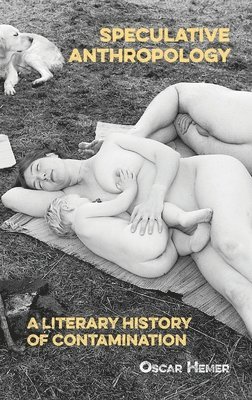
Du kanske också är intresserad av
Conviviality at the Crossroads
Oscar Hemer, Maja Povrzanović Frykman, Per-Markku Ristilammi
Häftad, 2020
409 kr
Conviviality at the Crossroads
Per-Markku Ristilammi, Maja Povrzanovic Frykman, Oscar Hemer
Häftad, 2020
819 kr
Conviviality at the Crossroads
Oscar Hemer, Maja Povrzanović Frykman, Per-Markku Ristilammi
Inbunden, 2019
409 kr