
Del i serien Italian List
Self-Portrait in the Studio
Inbunden, Engelska, 2024
289 kr
Beställningsvara. Skickas inom 5-8 vardagar. Fri frakt för medlemmar vid köp för minst 249 kr.
A rare autobiographical glimpse into the life and influences of one of Europe's greatest living philosophers.This book’s title, Self-Portrait in the Studio—a familiar iconographic subject in the history of painting—is intended to be taken literally: the book is a self-portrait, but one that comes into view for the reader only by way of patient scrutiny of the images, photographs, objects, and paintings present in the studios where the writer has worked and still works. That is to say, Giorgio Agamben’s wager is to speak of himself solely and uniquely by speaking of others: the poets, philosophers, painters, musicians, friends, passions—in short, the meetings and encounters that have shaped his life, thought, and writing, from Martin Heidegger to Elsa Morante, from Herman Melville to Walter Benjamin, from Giorgio Caproni to Giovanni Urbani. For this reason, images are an integral part of the book, images that—like those in a rebus that together form another, larger image—ultimately combine with the written text in one of the most unusual self-portraits that any writer has left of himself: not an autobiography, but a faithful and timeless auto-heterography.
Produktinformation
- Utgivningsdatum2024-11-01
- Mått160 x 193 x 23 mm
- Vikt363 g
- FormatInbunden
- SpråkEngelska
- SerieItalian List
- Antal sidor220
- FörlagSeagull Books London Ltd
- ISBN9781803094656
- ÖversättareKevin Attell
Tillhör följande kategorier
Hoppa över listan
Mer från samma författare
Releasing the Image
Jacques Khalip, Robert Mitchell, Giorgio Agamben, Cesare Casarino, Peter Geimer, Mark Hansen
Häftad, 2011
389 kr
Hoppa över listan


Du kanske också är intresserad av
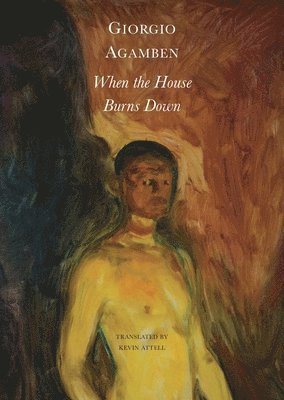
When the House Burns Down – From the Dialect of Thought
Giorgio Agamben, Kevin Attell
Häftad, 2023
209 kr
- Nyhet
Del 3
- Nyhet
Del 11