
Del 142
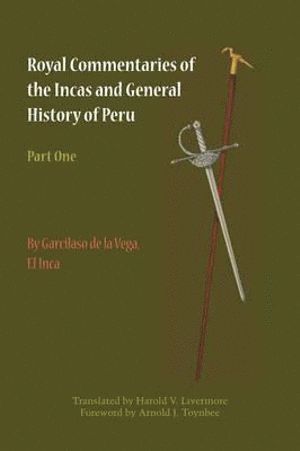
Royal Commentaries of the Incas and General History of Peru, Part Two
Häftad, Engelska, 2014
1 219 kr
Beställningsvara. Skickas inom 5-8 vardagar. Fri frakt för medlemmar vid köp för minst 249 kr.
Garcilaso de la Vega, the first native of the New World to attain importance as a writer in the Old, was born in Cuzco in 1539, the illegitimate son of a Spanish cavalier and an Inca princess. Although he was educated as a gentleman of Spain and won an important place in Spanish letters, Garcilaso was fiercely proud of his Indian ancestry and wrote under the name El Inca.Royal Commentaries of the Incas is the account of the origin, growth, and destruction of the Inca empire, from its legendary birth until the death in 1572 of its last independent ruler. For the material in Part One of Royal Commentaries-the history of the Inca civilization prior to the arrival of the Spaniards-Garcilaso drew upon "what I often heard as a child from the lips of my mother and her brothers and uncles and other elders . . . [of] the origin of the Inca kings, their greatness, the grandeur of their empire, their deeds and conquests, their government in peace and war, and the laws they ordained so greatly to the advantage of their vassals."The conventionalized and formal history of an oral tradition, Royal Commentaries describes the gradual imposition of order and civilization upon a primitive and barbaric world. To this Garcilaso adds facts about the geography and the flora and fauna of the land; the folk practices, religion, and superstitions; the agricultural and the architectural and engineering achievements of the people; and a variety of other information drawn from his rich store of traditional knowledge, personal observation, or speculative philosophy.Important though it is as history, Garcilaso's classic is much more: it is also a work of art. Its gracious and graceful style, skillfully translated by Harold V. Livermore, succeeds in bringing to life for the reader a genuine work of literature.Part Two covers the Spanish conquest of the Incas.
Produktinformation
- Utgivningsdatum2014-12-19
- Mått152 x 229 x 55 mm
- Vikt454 g
- FormatHäftad
- SpråkEngelska
- Antal sidor950
- FörlagUniversity of Texas Press
- ISBN9781477300008
- ÖversättareHarold V. Livermore
Tillhör följande kategorier
- IntroductionPart Two. The Conquest of PeruBook One I. Three noble Spaniards aspire to conquer PeruII. The great and excellent results of the partnership of the three SpaniardsIII. The shortage of coin in Spain before the conquest of PeruIV. The proof of the small quantity of coin in those times compared with the great quantity there is now, continuedV. The cost of the New World to the kings of CastileVI. The value of common things before the conquest of PeruVII. Two opinions about the wealth of Peru; the beginnings of the conquestVIII. Almagro twice returns to Panama for helpIX. Pizarro is abandoned by his men; only thirteen remain with himX. Francisco Pizarro presses on with his conquestXI. Francisco Pizarro and his thirteen companions reach PeruXII. The miracle God wrought at TÚmbezXIII. Pedro de CandÍa reports what he has seen and they all return to PanamaXIV. Pizarro comes to Spain and solicits the right to conquer PeruXV. The hardships suffered by the Spaniards between Panama and TÚmbezXVI. The Spaniards gain the island of Puna and TÚmbezXVII. An embassy with great presents sent by the Inca to the SpaniardsXVIII. The governor sends an embassy to King AtahuallpaXIX. The Inca’s reception of the Spanish embassyXX. The speech of the ambassadors and the Inca’s replyXXI. The two Spaniards return to the rest; they all prepare to receive the IncaXXII. The discourse delivered by Fray Vicente de Valverde before AtahuallpaXXIII. The difficulty of interpreting Fray Vicente’s speech accuratelyXXIV. Atahuallpa’s reply to the friar’s discourseXXV. A great fray between Indians and SpaniardsXXVI. The author compares what he has said with the Spanish historiesXXVII. The Spaniards capture King AtahuallpaXXVIII. Atahuallpa promises a ransom in return for his liberty; the steps taken to collect itXXIX. Hernando Pizarro’s journey to PachacÁmac; the events of the journeyXXX. The demons of Peru are silenced by the sacraments of the Roman Church, our holy MotherXXXI. HuÁscar Inca implores the help of the two scoutsXXXII. The two Spaniards reach Cuzco and find crosses in the temples and palacesXXXIII. The astuteness of Atahuallpa and the death of King HuÁscar IncaXXXIV. Don Diego de Almagro reaches Cajamarca; the signs and fears Atahuallpa has of his approaching endXXXV. Hernando Pizarro comes to Spain to report on the happenings in PeruXXXVI. “The execution of Atahuallpa as a result of deceit and false information”XXXVII. The evidence against AtahuallpaXXXVIII. A stroke of ingenuity by Atahuallpa; the amount of his ransomXXXIX. The opinions expressed by the Spaniards on these eventsXL. The results of the discord between the two brothers, the last Inca kingsXLI. The loyalty of the Peruvian Indians toward the Spaniards who had defeated them in warBook Two I. Don Pedro de Alvarado joins in the conquest of PeruII. The toils undergone by Alvarado and his companions on the wayIII. They carry Atahuallpa’s body to Quito; RumiÑaui’s treacheryIV. RumiÑaui buries alive all the chosen virgins of one of the conventsV. Two skirmishes between Indians and SpaniardsVI. They kill CuÉllar and come to terms with the other prisonersVII. The Spaniards enter Cuzco and find great treasuresVIII. The conversion of an Indian who asked for the true religion of mankindIX. Don Diego de Almagro goes to meet Don Pedro de Alvarado; and BelalcÁzar, to punish RumiÑauiX. The fears and hopes of Almagro, the flight of his interpreter, and the agreement with AlvaradoXI. Almagro and Alvarado go to Cuzco; Prince Manco Inca comes to speak to the governor, who gives him a great receptionXII. The Inca asks for the restoration of his empire; the answer he receivesXIII. The two governors go in quest of the commander QuÍzquizXIV. Three battles between Spaniards and Indians; the number of the deadXV. The governor leaves Cuzco, sees Alvarado, and pays him the sum agreed onXVI. Alvarado’s unfortunate deathXVII. The foundation of Lima and TrujilloXVIII. The commander QuÍzquiz is killed by his own menXIX. Almagro declares himself governor without royal authority; his agreement with the marquisXX. Almagro enters Chile; his army is much weakened; his welcome by the Inca’s representativesXXI. New claims prevent the conquest of Chile; Almagro prepares to return to Peru, and the reason whyXXII. Almagro abandons Chile and returns to Cuzco; Prince Manco Inca again asks for the return of his empire, and the answer given him; Hernando Pizarro’s arrival in Peru; and the arrest of the IncaXXIII. The measures taken by Prince Manco Inca to recover his empireXXIV. Prince Manco Inca’s rising; two miracles on behalf of the ChristiansXXV. A miracle of Our Lady on behalf of the Christians; and a duel between two IndiansXXVI. The Spaniards win the fortress, but the good Juan Pizarro is killedXXVII. The deeds of Indians and Spaniards during the siege of CuzcoXXVIII. The number of Spaniards killed by the Indians on the roads, and the events of the siege of LimaXXIX. The flight of UÍllac Umu; the punishment of the interpreter Felipe; Prince Manco Inca abandons his empireXXX. An author on the Inca kings and their vassalsXXXI. Differences between the Almagros and the Pizarros; arrest of Hernando PizarroXXXII. Hardships undergone by Garcilaso de la Vega and his companions in the discovery of BuenaventuraXXXIII. Alonso de Alvarado goes to succor Cuzco; the events of the journeyXXXIV. The battle of the river AmÁncay and capture of Alonso de Alvarado and his followersXXXV. The marquis appoints captains for the war; Gonzalo Pizarro escapes from prison; the sentence of the judges on the question of the jurisdictions; the interview of the two governors and the release of Hernando PizarroXXXVI. Comments on the foregoing; Hernando Pizarro attacks AlmagroXXXVII. The bloody battle of Las SalinasXXXVIII. The lamentable events that took place after the battle of Las SalinasXXXIX. The lamentable death of Don Diego de AlmagroXL. The captains who went out on new conquests; the return to Spain of Henando Pizarro and his long imprisonmentBook Three I. The conquest of Los Charcas, and some battles between Indians and SpaniardsII. The marquis divides the kingdom and province of Los Charcas, and Gonzalo Pizarro goes to the conquest of the land of CinnamonIII. The hardships of Gonzalo Pizarro and his followers; how they made a wooden bridge and a brigantine to cross a large riverIV. Francisco de Orellana rebels, seizes the brigantine, and sails to Spain to claim this conquest; his deathV. Gonzalo Pizarro seeks to return to Cuzco; the Chilean party plans to kill the marquisVI. A provocation drives the Chileans to kill the marquis; how they perpetrate the deedVII. The death of the marquis and his poor funeralVIII. “On the customs and qualities of the marquis Don Francisco Pizarro and the adelantado Don Diego de Almagro”IX. The affability of the marquis; his inventions for succoring those he felt to be in needX. Almagro the younger has himself sworn in as governor of Peru; he sends instructions to various parts of the kingdom; they are defiedXI. Steps taken by the vecinos of Cuzco in the king’s service, and those adopted by Don Diego; the appointment in Spain of Vaca de Castro to be judge of the events of PeruXII. The people of Lima and other places accept Vaca de Castro as their governor; HolguÍn and his men deceive Don Diego de Almagro and join Don Alonso de AlvaradoXIII. The governor chooses captains; he sends his army forward, and takes other necessary steps in His Majesty’s interest; the death of CristÓbal de Sotelo at the hands of GarcÍa de Alvarado, and that of GarcÍa de Alvarado by Don Diego de AlmagroXIV. Almagro goes out in search of the governor; and Gonzalo Pizarro leaves La Canela after having undergone incredible hardshipsXV. Gonzalo Pizarro enters Quito; he writes to the governor offering his person and his men; the answer; the terms offered by the governor to Don Diego de AlmagroXVI. The manner in which Vaca de Castro and Almagro order their forces; the beginning of the battle; the death of Captain Pedro de CandÍaXVII. The cruel battle of Chupas continues; a miscalculation by Don Diego’s followers; the victory of the governor and flight of Don DiegoXVIII. The names of the leading gentlemen who were in the battle; the number of the dead; the punishment of the guilty and the death of Don Diego de AlmagroXIX. The good government of Licentiate Vaca de Castro; peace and quiet in Peru; the cause of the disturbances thereXX. New laws and ordinances made in the court of Spain for the two empires of Mexico and PeruXXI. The ministers who went to Mexico and Peru to put the ordinances into execution; and the description of the imperial city of MexicoXXII. They elect persons to appeal against the ordinances, which are proclaimed publicly; the disapproval and disturbances resulting from them, and how they are put down, and the successful issue brought about by the prudence and wisdom of the visitor in the whole empire of MexicoBook Four I. The doings of Viceroy Blasco NÚÑez Vela on his arrival in Tierra Firme and on the confines of PeruII. Licentiate Vaca de Castro goes to Lima and takes leave of his companions on the way; the disturbance caused by the news of the execution of the ordinances and the insubordinate talk that ensuesIII. What was said in Peru about the formulators of the ordinances, and especially about Licentiate BartolomÉ de las CasasIV. The reasons for their complaints adduced by the victims of the ordinances; how they prepare to receive the viceroyV. The viceroy’s reception; the arrest of Vaca de Castro; the public scandal and the passions aroused in the viceroy and the restVI. The secret discord between the viceroy and the judges becomes public; Prince Manco Inca and the Spaniards with him write to the viceroyVII. The unfortunate death of Prince Manco Inca; the disturbances among the Spaniards about the ordinancesVIII. The disturbances continue; four cities write to Gonzalo Pizarro; he is elected procurator general of Peru and raises men to take to LimaIX. Gonzalo Pizarro appoints captains and leaves Cuzco with his army; the viceroy summons men, chooses captains, and arrests Licentiate Vaca de Castro and other leading menX. Two vecinos of Arequipa take two of Gonzalo PizarrÓn ships to the viceroy; the vecinos of Cuzco flee from Pizarro’s armyXI. How Pedro de Puelles rebels against Blasco NÚÑez Vela and goes over to Gonzalo Pizarro, and others whom the viceroy sends after him do the sameXII. Pardon and safe conduct for Gaspar RodrÍguez and his friends; his death and that of some othersXIII. The death of the factor IllÉn SuÁrez de Carvajal and the scandal and unrest it causes throughout PeruXIV. The various decisions of the viceroy in the face of Gonzalo Pizarro’s advance on Lima; the open opposition of the judgesXV. The arrest of the viceroy and its results on land and at seaXVI. Lamentable occurrences with the viceroy; a plot in Lima against the judges, and its results; the viceroy’s releaseXVII. The judges send a summons to Gonzalo Pizarro; the unfortunate fate of the vecinos who had fled from himXVIII. Gonzalo Pizarro approaches Lima; the death of some of the leading citizens because the judges delayed appointing him governorXIX. Pizarro is named governor of Peru; his entry into Lima; the death of Captain Gumiel; the release of the vecinos of CuzcoXX. The festivities and rejoicings of the Pizarrists; a general pardon granted to those who had fled; the place where Garcilaso de la Vega had withdrawn and how he obtained pardon from Gonzalo PizarroXXI. The punishment of a profanation of the Blessed Sacrament, and of some blasphemies; Pizarro and his friends appoint procurators to come to SpainXXII. Gonzalo Pizarro’s anger at the escape of Vaca de Castro; Bachicao goes to Panama; and the viceroy issues orders calling up soldiersXXIII. Bachicao’s doings in Panama; Licentiate Vaca de Castro comes to Spain; the end of his affairs; the viceroy retires to QuitoXXIV. Two captains of Pizarro’s behead three of the viceroy’s; he avenges them by force of arms; Gonzalo embarks for the city of TrujilloXXV. Gonzalo Pizarro’s great precautions crossing a desert; he comes within sight of the viceroy, who retreats to Quito; Lorenzo de Aldana’s prudence and good governmentXXVI. Gonzalo and his captains pursue the viceroy; the hunger and hardship experienced by both sides; the violent deaths of the viceroy’s commander and captainsXXVII. The death of Francisco de Almendras; the rising of Diego Centeno; Alonso de Toro resists him, and the long chase after himXXVIII. Centeno sends his men after Alonso de Toro; suspicions of disorders in Lima; Lorenzo de Aldana pacifies them; Pizarro sends his commander Francisco de Carvajal to Los Charcas; his deeds on the wayXXIX. Carvajal pursues Centeno; he commits a strange act of cruelty against a soldier; a trick another played on himXXX. Gonzalo pursues the viceroy and expels him from Peru; Pedro de Hinojosa goes to Panama with Pizarro’s fleetXXXI. Pedro de Hinojosa arrests Vela NÚÑez on the way; the preparations made to resist him in Panama, and how the fire was quelledXXXII. What Melchor Verdugo did at Trujillo, Nicaragua, and Nombre de Dios; how he was expelled from the last-named cityXXXIII. Blasco NÚÑez Vela reforms his army at PopayÁn; Gonzalo Pizarro pretends to go to Quito [Los Charcas] to drive him out; the viceroy pursues Pedro de PuellesXXXIV. The beginning of the battle of Quito, in which the viceroy is defeated and killedXXXV. The viceroy’s burial; Gonzalo Pizarro’s actions after the burial; he spares Vela NÚÑez; the good laws he makes for the administration of the empireXXXVI. A brave strategem employed by Centeno against Francisco de Carvajal; other occurrences until the end of this campaignXXXVII. The affairs of Lope de Mendoza; the kinds of poison used by the Indians for their arrows; how Lope de Mendoza returned to PeruXXXVIII. The stratagems of Carvajal, whereby he defeats and kills Lope de Mendoza, and goes to Los CharcasXXXIX. Carvajal sends Lope de Mendoza’s head to Arequipa; a woman’s saying; a revolt against Carvajal and his punishment of itXL. What Carvajal wrote and said to Gonzalo on the question of his becoming king of Peru; the persuasions of others on this matterXLI. The respect of Gonzalo Pizarro for the royal service; he leaves Quito and goes to Trujillo and Lima; the celebrations on his arrivalXLII. The author says how Gonzalo Pizarro treated his friends; he tells of the death of Vela NÚÑez and the arrival of Francisco de Carvajal in Lima, and his receptionBook Five I. The selection of Licentiate Pedro de la Gasca by the emperor Charles V to restore order in PeruII. The powers taken by Licentiate La Gasca; his arrival at Santa Marta and Nombre de Dios; his reception and the events and negotiations that occurred thereIII. The president sends HernÁn MejÍa to Panama to pacify Hinojosa, and despatches an ambassador to Gonzalo Pizarro, who, on learning of the president’s arrival, sends ambassadors to the emperorIV. The ambassadors reach Panama; they and those already there repudiate Gonzalo and deliver their fleet to the president; Paniagua reaches LimaV. Consultations about the revocation of the ordinances and the pardon for past offences; the secret messages given to Paniagua, and Gonzalo Pizarro’s replyVI. The death of Alonso de Toro; Diego Centeno comes forth from his cave, and other captains rally to serve His Majesty; Gonzalo burns his ships; Carvajal’s remarks on the subjectVII. The president leaves Panama and reaches TÚmbez; Aldana reaches the valley of Santa; he sends spies out against Gonzalo, who appoints captains and pays them; a suit against the presidentVIII. Gonzalo sends Juan de Acosta against Aldana; they lie in wait for one another; the death of Pedro de PuellesIX. A single combat over the death of Puelles; Centeno’s entry into Cuzco and his fight with Pedro MaldonadoX. A remarkable result of Pedro Maldonado’s fight; the death of Antonio de Robles; the election of Diego Centeno as captain general; the reduction of Lucas MartÍn to the royal service; the agreement between Alonso de Mendoza and CentenoXI. The president reaches TÚmbez; the measures he takes there; Gonzalo sends Juan de Acosta against Centeno; Aldana approaches Lima, and Gonzalo takes an oath of loyalty from his followersXII. Hostages are exchanged, with trickery on both sides; many leading men desert GonzaloXIII. MartÍn de Robles uses a trick and fleesXIV. The flight of Licentiate Carvajal and that of Gabriel de Rojas, and many other vecinos and famous soldiersXV. Lima declares for His Majesty; Aldana lands; a great disturbance in the cityXVI. Acosta’s captains and soldiers flee; Gonzalo Pizarro reaches Huarina, and sends a message to Centeno; the replyXVII. Centeno writes to the president by Gonzalo’s own messenger; Gonzalo’s despair; the president reaches Jauja where he finds Francisco VossoXVIII. Pizarro decides to give battle; he sends Acosta to make a night attack; Centeno draws up his men and Pizarro does likewiseXIX. The battle of Huarina; Carvajal’s stratagem, and the personal deeds of Gonzalo Pizarro and other famous knightsXX. The cruel battle of Huarina continues; individual feats of arms; Gonzalo Pizarro’s victoryXXI. The dead and wounded on both sides, and other occurrences; what Carvajal did after the battleXXII. Pizarro has the dead buried, and sends officials in various directions; the flight of Centeno, and incidents among the vanquishedXXIII. The author quotes authorities for what he has said; and in case he is not believed, takes pride in what the historians say about his fatherXXIV. What Juan de la Torre did in Cuzco, and what other bad officials did in various placesXXV. What Carvajal did in Arequipa in gratitude for the benefits he had received from Miguel Cornejo years beforeXXVI. The president’s distress and that of his army at Gonzalo Pizarro’s victory; the new measures he takesXXVII. Licentiate Cepeda and others persuade Gonzalo Pizarro to ask for peace and make terms with the president; his reply; the death of Hernando Bachicao; Gonzalo’s entry into CuzcoXXVIII. The capture and death of Pedro de Bustincia; the captains selected by the president; how he leaves Jauja and comes to AntahuaillaXXIX. The leading men, captains, and soldiers, who repair to Antahuailla to serve His Majesty; the rejoicings that take place thereXXX. The army leaves Antahuailla; it crosses the river AbÁncay; the difficulty of crossing the river ApurÍmac; a project to make four bridges; a plan of Carvajal’s rejected by Gonzalo PizarroXXXI. Lope Martim throws three cables of the bridge across the stream; Gonzalo’s scouts cut two of them; the disturbance in the royal army; Carvajal recommends Juan de Acosta to defend the river crossingXXXII. The president reaches the river ApurÍmac; the difficulties and dangers with which they cross it; Juan de Acosta comes out to defend the crossing; his carelessness and negligence with regard to the whole expeditionXXXIII. Gonzalo announces his departure from Cuzco; Carvajal tries to prevent this, recalling a prophecy about his life; the president marches toward Cuzco, and the opposing army comes out to meet himXXXIV. The two armies reach Sacsahuana; Gonzalo’s distrust of Centeno’s men incorporated in his army, and the president’s confidence that many will desert to him; Pizarro’s request and protestations and La Gasca’s reply; they decide to give battle; the array of the royal armyXXXV. The events of the battle of Sacsahuana up to the defeat of Gonzalo PizarroXXXVI. Gonzalo Pizarro surrenders, as this seems less shameful than flight; his conversation with the president; the capture of Francisco de CarvajalXXXVII. What happens between Francisco de Carvajal and Diego Centeno and the president; the capture of the other captainsXXXVIII. Francisco de Carvajal’s visitors while he is under arrest; his conversations with those who come to triumph over himXXXIX. The captains who were executed, and how their heads were taken to various parts of PeruXL. What Francisco de Carvajal said and did on the day of his death; what the authors say of his character and military skillXLI. Francisco de Carvajal’s dress; some of his stories and jestsXLII. Other similar anecdotes; the last of which tells of what happened to a boy with one of Carvajal’s quartersXLIII. How Gonzalo Pizarro was beheaded; the charity he asked for at the hour of his death; his character and good qualitiesBook Six I. New measures by the president for the punishment of the rebels; the scandal caused among the Indians by the sight of Spaniards being whipped; the harassing of the president by the claimants, and his departure from the city to carry out the allocationII. After making the allocation, the president goes secretly to Lima; he writes a letter to the unlucky claimants, which drives them to desperate deedsIII. Marriages of claimants with widows; the allocations given to Pedro de Hin ojosa and his companions; the surprise of the recipientsIV. Francisco HernÁndez GirÓn unreasonably takes great offence at the distribution, and is granted a commission to explore and make new conquests; the punishment of Francisco de Espinosa and Diego de CarvajalV. Pedro de Valdivia is given the governorship of Chile; the conditions imposed on him by his followers, and the president’s ingenuity in releasing himVI. The unfortunate death of Diego Centeno in Charcas, and of Licentiate Carvajal in Cuzco; the foundation of the city of La Paz; the establishment of the audiencia at LimaVII. The preoccupations and labors of President La Gasca; the suppression of a rising; his patience in the face of insulting words applied to him; his skill and ingenuity in holding off the claimantsVIII. The cause of the risings in Peru; the delivery of the galley slaves to Rodrigo NiÑo to bring to Spain; his great ingenuity and cunning in escaping from a pirateIX. All Rodrigo NiÑo’s galley slaves take flight, and he drives off one who remains behind with his dagger; the penalty for this, and the favor shown by Prince MaximilianX. The second distribution is published; the president leaves for Spain; the death of Licentiate Cepeda; the arrival of the president in PanamaXI. “What happened to Hernando and Pedro de Contreras, who were in Nicaragua and went in pursuit of the president”XII. The amateurishness and folly of the Contreras which lost them their treasure and their lives; the pains and ingenuity of their enemies in seeking their punishment and deathXIII. The president recovers his lost treasure, punishes the guilty, and reaches Spain, where he finishes his life happilyXIV. Francisco HernÁndez GirÓn announces his expedition; many soldiers hasten to join it; they cause a great disturbance and rising in Cuzco which is pacified by the prudence and good sense of some of the citizensXV. Juan Alonso Palomino and JerÓnimo Costilla flee from Cuzco; Francisco HernÁndez GirÓn appears before the royal audiencia, and returns to Cuzco a free man and married; the story of another ris ing in CuzcoXVI. The judges of the audiencia send a new corregidor to Cuzco, who executes justice on the rebels; the causes of these risings set forthXVII. The arrival of Viceroy Don Antonio de Mendoza in Peru; he sends his son Don Francisco to visit the country as far as Charcas, and sends him to Spain with a report on it; a severe sentence by a judgeXVIII. The vengeance Aguirre obtains for the wrong done him, and the pains the corregidor takes to lay hands on him; how Aguirre escapesXIX. Many citizens go to kiss the viceroy’s hand; an incident with a gossip; a revolt in Lima and its punishment; the death of the viceroy and the scandals that followXX. Disturbances in the province of Charcas, and many private quarrels, one of which is recounted in particularXXI. A single combat between MartÍn de Robles and Pablo de Meneses; the satisfaction given in it; Pedro de Hinojosa’s departure for Charcas; the great number of soldiers he found ready for a rising; the warning given the corregidor; the vain hopes with which he entertained the soldiersXXII. Many other warnings conveyed to the general in various ways; his bold words and lukewarmness; the soldiers plot to kill himXXIII. Don SebastiÁn de Castilla and his companions kill the corregidor Pedro de Hinojosa and his deputy Alonso de Castro; some of the citizens flee and others are arrested; the officers appointed by the rebelsXXIV. Precautions and measures taken by Don SebastiÁn; his instructions to Egas de GuzbÁn to rebel in PotosÍ and the strange events that took place thereXXV. Don SebastiÁn and his officers send captains and soldiers to kill the marshal; Juan RamÓn, their leader, disarms Don GarcÍa and his supporters; at this news Don SebastiÁn is killed by those who made him their leaderXXVI. The election of civil and military officers; Vasco GodÍnez’s election as general; the death of Don GarcÍa and many others without confessionXXVII. The events of PotosÍ; Egas de GuzmÁn drawn and quartered, and other excesses committed by the soldiers; the death of many famous men; preparations in Cuzco against the rebelsXXVIII. The royal audiencia appoints Marshal Alonso de Alvarado as judge to punish the rebels; the judge’s measures and those taken by the soldiers; the arrest of Vasco GodÍnez and other soldiers and citizensXXIX. The judge punishes many rebels in the city of La Paz and in the fort at PotosÍ, condemning them to death, the lash, and the galleys; he does the same in Silver City; the sentence and death of Vasco GodÍnezBook Seven I. On hearing of the severe punishments administered in Charcas, Francisco HernÁndez GirÓn conspires to rebelII. Francisco HernÁndez rebels in Cuzco; the events of the night of the rebellion; the flight of many citizens from the cityIII. Francisco HernÁndez arrests the corregidor, goes out into the square, releases the prisoners from jail, and has Don Baltasar de Castilla and the treasurer Juan de CÁceres killedIV. Francisco HernÁndez appoints a commander and captains of his army; two cities send envoys to him; the number of citizens who fled to LimaV. Letters written to the rebel leader; he banishes the corregidor from CuzcoVI. Francisco HernÁndez has himself elected procurator and captain general of the empire; the royal judges appoint officers for the war; and the marshal does the sameVII. The captains and officials nominated by the royal judges for the war; candidates for the position of captain general; Francisco HernÁndez leaves Cuzco to oppose the judgesVIII. Juan de Vera de Mendoza flees from Francisco HernÁndez; the people of Cuzco go off to join the marshal; Sancho Duarte recruits men and makes himself their general; the marshal puts him down; Francisco HernÁndez reaches Huamanga; the scouts of the two sides meetIX. Three of the king’s captains capture a rebel captain and forty men, and hand them over to one of the royal judges; Francisco HernÁndez decides to attack the royal army; many of his followers desert.X. Francisco HernÁndez withdraws with his army; much confusion of purpose in His Majesty’s camp; a revolt in the city of Piura and how it endedXI. Misfortunes of both armies; the death of NuÑo Mendiola, a captain on Francisco HernÁndez’s side, and of Lope Martim, a captain on His Majesty’s sideXII. The royal judges send men to help Pablo de Meneses; Francisco HernÁndez turns on him and delivers a fierce attack; the unlucky death of Miguel Cornejo; the loyalty of a horse to its ownerXIII. The judges dismiss the two generals; Francisco HernÁndez reaches Nanasca; a double spy brings him much information; the rebel leader raises a force of NegroesXIV. The marshal picks captains for his army; he reaches Cuzco and gives pursuit to Francisco HernÁndez; the unfortunate death of Captain Diego de AlmendrasXV. The marshal is warned of the enemies’ approach and sends men out to oppose them; a skirmish between the two forces takes place, and all those on the king’s side decide against giving battleXVI. Juan de Piedrahita raids the marshal’s camp; Rodrigo de Pineda goes over to the king’s side and persuades the marshal to give battle; the clash of opinions about this; the marshal’s determination to fightXVII. The marshal disposes his men for battle; Francisco HernÁndez disposes his defences; incidents in the struggle; the deaths of many prominent menXVIII. Francisco HernÁndez is victorious; the marshal and his men take flight from the scene of the battle; many of them are killed by Indians on the wayXIX. The scandal caused in His Majesty’s camp by the marshal’s defeat; the steps taken by the royal judges to repair the damage; their disagreements about whether to accompany the royal army or not; the flight of a rebel captain to the king’s sideXX. What Francisco HernÁndez does after the battle; he sends officers to various parts of the kingdom to sack the cities; the silver stolen from the citizens of CuzcoXXI. The theft committed by Antonio Carrillo and his death; the deeds of Piedrahita at Arequipa; his victory, owing to the divisions of the people thereXXII. Francisco HernÁndez avoids entering Cuzco; he takes his wife with himXXIII. The royal army crosses the AbÁncay River and the ApurÍmac with unexpected ease; its scouts reach the city of CuzcoXXIV. His Majesty’s army enters Cuzco and continues beyond the city; how the Indians carried the artillery on their backs; part of the munitions reaches the royal armyXXV. His Majesty’s army reaches the enemy’s stronghold; it camps on a flat piece of ground and fortifies its positions; skirmishes occur and the royalists suffer reversesXXVI. Tricks of disloyal soldiers; Piedrahita raids the royal army; Francisco HernÁndez decides to do battle with the royal judges; their precautionsXXVII. Francisco HernÁndez goes out to do battle; he retreats as the attack miscarries; TomÁs VÁsquez goes over to the royal forces; a prophecy made by the rebel leaderXXVIII. Francisco HernÁndez flees alone; his commander with more than a hundred men takes another route; General Pablo de Meneses pursues them, captures them, and executes justice on themXXIX. The commander Don Pedro Puertocarrero goes in search of Francisco HernÁndez; two other captains set out with the same purpose by another road; they capture the rebel and take him to Lima, which they enter as if in triumphXXX. The royal judges appoint corregidors; they have difficult interviews with importunate soldiers; they execute Francisco HernÁndez GirÓn; his head is placed on the municipal pillar; a gentleman steals it, with those of Gonzalo Pizarro and Francisco de Carvajal; the strange death of Baltasar VelÁzquezBook Eight I. How the Indians and Spaniards celebrated the feast of the Holy Sacrament in Cuzco; a private quarrel among the Indians at one of these feastsII. A remarkable event that occurred in CuzcoIII. The election of the marquis of CaÑete as viceroy of Peru; his arrival at Tierra Firme; the fugitive Negroes are recaptured; the burning of a galleon with eight hundred people aboardIV. The viceroy reaches Peru; his appointment of new officials; he writes letters to the corregidorsV. The precautions taken by the viceroy to prevent risings and revolts; the execution of TomÁs VÁzquez, Piedrahita, and Alonso DÍaz for having followed Francisco HernÁndez GirÓnVI. The arrest and death of MartÍn de Robles and the reason why he is killedVII. How the viceroy deals with claimants of rewards for their services; how he sends thirty-seven of them in exile to Spain as envious and disloyal schemersVIII. The viceroy tries to bring the Inca prince, the heir to the empire, out from the forests, and reduce him to His Majesty’s service; the negotiations for this purposeIX. The suspicion and fears of the prince’s governors about the Christian embassy; their cunning and devices to assure themselvesX. The prince s governors consult their omens and prophecies about his departure; opinions differ; the Inca decides to go; he arrives at Lima and is received by the viceroy; the Inca’s reply to the grant for his sustenanceXI. Prince Sairi TÚpac returns to Cuzco where his people receive him with rejoicing; he and the princess are baptized; the name he takes and the visits he pays in the cityXII. The viceroy raises a permanent force of infantry and cavalry for the security of the empire; the natural deaths of four of the conquerorsXIII. Concerns the claimants who came in exile to Spain and the great rewards conferred on them by His Majesty; Don GarcÍa de Mendoza goes as governor to Chile, and his adventure with the IndiansXIV. The heirs of those slain for their share in Francisco HernÁndez GirÓn’s revolt receive their Indians; the departure of Pedro de OrsÚa for the conquest of the Amazon; his end and death and that of many of his companionsXV. The count of Nieva elected viceroy of Peru; a message sent by him to his predecessor; the death of the marquis of CaÑete and of the count of Nieva; the arrival of Don GarcÍa de Mendoza in Spain; the election of Licentiate Castro as governor of PeruXVI. The appointment of Don Francisco de Toledo as viceroy of Peru; the causes of his persecution of Prince Inca TÚpac Amaru, and the arrest of this poor princeXVII. The trial of the prince and the Incas of the royal blood, and of the mestizos, the children of the conquerors of the empire by Indian womenXVIII. The exile of the Indians of the royal blood and the mestizos; their deaths and end; the sentence pronounced on the prince, his reply, and how he receives holy baptismXIX. The execution of the sentence against the prince; the consultations to prevent it; the viceroy refuses to heed them; the courageous death of the IncaXX. The coming of Don Francisco de Toledo to Spain; he is rebuked by His Catholic Majesty; his end and death; the death of Governor MartÍn GarcÍa LoyolaXXI. End of the Eighth Book, the last of this historyIndex
Hoppa över listan
Mer från samma författare
Royal Commentaries of the Incas and General History of Peru, Part One
Garcilaso de la Vega
Häftad, 1987
939 kr
Royal Commentaries of the Incas and General History of Peru, Abridged
Garcilaso De La Vega, Karen Spalding
Inbunden, 2006
809 kr
Expeditions Into the Valley of the Amazons, 1539, 1540, 1639
Clements Robert Markham, Garcilaso De La Vega, Antonio Herrera y De Tordesillas
Inbunden, 2022
519 kr
Expeditions Into the Valley of the Amazons, 1539, 1540, 1639
Clements Robert Markham, Garcilaso De La Vega, Antonio Herrera y De Tordesillas
Häftad, 2022
359 kr
Hoppa över listan


Du kanske också är intresserad av
Royal Commentaries of the Incas and General History of Peru, Part One
Garcilaso de la Vega
Häftad, 1987
939 kr
Royal Commentaries of the Incas and General History of Peru, Abridged
Garcilaso De La Vega, Karen Spalding
Inbunden, 2006
809 kr
Histoire des guerres civiles des espagnols dans les Indes. Tome 3
Garcilaso de la Vega
Häftad, 2018
419 kr
Histoire des guerres civiles des espagnols dans les Indes. Tome 1
Garcilaso de la Vega
Häftad, 2018
529 kr
Histoire des guerres civiles des espagnols dans les Indes. Tome 4
Garcilaso de la Vega
Häftad, 2018
469 kr
Histoire des guerres civiles des espagnols dans les Indes. Tome 2
Garcilaso de la Vega
Häftad, 2022
469 kr
- Nyhet
Del 3
- Nyhet
Del 11