
Rope, the Chair, and the Needle
Capital Punishment in Texas, 1923-1990
Häftad, Engelska, 1998
419 kr
Beställningsvara. Skickas inom 10-15 vardagar. Fri frakt för medlemmar vid köp för minst 249 kr.
In late summer 1923, legal hangings in Texas came to an end, and the electric chair replaced the gallows. Of 520 convicted capital offenders sentenced to die between 1923 and 1972, 361 were actually executed, thus maintaining Texas’ traditional reputation as a staunch supporter of capital punishment.This book is the single most comprehensive examination to date of capital punishment in any one state, drawing on data for legal executions from 1819 to 1990. The authors show persuasively how slavery and the racially biased practice of lynching in Texas led to the institutionalization and public approval of executions skewed according to race, class, and gender, and they also track long-term changes in public opinion up to the present.The stories of the condemned are masterfully interwoven with fact and interpretation to provide compelling reading for scholars of law, criminal justice, race relations, history, and sociology, as well as partisans on both sides of the debate.
Produktinformation
- Utgivningsdatum1998-07-01
- Mått152 x 229 x 20 mm
- Vikt399 g
- FormatHäftad
- SpråkEngelska
- Antal sidor295
- FörlagUniversity of Texas Press
- ISBN9780292752139
Tillhör följande kategorier
Hoppa över listan






Mer från samma författare
Life Without Parole and Medically Assisted Death
James W. Marquart, Joshua S. Long
Inbunden, 2026
1 339 kr
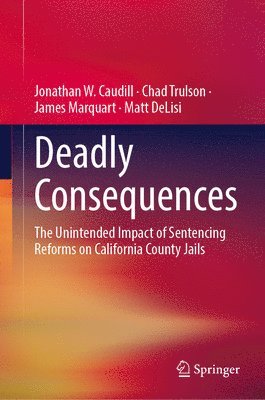
Deadly Consequences
Jonathan W. Caudill, Chad R. Trulson, James W. Marquart, Matt DeLisi
Inbunden, 2025
1 719 kr
Deadly Consequences
Jonathan W. Caudill, Chad R. Trulson, James W. Marquart, Matt DeLisi
Häftad, 2026
1 219 kr
Hoppa över listan

Du kanske också är intresserad av
Life Without Parole and Medically Assisted Death
James W. Marquart, Joshua S. Long
Inbunden, 2026
1 339 kr
Deadly Consequences
Jonathan W. Caudill, Chad R. Trulson, James W. Marquart, Matt DeLisi
Häftad, 2026
1 219 kr
Deadly Consequences
Jonathan W. Caudill, Chad R. Trulson, James W. Marquart, Matt DeLisi
Inbunden, 2025
1 719 kr