
Del i serien Early Social Performance
Ritual, Spectacle, and Theatre in Late Medieval Seville
Performing Empire
Inbunden, Engelska, 2023
2 819 kr
Beställningsvara. Skickas inom 5-8 vardagar. Fri frakt för medlemmar vid köp för minst 249 kr.
From the fall of Islamic Išbīliya in 1248 to the conquest of the New World, Seville was a nexus of economic and religious power where interconfessional living among Christians, Jews, and Muslims was negotiated on public stages. From out of seemingly irreconcilable ideologies of faith, hybrid performance culture emerged in spectacles of miraculous transformation, disciplinary processionals, and representations of religious identity.Ritual, Spectacle, and Theatre in Late Medieval Seville reinvigorates the study of medieval Iberian theatre by revealing the ways in which public expressions of devotion, penance, and power fostered cultural reciprocity, rehearsed religious difference, and ultimately helped establish Seville as the imperial centre of Christian Spain.
Produktinformation
- Utgivningsdatum2023-10-31
- Mått152 x 229 x 18 mm
- Vikt408 g
- FormatInbunden
- SpråkEngelska
- SerieEarly Social Performance
- Antal sidor184
- FörlagArc Humanities Press
- ISBN9781802700855
- UtmärkelserWinner of David Bevington Award, Medieval and Renaissance Drama Society 2024 (United States)
Tillhör följande kategorier
Hoppa över listan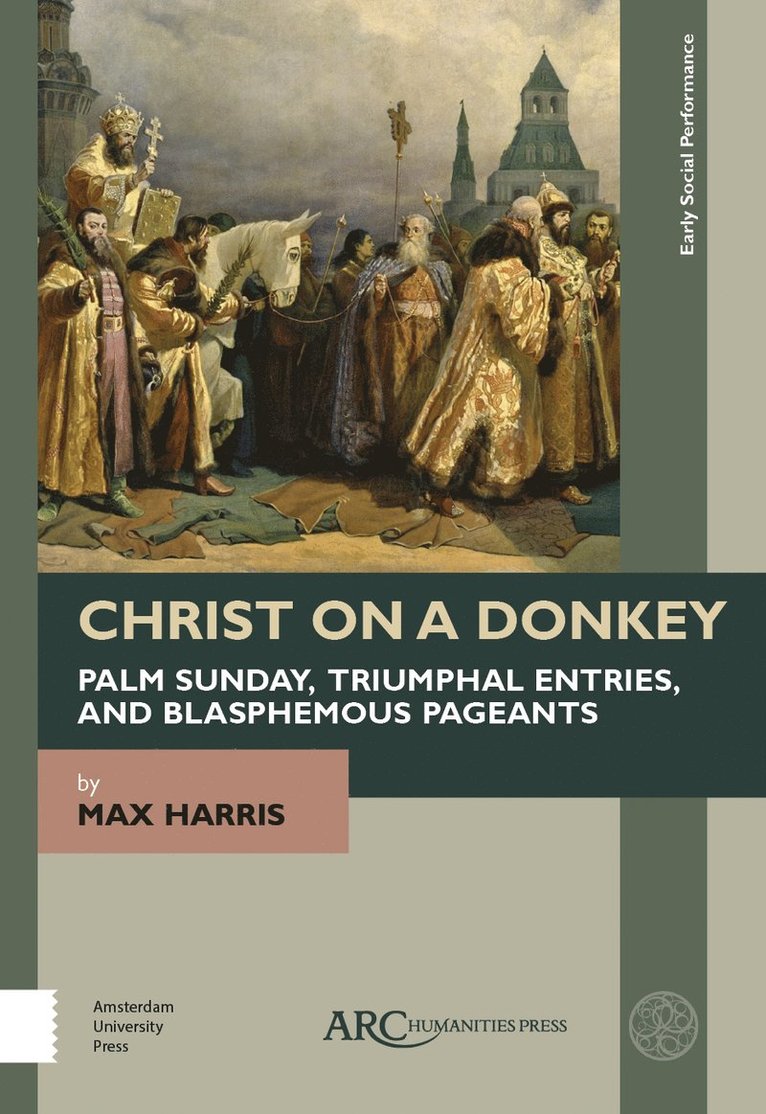

Mer från samma serie
Christ on a Donkey – Palm Sunday, Triumphal Entries, and Blasphemous Pageants
Max Harris
Inbunden, 2019
3 159 kr
Christ on a Donkey – Palm Sunday, Triumphal Entries, and Blasphemous Pageants
Max Harris
Häftad, 2021
689 kr
Early Performers and Performance in the Northeast of England
Diana Wyatt, John McKinnell
Inbunden, 2021
2 889 kr
Hoppa över listan
Du kanske också är intresserad av
Christ on a Donkey – Palm Sunday, Triumphal Entries, and Blasphemous Pageants
Max Harris
Häftad, 2021
689 kr
Early Performers and Performance in the Northeast of England
Diana Wyatt, John McKinnell
Inbunden, 2021
2 889 kr