
Religion within the Limits of History Alone
Pragmatic Historicism and the Future of Theology
Inbunden, Engelska, 2020
1 999 kr
Beställningsvara. Skickas inom 3-6 vardagar. Fri frakt för medlemmar vid köp för minst 249 kr.
Finns i fler format (1)
Shows that pragmatic historicism is a significant intellectual tradition in the history of American religious and philosophical thought.Among the greatest challenges facing religious thinkers today is that created by historicism, the notion that human beings and their myriad understandings of reality are utterly historical, conditioned by contingent circumstances and tied to particular contexts. In this book, Demian Wheeler confronts the historicist challenge by delineating and defending a particular trajectory of historicist thought known as pragmatic historicism. Rooted in the German Enlightenment and fully developed within the early Chicago school of theology, pragmatic historicism is a predominantly American tradition that was philosophically nurtured by classical pragmatism and its intellectual siblings, naturalism and radical empiricism. Religion within the Limits of History Alone not only undertakes a detailed genealogy of this pragmatic historicist lineage but also sets forth a constructive program for contemporary theology by charting a path for its future development. Wheeler shows that pragmatic historicism is an underdeveloped resource for contemporary theology since it offers a model for normative religious thought that is theologically compelling yet wholly nonsupernaturalistic, deeply pluralistic, unflinchingly liberal, and radically historicist.
Produktinformation
- Utgivningsdatum2020-09-01
- Mått152 x 229 x 35 mm
- Vikt762 g
- FormatInbunden
- SpråkEngelska
- Antal sidor528
- FörlagState University of New York Press
- ISBN9781438479330
Tillhör följande kategorier
Hoppa över listan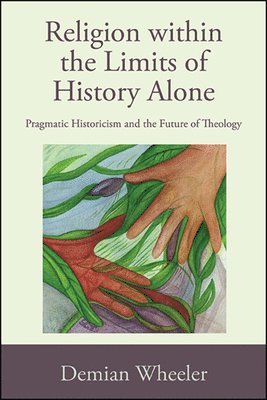









Du kanske också är intresserad av
- Nyhet
Del 3
- Nyhet
Del 11
- Nyhet
- Nyhet
Del 6
- Nyhet
Del 4
Del 1
Del 3