
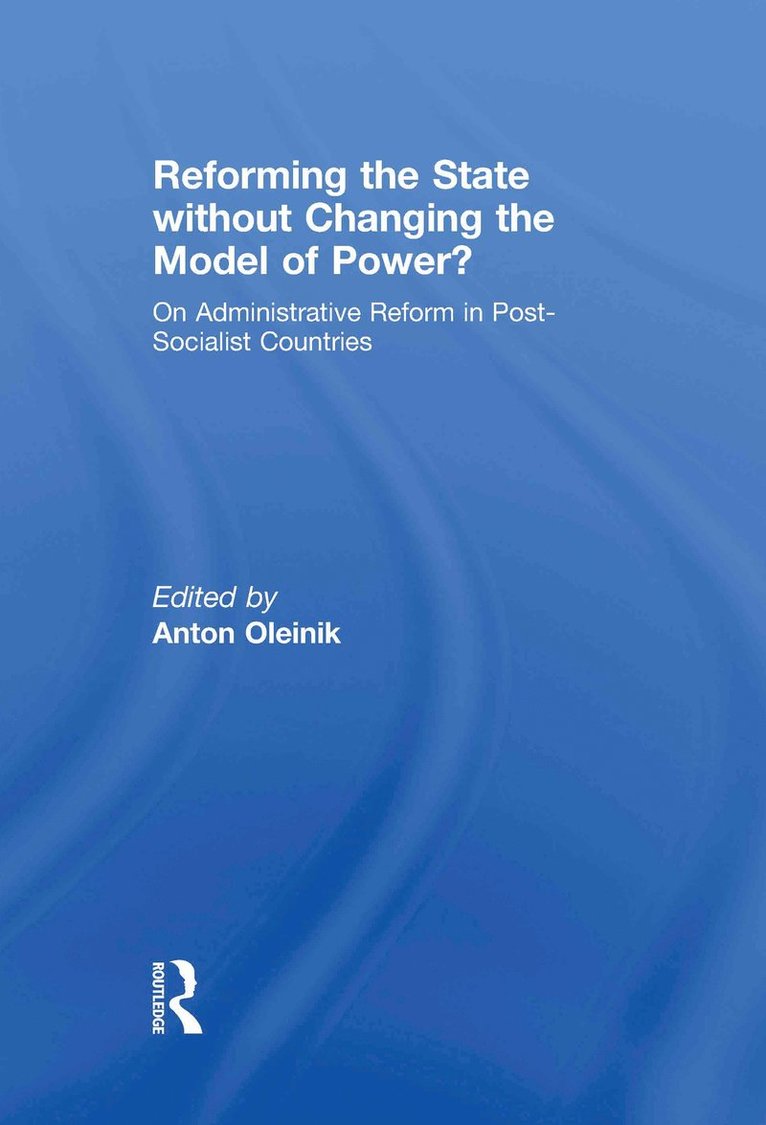
Reforming the State Without Changing the Model of Power?
On Administrative Reform in Post-Socialist Countries
Häftad, Engelska, 2016
489 kr
Beställningsvara. Skickas inom 10-15 vardagar. Fri frakt för medlemmar vid köp för minst 249 kr.
This book places administrative reform in post-socialist countries in a broad context of power and domination. This new perspective clarifies the reasons why reforms went awry in Russia and some other post-Soviet countries, whereas they produced positive outcomes in the Baltic States and most East European countries. The contributors analyse the idea that administrative reform cannot produce sustainable changes in the organization of the state apparatus as long as it does not touch the underpinning model of power and domination. Using an interdisciplinary and comparative approach, the essays combine elements of philosophy, sociology, political science and economics, including a wealth of primary and secondary data: surveys, in-depth interviews with state representatives and participant observation. The book focuses on Russia and analyses recent developments in this country by the way of comparison with the experience of carrying out administrative reform in Ukraine, Bulgaria, Poland, Germany and North America.This book was published as a special issue of the Journal of Communist Studies and Transition Politics.
Produktinformation
- Utgivningsdatum2016-07-08
- Mått156 x 234 x undefined mm
- Vikt453 g
- FormatHäftad
- SpråkEngelska
- Antal sidor258
- FörlagTaylor & Francis Ltd
- ISBN9781138997158
Tillhör följande kategorier
Hoppa över listan


Du kanske också är intresserad av
Del 177
Organized Crime, Prison and Post-Soviet Societies
Alain Touraine, Anton Oleinik
Inbunden, 2017
2 729 kr
Comparative Analysis of Political and Media Discourses about Russia’s Invasion of Ukraine
Anton Oleinik
Häftad, 2025
1 859 kr
Comparative Analysis of Political and Media Discourses about Russia’s Invasion of Ukraine
Anton Oleinik
Inbunden, 2024
1 859 kr