
Del i serien Wireless Networks
Reconfigurable Intelligent Surface-Enabled Integrated Sensing and Communication in 6G
Häftad, Engelska, 2025
2 149 kr
Beställningsvara. Skickas inom 10-15 vardagar. Fri frakt för medlemmar vid köp för minst 249 kr.
Finns i fler format (1)
As the main trend and key enabling technology for next-generation wireless networks (i.e., 6G), integrated sensing and communication (ISAC) can effectively improve spectrum efficiency, hardware efficiency, and information processing efficiency. However, it faces several deficiencies, including limited coverage due to high-frequency signals and limited communication-sensing performance due to uncontrollable wireless environments. Reconfigurable intelligent surface (RIS) provides novel dimensions to address these deficiencies by intelligently manipulating the wireless propagation environment in an energy- and hardware-efficient manner. RIS-enabled ISAC is expected to comprehensively promote the multi-dimensional performance of 6G, such as communication capacity, sensing accuracy, and coverage. Nevertheless, to fully realize its potential, one needs to figure out the impacts of RIS on joint communication and sensing performance and tackle new technical challenges in beamforming designand signal processing. The goal of this book, therefore, is to deliver a thorough understanding of RIS-enabled ISAC from three perspectives: performance analysis, beamforming design, and signal processing. Specifically, the authors provide a brief introduction to RIS-enabled ISAC, including basic concepts, motivations, potential application scenarios, and an overview of the state-of-the-art research on RIS-enabled ISAC. The theoretical performance analytical frameworks of RIS-enabled ISAC and their corresponding results are also discussed. Based on this, several critical issues are identified and elaborated on, including signal processing technologies such as angle and Delay-Doppler information acquisition, and air interface technologies such as beamforming designs. Finally, the book concludes with future trends and open issues for further research.The book would be beneficial for researchers, graduate students, and industry professionals who wish to gain a comprehensive understanding of the latest developments and challenges in RIS-enabled ISAC. By providing insights into the potential of RIS-enabled ISAC and the technical challenges that need to be addressed, the book can aid in the development of practical solutions for next-generation wireless networks and contribute to the advancement of the field of wireless communications.
Produktinformation
- Utgivningsdatum2025-02-23
- Mått155 x 235 x 11 mm
- Vikt300 g
- FormatHäftad
- SpråkEngelska
- SerieWireless Networks
- Antal sidor177
- FörlagSpringer Verlag, Singapore
- ISBN9789819983018
Tillhör följande kategorier
Hoppa över listan

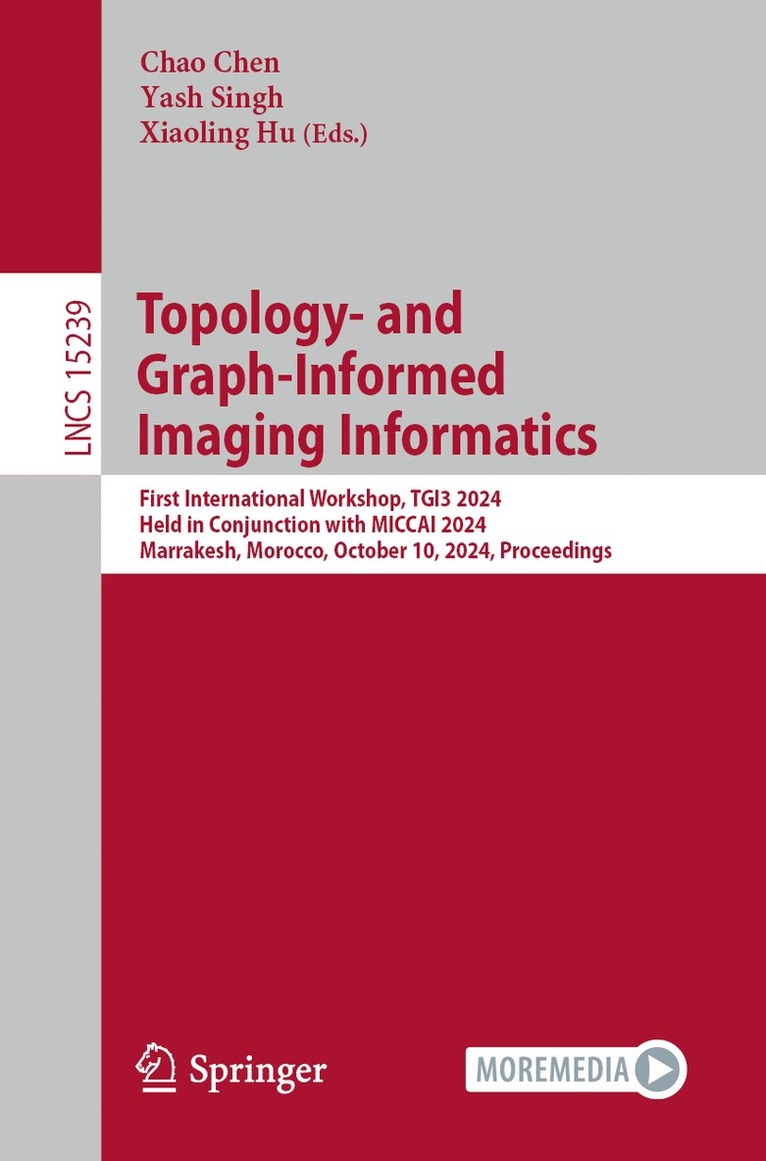

Mer från samma författare
Del 15239
Topology- and Graph-Informed Imaging Informatics
Chao Chen, Yash Singh, Xiaoling Hu
Häftad, 2024
789 kr
Del 16150
Reconstruction and Imaging Motion Estimation, and Graphs in Biomedical Image Analysis
Lina Felsner, Thomas Küstner, Andreas Maier, Chen Qin, Seyed-Ahmad Ahmadi, Anees Kazi, Xiaoling Hu
Häftad, 2025
979 kr
Hoppa över listan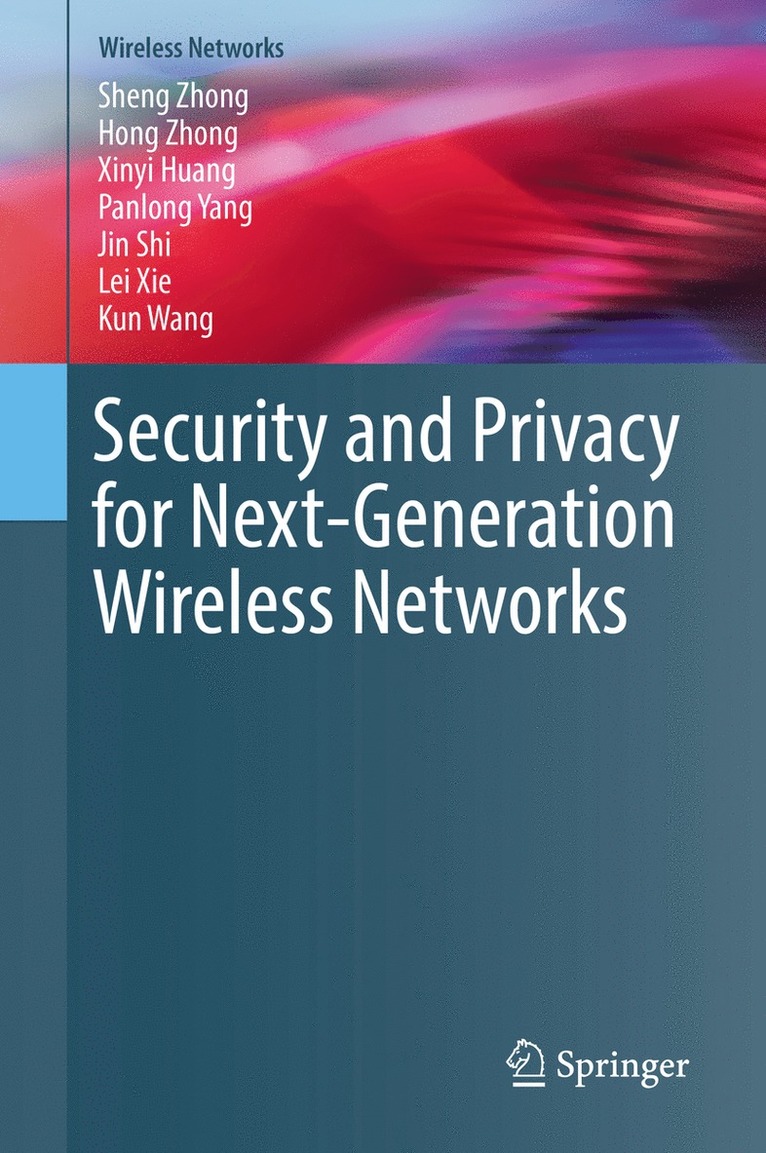

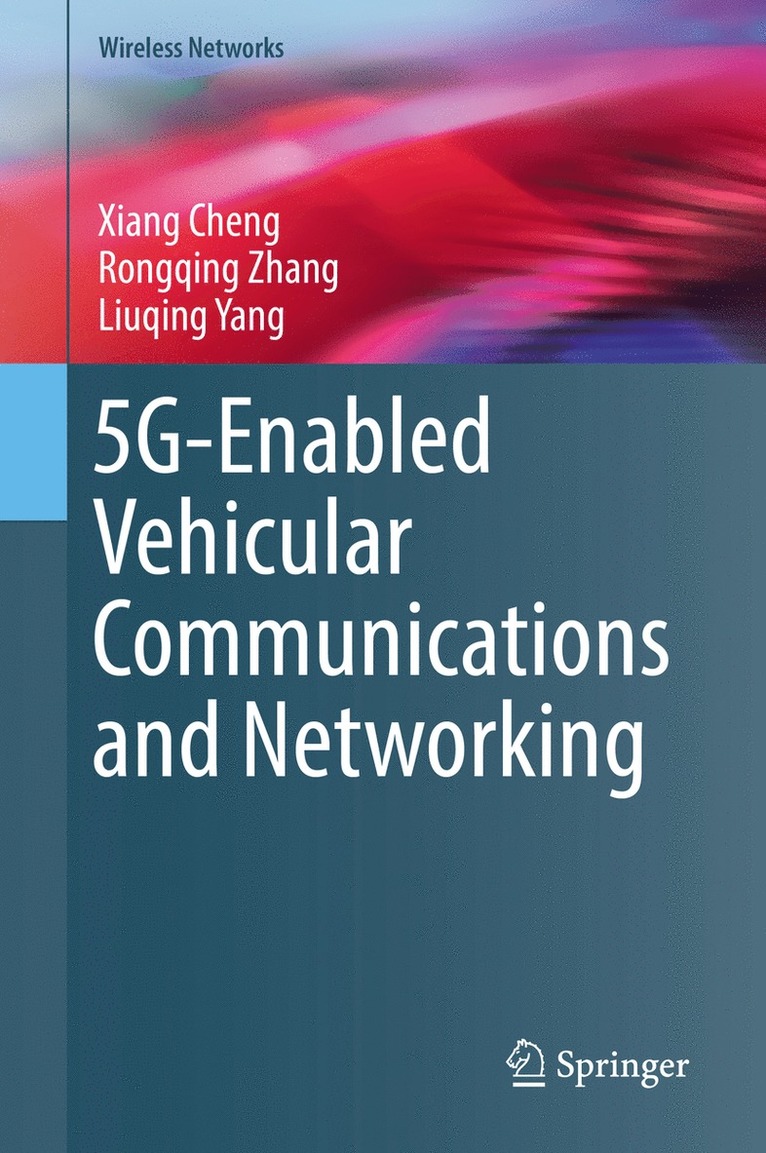
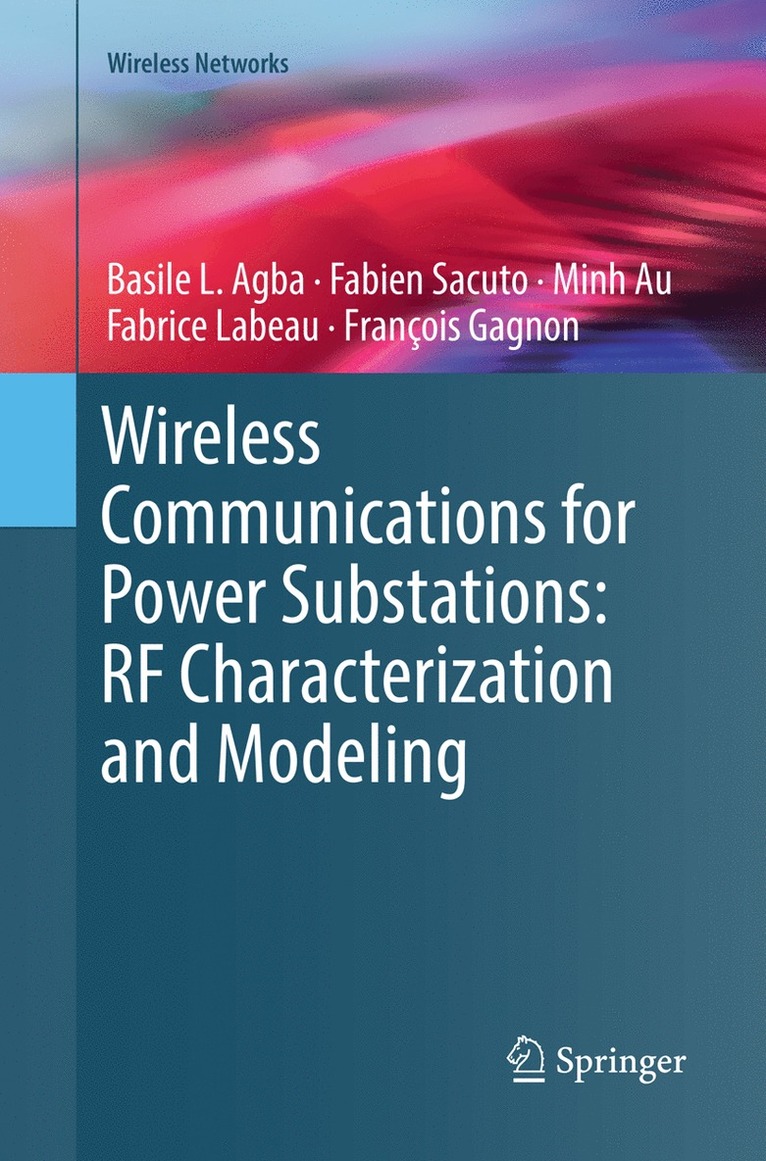
Mer från samma serie
Security and Privacy for Next-Generation Wireless Networks
Sheng Zhong, Hong Zhong, Xinyi Huang, Panlong Yang, Jin Shi, Lei Xie, Kun Wang
Inbunden, 2018
1 439 kr
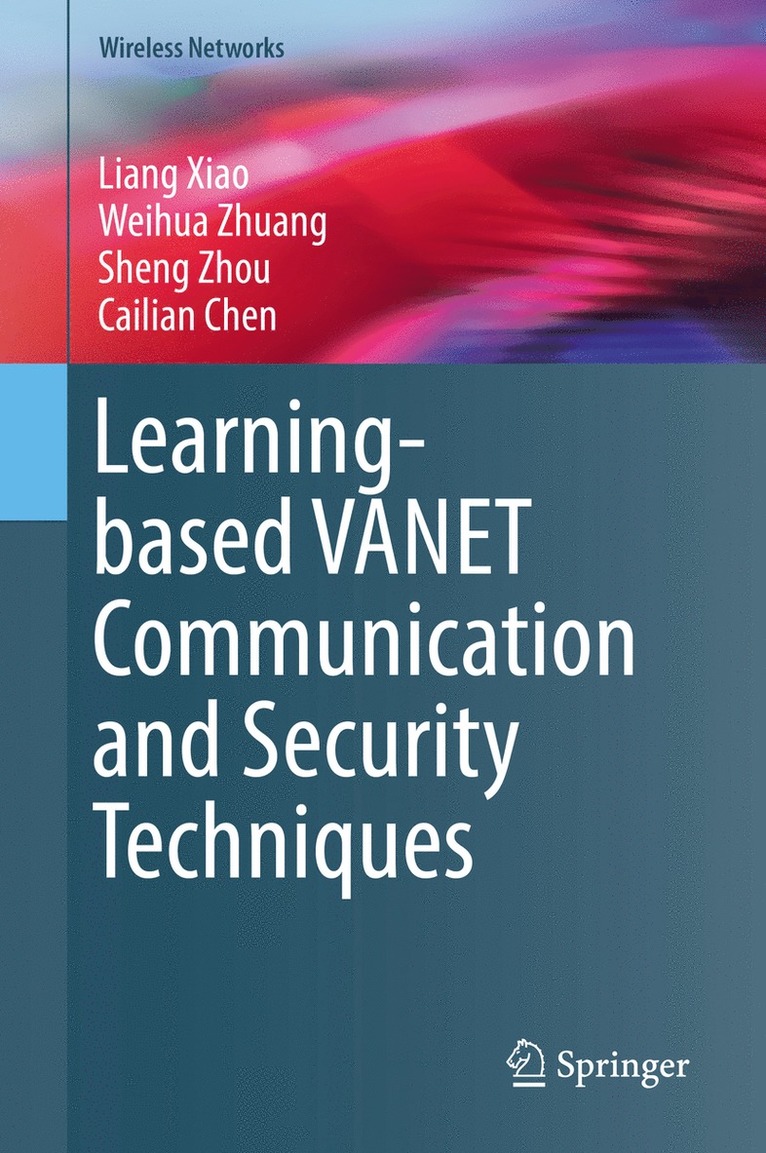
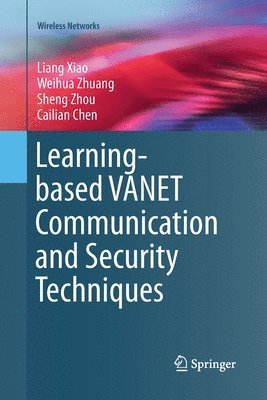
Learning-based VANET Communication and Security Techniques
Liang Xiao, Weihua Zhuang, Sheng Zhou, Cailian Chen
Inbunden, 2018
1 439 kr
Smartphone Instrumentations for Public Health Safety
Abbas Jamalipour, Md Arafat Hossain
Inbunden, 2018
1 439 kr
5G-Enabled Vehicular Communications and Networking
Xiang Cheng, Rongqing Zhang, Liuqing Yang
Inbunden, 2018
1 719 kr
Wireless Communications for Power Substations: RF Characterization and Modeling
Basile L. Agba, Fabien Sacuto, Minh Au, Fabrice Labeau, François Gagnon
Häftad, 2018
2 009 kr
Learning-based VANET Communication and Security Techniques
Liang Xiao, Weihua Zhuang, Sheng Zhou, Cailian Chen
Häftad, 2019
1 439 kr
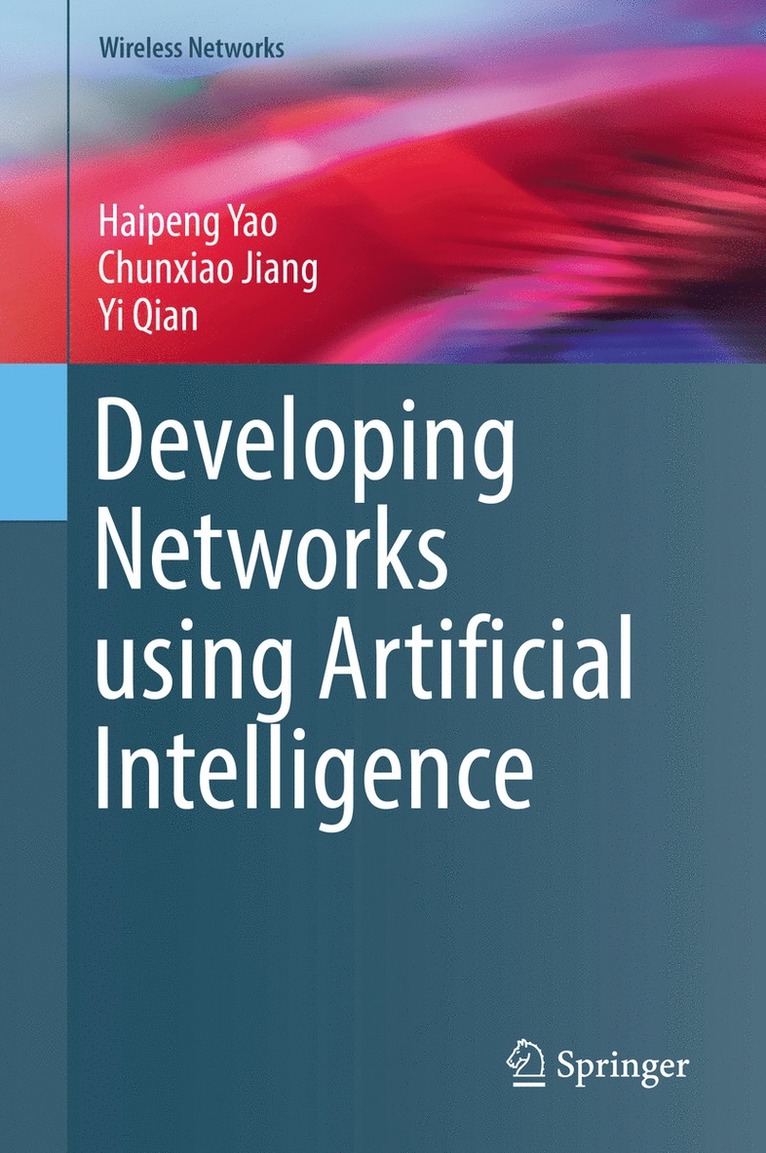
Developing Networks using Artificial Intelligence
Haipeng Yao, Chunxiao Jiang, Yi Qian
Inbunden, 2019
2 009 kr
Hoppa över listan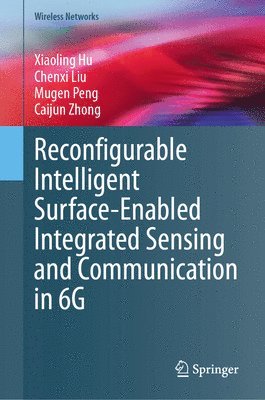

Du kanske också är intresserad av
Reconfigurable Intelligent Surface-Enabled Integrated Sensing and Communication in 6G
Xiaoling Hu, Chenxi Liu, Mugen Peng, Caijun Zhong
Inbunden, 2024
2 149 kr
Del 16150
Reconstruction and Imaging Motion Estimation, and Graphs in Biomedical Image Analysis
Lina Felsner, Thomas Küstner, Andreas Maier, Chen Qin, Seyed-Ahmad Ahmadi, Anees Kazi, Xiaoling Hu
Häftad, 2025
979 kr
Cloud Radio Access Networks
Tony Q. S. Quek, Mugen Peng, Osvaldo Simeone, Wei Yu
Inbunden, 2017
1 819 kr
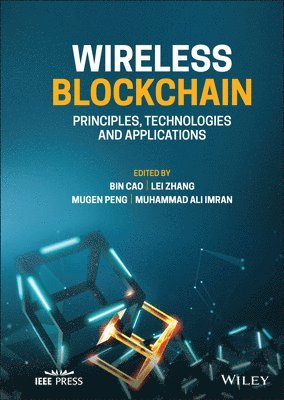
Wireless Blockchain
Bin Cao, Bin Cao, Lei Zhang, Mugen Peng, Muhammad Ali Imran
Inbunden, 2021
1 939 kr
Del 15239
Topology- and Graph-Informed Imaging Informatics
Chao Chen, Yash Singh, Xiaoling Hu
Häftad, 2024
789 kr
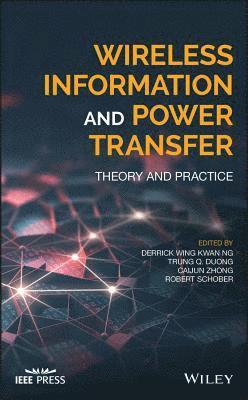
Wireless Information and Power Transfer
Derrick Wing Kwan Ng, Trung Q. Duong, Caijun Zhong, Robert Schober
Inbunden, 2019
2 339 kr