
Del 246
Rabelais and the Social Order
An Essay in Cognitive Criticism
Inbunden, Engelska, 2026
2 469 kr
Beställningsvara. Skickas inom 5-8 vardagar. Fri frakt för medlemmar vid köp för minst 249 kr.
This book asks two questions. The first question concerns one of the greatest figures of world literature: François Rabelais. What do his sixteenth-century fictions communicate about the power relations that shape what social groups do (or refrain from doing) to each other--killing, wounding, dismembering, having sex with, feeding, depriving of food, protecting, healing, commanding, obeying, ruling, serving, honouring, swallowing, humiliating, scaring, and so on?The second question is more general: how does a literary writer communicate to readers (whether about relations between social groups or anything else), even to readers who are separated from the writer by vast swaths of time and place?By considering afresh the first question, the book contributes to recent cognitively inflected answers to the second.Part I provides a reading of the social order across all five books of the Rabelaisian fictional chronicles. They communicate a profound preoccupation both with the need for a rank-based, hierarchical, social order and yet also with the comic and disquieting vulnerabilities or impossibilities of that social order-or rather of social orders in the plural, since the narrative lurches from the warring kingdoms of the early books (Pantagruel and Gargantua) to the strangely organized island societies of the fourth and fifth books. In the middle (third) book, an extravagant character (Panurge) plans to insert himself, by becoming a paterfamilias, in the whole system of renewing the social order through legitimate procreation and inheritance.Part II changes gear: it analyses readings of the social order in Rabelais's fiction that have been offered over the past millennium and that often introduce rather different terms (such as 'class' or 'revolution'). The journey takes in Aldous Huxley, Gustave Flaubert, Ernest Renan, Primo Levi, and many more. Have these remarkably varied and often conflicting readings been produced by certain core communicative processes? And did those processes also produce, with different results, the reading offered in Part I? A cognitive approach helps readers understand how literature can afford rich and embodied thinking which is, by definition, constant re-thinking--both from one reader to the next, and from one page to the next.
Produktinformation
- Utgivningsdatum2026-05-29
- Mått166 x 240 x 30 mm
- Vikt769 g
- FormatInbunden
- SpråkEngelska
- Antal sidor416
- FörlagOUP OXFORD
- ISBN9780198987246
Tillhör följande kategorier
Hoppa över listan



Mer från samma författare
Introduction to 16th-century French Literature and Thought
Neil Kenny, Nicholas Hammond
Häftad, 2008
559 kr
Text, Knowledge and Wonder in Early Modern France: Studies in Honour of Stephen Bamforth
Neil Kenny
Häftad, 2017
419 kr
Hoppa över listan
Du kanske också är intresserad av
Del 246
Introduction to 16th-century French Literature and Thought
Neil Kenny, Nicholas Hammond
Häftad, 2008
559 kr
Text, Knowledge and Wonder in Early Modern France: Studies in Honour of Stephen Bamforth
Neil Kenny
Häftad, 2017
419 kr
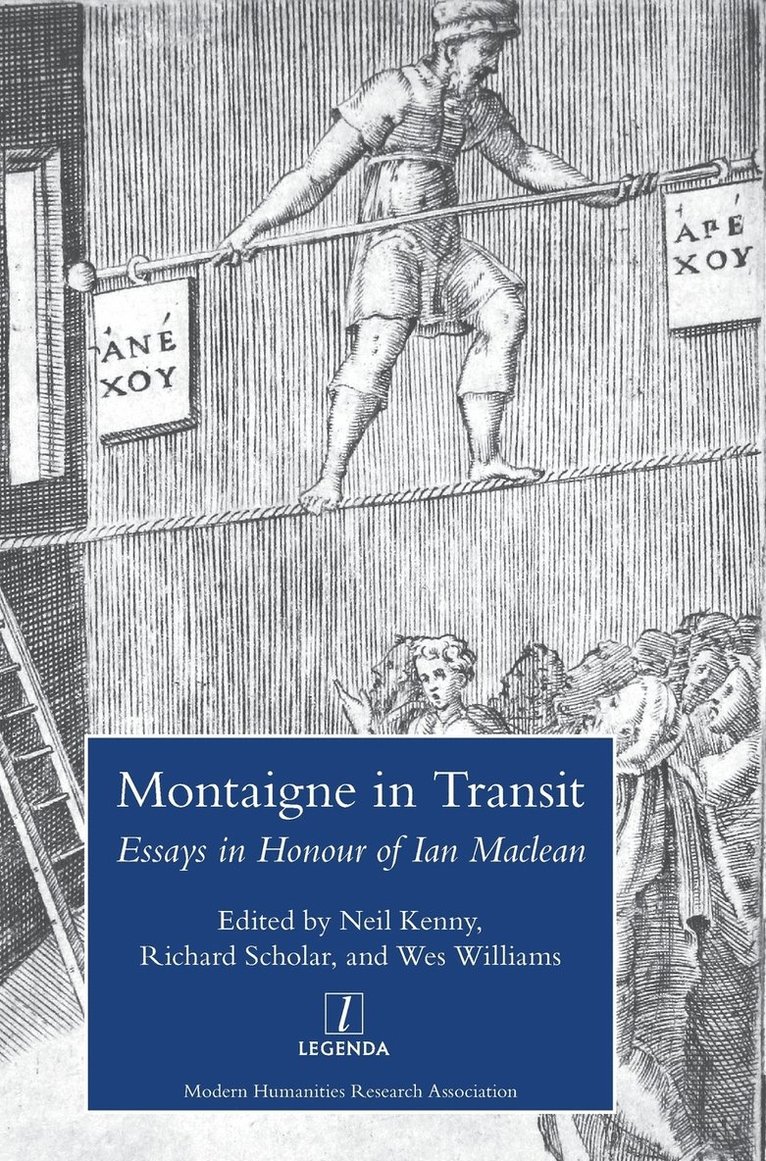
Montaigne in Transit: Essays in Honour of Ian Maclean
Neil Kenny, Richard Scholar
Inbunden, 2017
1 929 kr