Qing (1636-1912) was the last empire in China. For decades, historians have portrayed the Qing empire as either ruthlessly exploitative and corrupt, or culturally glorious and economically supreme. However, the evidence now suggests new ways of telling Qing history that look beyond earlier conventions to tell a more complex story of economic growth and political continuity that still shapes the world today. This definitive new history explores the period in all its magnificent complexity to place Qing China in the broader context of Eurasian and global history. Backed by the latest research while engaging with long-standing interpretive questions and unsolved mysteries, Pamela Crossley challenges readers to consider the dynamic relationship between facts and interpretation. China's Global Empire is essential reading for anyone seeking to understand this transformative period in both Chinese and world history.
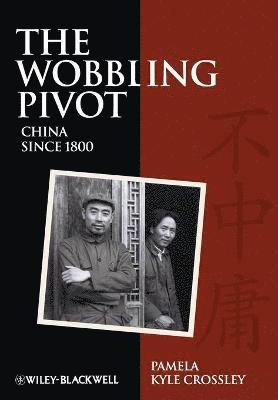
Pamela Kyle Crossley is Professor Emerita of History at Dartmouth College and author of A Translucent Mirror: History and Identity in Qing Imperial Ideology (2000) and The Wobbling Pivot: China since 1800 (2010).
List of figures; List of maps; Acknowledgments; Reign periods; Readings notes, names and terms; 1. Introduction; 2. Order on the frontier, 1400–1643; 3. Qing unification, 1644–1685; 4. State of war, 1616–1795; 5. State of peace, 1685–1799; 6. Enlightenment China, 1661–1805; 7. The wealth of nations, 1684–1820; 8. Wars at the inner peripheries, 1740–1850; 9. Heartland counter-state and its aftermath, 1850–1875; 10. Unreconstruction, 1876–1896; 11. Aristocratic chaos and the end of state reform, 1896–1902; 12. Late nation, 1902–1912; Glossary; Bibliography; Index.
'This book offers an amazing and brilliant review of the Qing dynasty. Both historically well informed and historiographically alert, Pamela Crossley lays out all the assumptions that prevail today and now cloud the international perception of China. More importantly, she leaves it to the reader to decide how to understand the Manchu occupation of China.' Timothy Brook, author of Great State: China and the World
Qing (1636-1912) was the last empire in China. For decades, historians have portrayed the Qing empire as either ruthlessly exploitative and corrupt, or culturally glorious and economically supreme. However, the evidence now suggests new ways of telling Qing history that look beyond earlier conventions to tell a more complex story of economic growth and political continuity that still shapes the world today. This definitive new history explores the period in all its magnificent complexity to place Qing China in the broader context of Eurasian and global history. Backed by the latest research while engaging with long-standing interpretive questions and unsolved mysteries, Pamela Crossley challenges readers to consider the dynamic relationship between facts and interpretation. China's Global Empire is essential reading for anyone seeking to understand this transformative period in both Chinese and world history.
Pamela Kyle Crossley is Professor Emerita of History at Dartmouth College and author of A Translucent Mirror: History and Identity in Qing Imperial Ideology (2000) and The Wobbling Pivot: China since 1800 (2010).
List of figures; List of maps; Acknowledgments; Reign periods; Readings notes, names and terms; 1. Introduction; 2. Order on the frontier, 1400–1643; 3. Qing unification, 1644–1685; 4. State of war, 1616–1795; 5. State of peace, 1685–1799; 6. Enlightenment China, 1661–1805; 7. The wealth of nations, 1684–1820; 8. Wars at the inner peripheries, 1740–1850; 9. Heartland counter-state and its aftermath, 1850–1875; 10. Unreconstruction, 1876–1896; 11. Aristocratic chaos and the end of state reform, 1896–1902; 12. Late nation, 1902–1912; Glossary; Bibliography; Index.
'This book offers an amazing and brilliant review of the Qing dynasty. Both historically well informed and historiographically alert, Pamela Crossley lays out all the assumptions that prevail today and now cloud the international perception of China. More importantly, she leaves it to the reader to decide how to understand the Manchu occupation of China.' Timothy Brook, author of Great State: China and the World