
Purchasing Power Parities of Currencies
Recent Advances in Methods and Applications
Inbunden, Engelska, 2009
3 379 kr
Beställningsvara. Skickas inom 5-8 vardagar. Fri frakt för medlemmar vid köp för minst 249 kr.
This up-to-date book demonstrates how the purchasing power parities (PPPs) of currencies are being increasingly used in place of exchange rates for a variety of purposes. These include: comparisons of real income, measurements of global inequality and poverty, calculation of the human development index and assessment of nations economic performance.Despite the increasing popularity of PPPs, many users have very little appreciation of the data and methods used in their derivation. This timely monograph brings together a number of significant contributions from leading researchers in the field, offering a comprehensive review of the latest methods used in the construction and application of PPPs. The authors provide a broad overview of the current state-of-the-art both in terms of techniques as well as current practice with various international organisations.Given the increasing application of PPPs in this truly globalised world, this book will be a stimulating read for researchers and academics involved in international comparisons and development economics, general economists and economist statisticians.
Produktinformation
- Utgivningsdatum2009-09-30
- Mått156 x 234 x undefined mm
- FormatInbunden
- SpråkEngelska
- FörlagEdward Elgar Publishing Ltd
- ISBN9781845422370
Tillhör följande kategorier
Hoppa över listan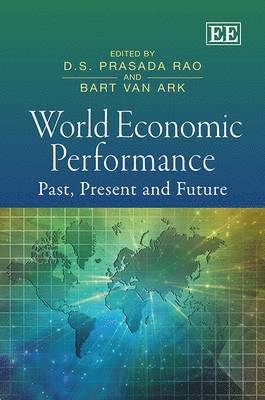









Du kanske också är intresserad av
- Nyhet
Del 3
- Nyhet
Del 11
- Nyhet
Del 6
- Nyhet
Del 4
Del 3
Del 1
Del 2
Del 7
- Nyhet