
Proletarian Imagination
Self, Modernity, and the Sacred in Russia, 1910–1925
Häftad, Engelska, 2002
859 kr
Beställningsvara. Skickas inom 10-15 vardagar. Fri frakt för medlemmar vid köp för minst 249 kr.
Finns i fler format (1)
In fin-de-siècle and early revolutionary Russia, a group of self-educated workers produced a large body of poetry and prose in which they attempted to comprehend their rapidly changing world. Witnesses to wars and revolution, these men and women grappled on paper with the nature of civilization and the imperatives of ethical truth. In a strikingly original approach to Russian culture, Mark D. Steinberg listens to their words, which are little known today. The results of their literary creativity, he finds, were frequently not what the new Soviet order was expecting from its workers, despite its celebration of the notion of a proletarian art.Through insightful readings of a vast fund of lower-class writings, Steinberg shows that the authors focused above all on the uncertain nature and place of the self, the promise and dangers of modernity, and the qualities of the sacred in both their lives and their imaginations. Like their counterparts in the intelligentsia, these worker writers were ambivalent about Marxist ideology's celebration of the city and the factory and even about modern progress itself. Drawing on vast research, Steinberg demonstrates the texts' significance for an understanding of Russian popular mentalities, indeed for the very meaning, philosophically and morally, of these years of crisis and possibility at the end of the old order and the early years of the Soviet regime.
Produktinformation
- Utgivningsdatum2002-09-18
- Mått155 x 235 x 21 mm
- Vikt907 g
- FormatHäftad
- SpråkEngelska
- Antal sidor352
- FörlagCornell University Press
- ISBN9780801488269
Tillhör följande kategorier
Hoppa över listan

Mer från samma författare
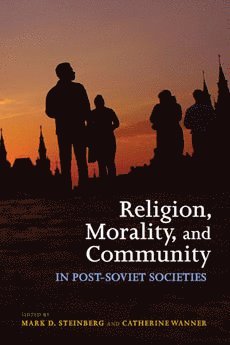
Religion, Morality, and Community in Post-Soviet Societies
Mark D. Steinberg, Catherine Wanner
Häftad, 2008
209 kr