
Del i serien Rowman & Littlefield Publishers
Political is Political
Conformity and the Illusion of Dissent in Contemporary Political Philosophy
Inbunden, Engelska, 2015
2 539 kr
Beställningsvara. Skickas inom 10-15 vardagar. Fri frakt för medlemmar vid köp för minst 249 kr.
Finns i fler format (1)
Nobody should really have to point out that political philosophy is political. Yet in this highly original and provocative book Lorna Finlayson argues that in fact it is necessary to do so. Offering a critique of mainstream liberal political philosophy through close, critical engagement with a series of specific debates and arguments, Finlayson analyzes the way in which apparently neutral methodological devices such as “charitable interpretation” and “constructive criticism” function so as to protect against challenges to the status quo. At each stage, Finlayson demonstrates that political philosophy is suffering from a complex process of “de-politicization.” Even in cases where it appears that the dominant framework of liberal political philosophy is being strongly challenged—as, for example, in the case of the ‘realist’ critique of “ideal theory”—this book argues that the debate is set up in such a way as to impose strict limits on the kind of dissent that is possible. Only by dragging these hidden presuppositions into the foreground can we arrive at a clear-eyed appreciation of such debates, and perhaps look beyond the artificially constricted landscape in which they seek to confine us.
Produktinformation
- Utgivningsdatum2015-06-01
- Mått161 x 237 x 24 mm
- Vikt517 g
- FormatInbunden
- SpråkEngelska
- SerieRowman & Littlefield Publishers
- Antal sidor212
- FörlagBloomsbury Publishing PLC
- ISBN9781783482863
Tillhör följande kategorier
Hoppa över listan







Mer från samma serie
Research Methods in Criminal Justice and Criminology
Lee Ellis, Richard D. Hartley, Anthony Walsh
Häftad, 2010
1 259 kr
America's Urban Crisis and the Advent of Color-Blind Politics
Curtis L. Ivery, Joshua Bassett
Häftad, 2017
469 kr
Contemporary Controversies and the American Racial Divide
Robert C. Smith, Richard Seltzer
Inbunden, 2000
2 359 kr
Hoppa över listan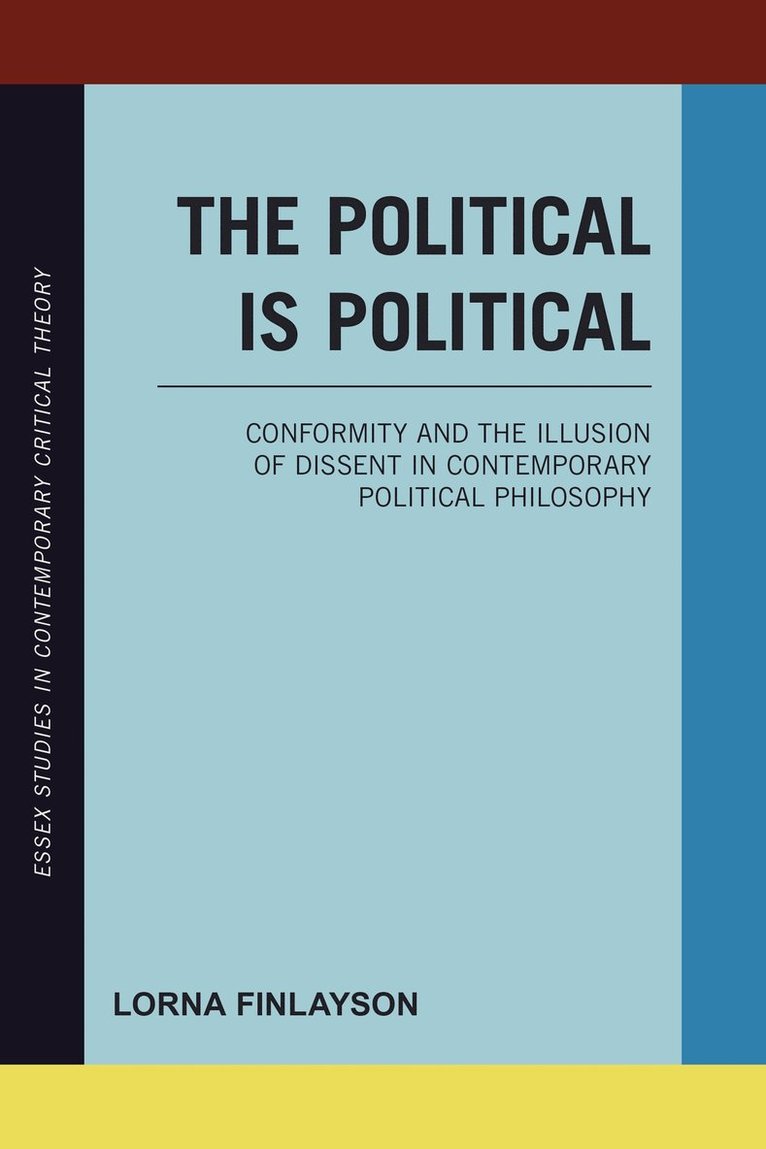








Du kanske också är intresserad av
- Nyhet
Del 3
- Nyhet
Del 11
- Nyhet
Del 4
- Nyhet
Del 4
Del 1
Del 3