
Del i serien Thinking Art
Playing with Words
On Form and Thought in the Philosophy of Poetry
Inbunden, Engelska, 2027
1 369 kr
Kommande
Peter Lamarque argues that what sets poetry apart from other uses of language is playfulness, contrasted not with seriousness but with single-mindedness. Poetry gives the imagination free rein, engaging in exploratory journeys of thought, emotion, and ways of seeing without prescribed methods or fixed conclusions. Poets and their readers participate in a shared game of reflecting on the possibilities disclosed by images, figures of speech, and linguistic invention, with the understanding that how something is presented fundamentally determines what is presented. Attention to a poem's form-the total configuration of elements in the linguistic artefact-is therefore central, yielding poetry's distinctive pleasures. Precision of expression, where words seem exactly right in context, establishes poetry's own kind of truth.In Playing with Words, Lamarque situates these claims within the philosophy of poetry, an emerging branch of analytical aesthetics. He examines familiar notions-form, experience, expression, thought, and poetic truth-showing that under analytical scrutiny they challenge orthodox views of meaning, communication, interpretation, paraphrase, emotion, and truth. At the book's centre lies the relation of form and thought: poetic thought acquires its identity through its mode of articulation, just as poetic emotion is created by expression itself. Attention to form shifts focus from meaning to experience, and from truth as correspondence to truth as a quality of expression. This perspective, Lamarque shows, unsettles philosophical certainties about the functions of language, and marks a significant and novel contribution to the philosophy of poetry.
Produktinformation
- Utgivningsdatum2027-03-08
- Mått140 x 210 x undefined mm
- FormatInbunden
- SpråkEngelska
- SerieThinking Art
- Antal sidor304
- FörlagOUP USA
- ISBN9780197841976
Tillhör följande kategorier
Hoppa över listan

Mer från samma författare
Aesthetics and the Philosophy of Art
Lamarque, Olsen SH, Peter Lamarque, Stein Haugom Olsen
Inbunden, 2003
2 559 kr
Hoppa över listan
Mer från samma serie
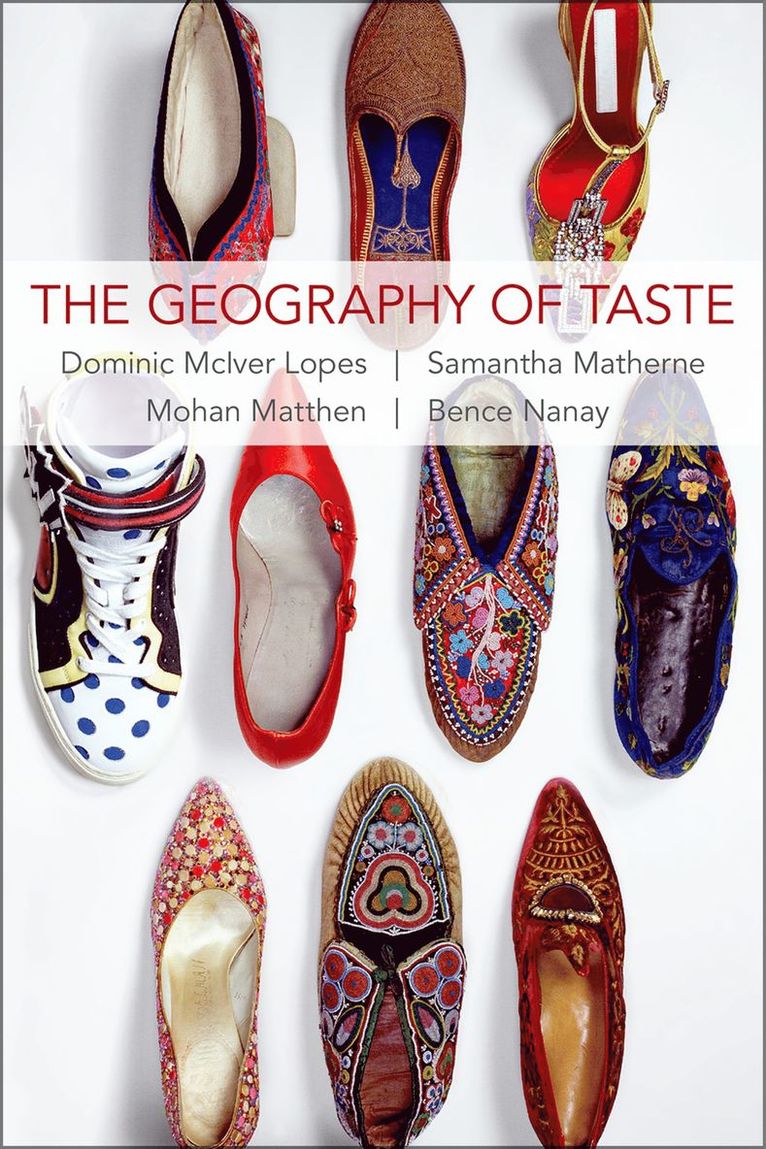
The Geography of Taste
Dominic McIver Lopes, Samantha Matherne, Mohan Matthen, Bence Nanay
Inbunden, 2024
1 229 kr
The Geography of Taste
Dominic McIver Lopes, Samantha Matherne, Mohan Matthen, Bence Nanay
Häftad, 2024
379 kr