
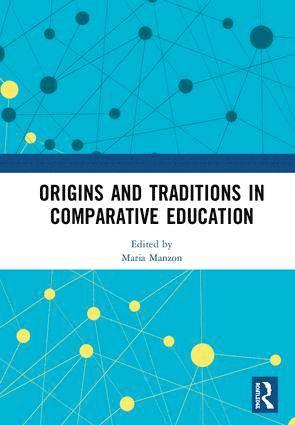
Origins and Traditions in Comparative Education
Häftad, Engelska, 2020
809 kr
Beställningsvara. Skickas inom 10-15 vardagar. Fri frakt för medlemmar vid köp för minst 249 kr.
This volume aims to expand knowledge about the history of comparative education. It explores new scholarship on key actors and ways of knowing in the field. It aims to raise awareness on the positionality of historical narratives about this field of inquiry and offers a re-think of its histories.Since comparative education has always been embedded within a global field of power, what would the changing world order’s implications be for the institutional and intellectual histories of the field? This book offers diverse perspectives for re-theorising the histories of comparative education. It suggests casting a far-sighted and panoramic look at the field’s origins. The volume concludes with a puzzle for future work on a global history of comparative education.This book was originally published as a special issue of Comparative Education.
Produktinformation
- Utgivningsdatum2020-12-18
- Mått174 x 246 x undefined mm
- Vikt230 g
- FormatHäftad
- SpråkEngelska
- Antal sidor112
- FörlagTaylor & Francis Ltd
- ISBN9780367728298
Tillhör följande kategorier
Hoppa över listan





Du kanske också är intresserad av
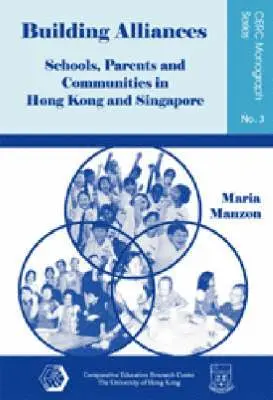
Building Alliances – Schools, Parents, and Communities in Hong Kong and Singapore
Maria Manzon
Häftad, 2004
189 kr
Del 29
- Nyhet
Del 3
- Nyhet
Del 11
- Nyhet
Del 4
Del 3