
Object-Oriented Design Choices
Inbunden, Engelska, 2021
3 309 kr
Beställningsvara. Skickas inom 10-15 vardagar. Fri frakt för medlemmar vid köp för minst 249 kr.
Finns i fler format (1)
Do modern programming languages, IDEs, and libraries make coding easy? Maybe, but coding is not design. Large-scale or expensive apps clearly require evaluation of design choices. Still, software design directly impacts code reuse and longevity even for small-scale apps with limited overhead. This text evaluates and contrasts common object-oriented designs.A given problem may have many solutions. A developer may employ different design techniques – composition, inheritance, dependency injection, delegation, etc. – to solve a particular problem. A skilled developer can determine the costs and benefits of different design responses, even amid competing concerns. A responsible developer documents design choices as a contract with the client, delineating external and internal responsibilities. To promote effective software design, this book examines contractual, object-oriented designs for immediate and sustained use as well as code reuse. The intent of identifying design variants is to recognize and manage conflicting goals such as short versus long-term utility, stability versus flexibility, and storage versus computation. Many examples are given to evaluate and contrast different solutions and to compare C# and C++ effects. No one has a crystal ball; however, deliberate design promotes software longevity. With the prominence of legacy OO code, a clear understanding of different object-oriented designs is essential.Design questions abound. Is code reuse better with inheritance or composition? Should composition rely on complete encapsulation? Design choices impact flexibility, efficiency, stability, longevity, and reuse, yet compilers do not enforce design and syntax does not necessarily illustrate design. Through deliberate design, or redesign when refactoring, developers construct sustainable, efficient code.
Produktinformation
- Utgivningsdatum2021-01-19
- Mått156 x 234 x 30 mm
- Vikt453 g
- FormatInbunden
- SpråkEngelska
- Antal sidor348
- FörlagTaylor & Francis Ltd
- ISBN9780367820817
Tillhör följande kategorier
Hoppa över listan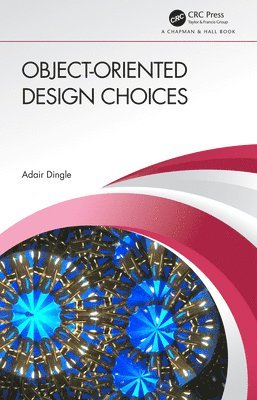





Du kanske också är intresserad av
- Nyhet
Del 11
- Nyhet
Del 3
- Nyhet
Del 1
- Nyhet
Del 1
- Nyhet
Del 4
- Nyhet
Del 6
Del 1