
Del i serien Routledge Frontiers of Criminal Justice
Municipal Corporate Security in International Context
Inbunden, Engelska, 2015
3 509 kr
Beställningsvara. Skickas inom 10-15 vardagar. Fri frakt för medlemmar vid köp för minst 249 kr.
Finns i fler format (1)
Corporate security is a form of regulation that involves centralized management of access control, physical security, personnel security, and information security inside an organization. For all the research on public policing, national security, and private contract security in sociology, criminology, and related disciplines, little scholarly attention has been paid to corporate security. Increasingly, corporate security is playing an important role in municipal and other government organizations as well as its traditional private, corporate domain. This book is the first social scientific contribution on corporate security to draw together the sociologies of security and policing, legal and social theory, and debates about municipal government. In this book, Walby and Lippert conceptualize various types of corporate security, including its public and private forms, and analyze a range of practices, such as asset protection and physical security provision. The authors explore a number of heretofore neglected themes, including use of legal knowledge, professionalization, legitimation work, and corporate security links with other security agencies and public police. The book provides empirical analyses of developments in several countries, but especially Canada and the US, where corporate security - including its entry into municipal government - is particularly advanced.Because corporate security cuts across security, policing, law, and government, as well as issues of professionalization, public space and democracy, the readership for Municipal Corporate Security in International Context spans disciplinary and national boundaries. It is essential reading for academics and students engaged in studying security, urban governance, politics and legal regulation. It will be of great interest to corporate security professionals and government policymakers too.
Produktinformation
- Utgivningsdatum2015-04-20
- Mått156 x 234 x 15 mm
- Vikt408 g
- FormatInbunden
- SpråkEngelska
- SerieRoutledge Frontiers of Criminal Justice
- Antal sidor182
- FörlagTaylor & Francis Ltd
- ISBN9780415733250
Tillhör följande kategorier
Hoppa över listan




Mer från samma författare
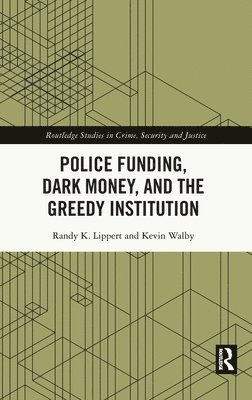
Police Funding, Dark Money, and the Greedy Institution
Randy K. Lippert, Kevin Walby
Inbunden, 2022
2 959 kr
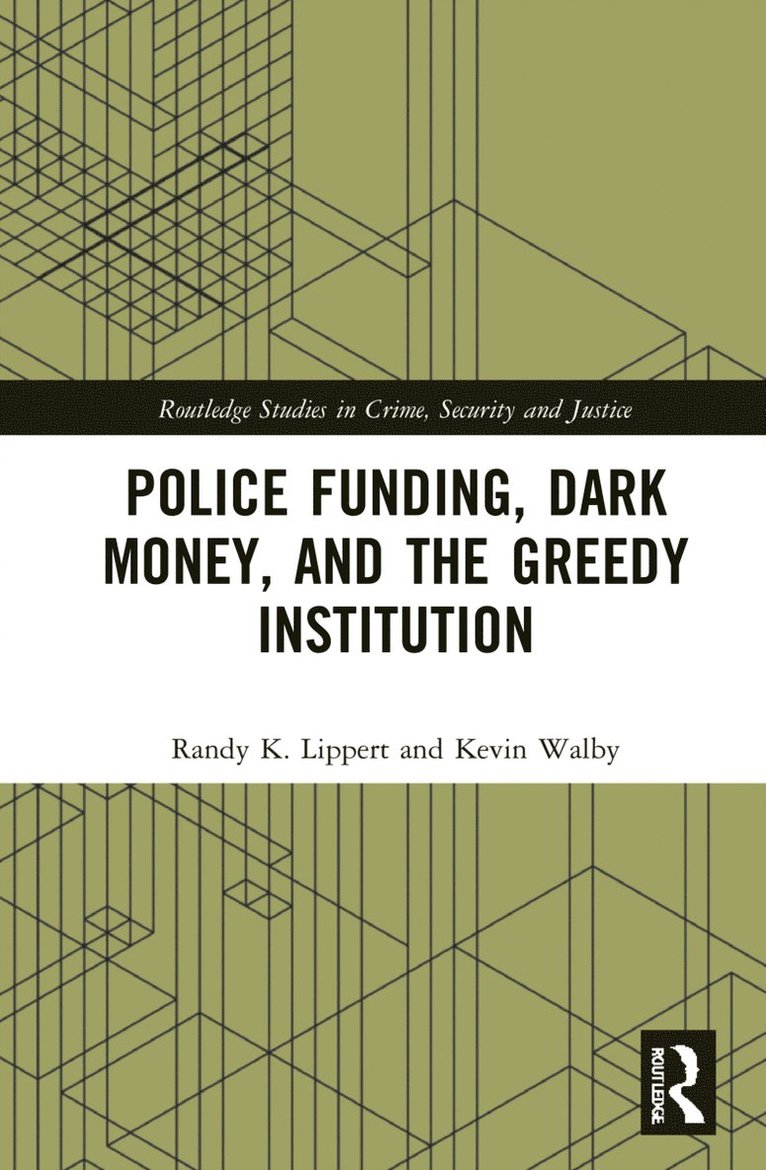
Police Funding, Dark Money, and the Greedy Institution
Randy K. Lippert, Kevin Walby
Häftad, 2024
829 kr
Journal of Prisoners on Prisons, V26 #1&2
Jarrod Shook, Bridget McInnis, Justin Piche, Kevin Walby
Häftad, 2017
419 kr
Hoppa över listan




Mer från samma serie
Emotional Labour in Criminal Justice and Criminology
Jake Phillips, Jaime Waters, Chalen Westaby, Andrew Fowler
Inbunden, 2020
2 959 kr
Hoppa över listan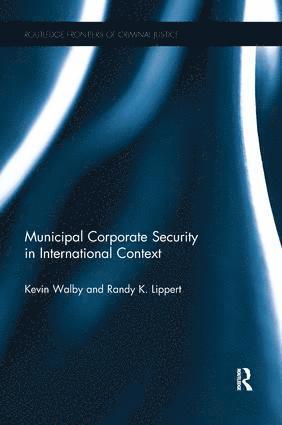


Du kanske också är intresserad av
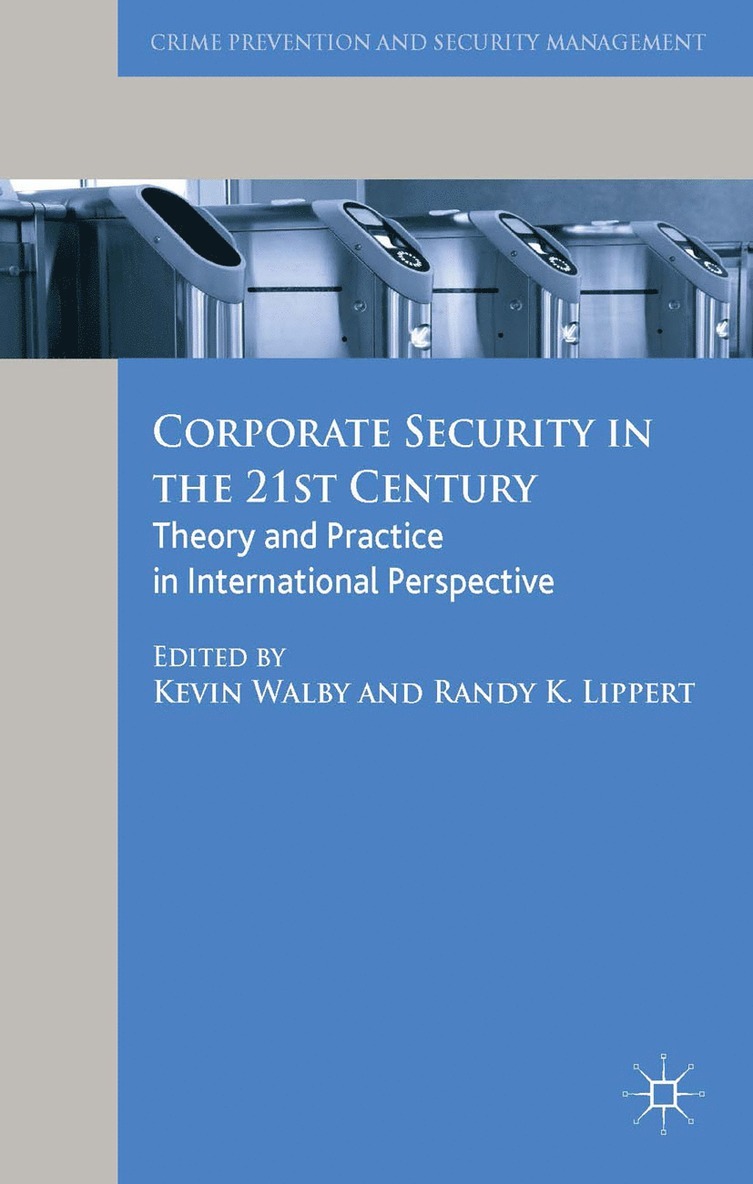
Corporate Security in the 21st Century
Kevin Walby, Randy Lippert, Kevin Walby, Randy Lippert
Inbunden, 2014
1 979 kr