
Multiple Marginality and Gangs
Through a Prism Darkly
Inbunden, Engelska, 2020
1 459 kr
Beställningsvara. Skickas inom 10-15 vardagar. Fri frakt för medlemmar vid köp för minst 249 kr.
Finns i fler format (1)
Multiple Marginality and Gangs: Through a Prism Darkly unravels the youth gang problem in a multidimensional approach that encompasses the place, status, social control, subcultural, and identity facets of urban street gangs. The power of place and the status of persons and groups are the major forces that generate the many situations and conditions that give rise to gangs. In its simplest trajectory, Multiple Marginality can be modeled as follows: place/status to street socialization to street subculture to street identity. It is the actions and reactions among them that we fathom. As we witness detrimental or absent family influence, we also observe weaker, underfunded schools that limit educators’ reach. At the same time, there has been an increase in the militarization of law enforcement to deal with the youth street populations, the heaviest hand is that of the police. There is a causal relationship between social marginalization factors and gang membership. A psychological analysis also entails how street socialization leads to a street identity. In a place and status group, the cascading effects of marginalization have certainly affected—and mostly thwarted—social control institutions.
Produktinformation
- Utgivningsdatum2020-08-20
- Mått161 x 233 x 17 mm
- Vikt381 g
- FormatInbunden
- SpråkEngelska
- Antal sidor140
- FörlagBloomsbury Publishing Plc
- ISBN9781793613318
Tillhör följande kategorier
Hoppa över listan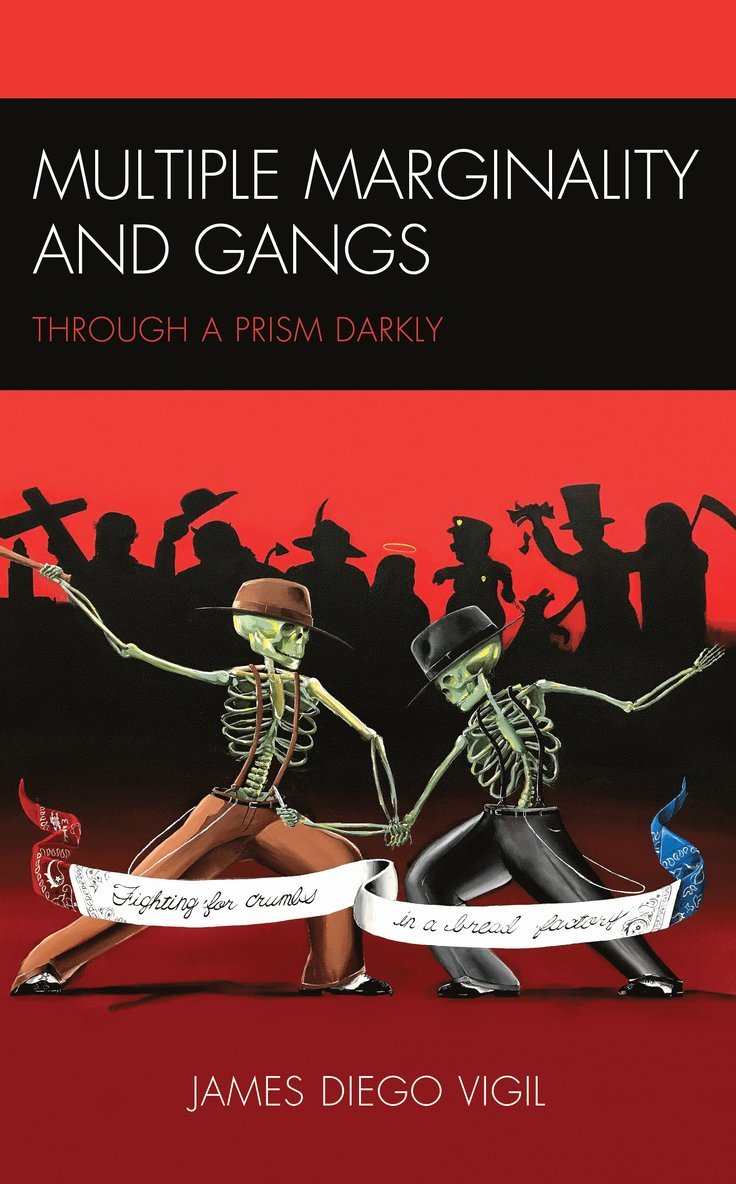






Du kanske också är intresserad av
- Nyhet
Del 3
- Nyhet
Del 11
- Nyhet
Del 6
- Nyhet
Del 4
Del 3
Del 1