
Del 1 i serien Advances in Medical Education
Medical Education for the Future
Identity, Power and Location
Inbunden, Engelska, 2011
3 389 kr
Beställningsvara. Skickas inom 10-15 vardagar. Fri frakt för medlemmar vid köp för minst 249 kr.
Finns i fler format (1)
The purpose of medical education is to benefit patients by improving the work of doctors. Patient centeredness is a centuries old concept in medicine, but there is still a long way to go before medical education can truly be said to be patient centered. Ensuring the centrality of the patient is a particular challenge during medical education, when students are still forming an identity as trainee doctors, and conservative attitudes towards medicine and education are common amongst medical teachers, making it hard to bring about improvements. How can teachers, policy makers, researchers and doctors bring about lasting change that will restore the patient to the heart of medical education? The authors, experienced medical educators, explore the role of the patient in medical education in terms of identity, power and location. Using innovative political, philosophical, cultural and literary critical frameworks that have previously never been applied so consistently to the field, the authors provide a fundamental reconceptualisation of medical teaching and learning, with an emphasis upon learning at the bedside and in the clinic. They offer a wealth of practical and conceptual insights into the three-way relationship between patients, students and teachers, setting out a radical and exciting approach to a medical education for the future.“The authors provide us with a masterful reconceptualization of medical education that challenges traditional notions about teaching and learning. The book critiques current practices and offers new approaches to medical education based upon sociocultural research and theory. This thought provoking narrative advances the case for reform and is a must read for anyone involved in medical education.” - David M. Irby, PhD, Vice Dean for Education,University of California, San Francisco School of Medicine; and co-author of Educating Physicians: A Call for Reform of Medical School and Residency"This book is a truly visionary contribution to the Flexner centenary. It is compulsory reading for the medical educationalist with a serious concern for the future - and for the welfare of patients and learners in the here and now." Professor Tim Dornan, University of Manchester Medical School and Maastricht University Graduate School of Health Professions Education.
Produktinformation
- Utgivningsdatum2011-02-09
- Mått155 x 235 x 24 mm
- Vikt620 g
- FormatInbunden
- SpråkEngelska
- SerieAdvances in Medical Education
- Antal sidor292
- Upplaga2011
- FörlagSpringer
- ISBN9789048196913
Tillhör följande kategorier
Hoppa över listan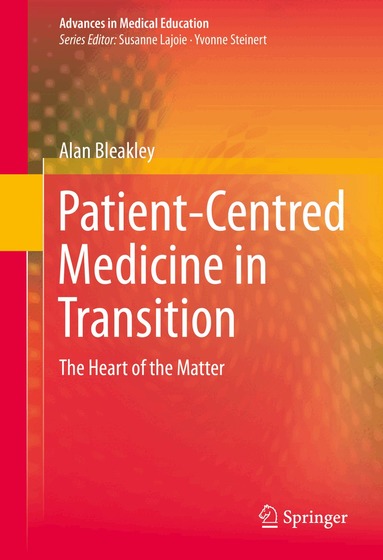
Mer från samma serie
Del 3
Del 4
Del 5
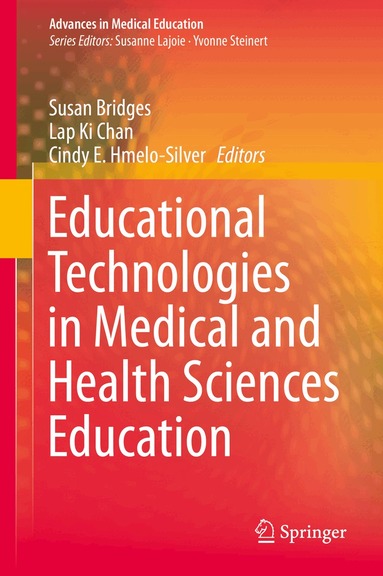
Educational Technologies in Medical and Health Sciences Education
Susan Bridges, Lap Ki Chan, Cindy E. Hmelo-Silver
Inbunden, 2015
1 389 kr
Del 5
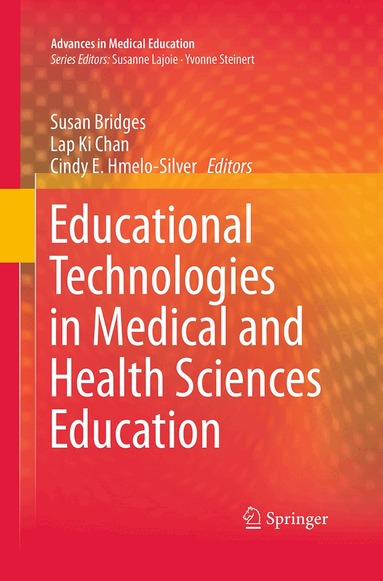
Educational Technologies in Medical and Health Sciences Education
Susan Bridges, Lap Ki Chan, Cindy E. Hmelo-Silver
Häftad, 2016
1 479 kr
Del 3
Del 4
Del 2
Del 2
Hoppa över listan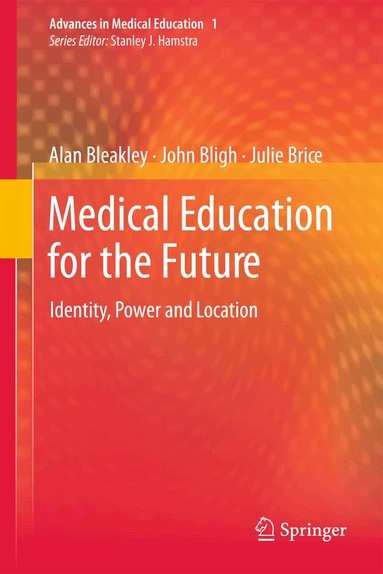



Du kanske också är intresserad av
Del 1
Educators of Healthcare Professionals: Agreeing a Shared Purpose
Julie Browne, Alison Bullock, Samuel Parker, Chiara Poletti, John Jenkins, Derek Gallen
Häftad, 2021
439 kr
A Practical Approach to Alternative Dispute Resolution
Susan Blake, Julie Browne, Stuart Sime
Häftad, 2018
999 kr
Staying Human During the Foundation Programme and Beyond
Allan Peterkin, Alan Bleakley
Häftad, 2017
589 kr