
Mathematical Modeling
Inbunden, Engelska, 2011
969 kr
Beställningsvara. Skickas inom 10-15 vardagar. Fri frakt för medlemmar vid köp för minst 249 kr.
Finns i fler format (1)
The whole picture of Mathematical Modeling is systematically and thoroughly explained in this text for undergraduate and graduate students of mathematics, engineering, economics, finance, biology, chemistry, and physics. This textbook gives an overview of the spectrum of modeling techniques, deterministic and stochastic methods, and first-principle and empirical solutions.Complete range: The text continuously covers the complete range of basic modeling techniques: it provides a consistent transition from simple algebraic analysis methods to simulation methods used for research. Such an overview of the spectrum of modeling techniques is very helpful for the understanding of how a research problem considered can be appropriately addressed.Complete methods: Real-world processes always involve uncertainty, and the consideration of randomness is often relevant. Many students know deterministic methods, but they do hardly have access to stochastic methods, which are described in advanced textbooks on probability theory. The book develops consistently both deterministic and stochastic methods. In particular, it shows how deterministic methods are generalized by stochastic methods.Complete solutions: A variety of empirical approximations is often available for the modeling of processes. The question of which assumption is valid under certain conditions is clearly relevant. The book provides a bridge between empirical modeling and first-principle methods: it explains how the principles of modeling can be used to explain the validity of empirical assumptions. The basic features of micro-scale and macro-scale modeling are discussed – which is an important problem of current research.
Produktinformation
- Utgivningsdatum2011-07-03
- Mått155 x 235 x 31 mm
- Vikt900 g
- FormatInbunden
- SpråkEngelska
- Antal sidor460
- Upplaga2011
- FörlagSpringer-Verlag Berlin and Heidelberg GmbH & Co. KG
- ISBN9783642203107
Tillhör följande kategorier
Hoppa över listan



Mer från samma författare
Requisiten
Joanna Olchawa, Kathi Loch, Sascha Förster, Birgit Wiens, Astrid Schenka, Andrew Sofer, Julia Saviello, Michael Kleine, Roman Lemberg, Thomas Pöpper, Stefan Heinz, Miriam Volmert, Max Böhner, Antje Krause-Wahl, Joanna Olchawa, Julia Saviello
Inbunden, 2023
809 kr
Hoppa över listan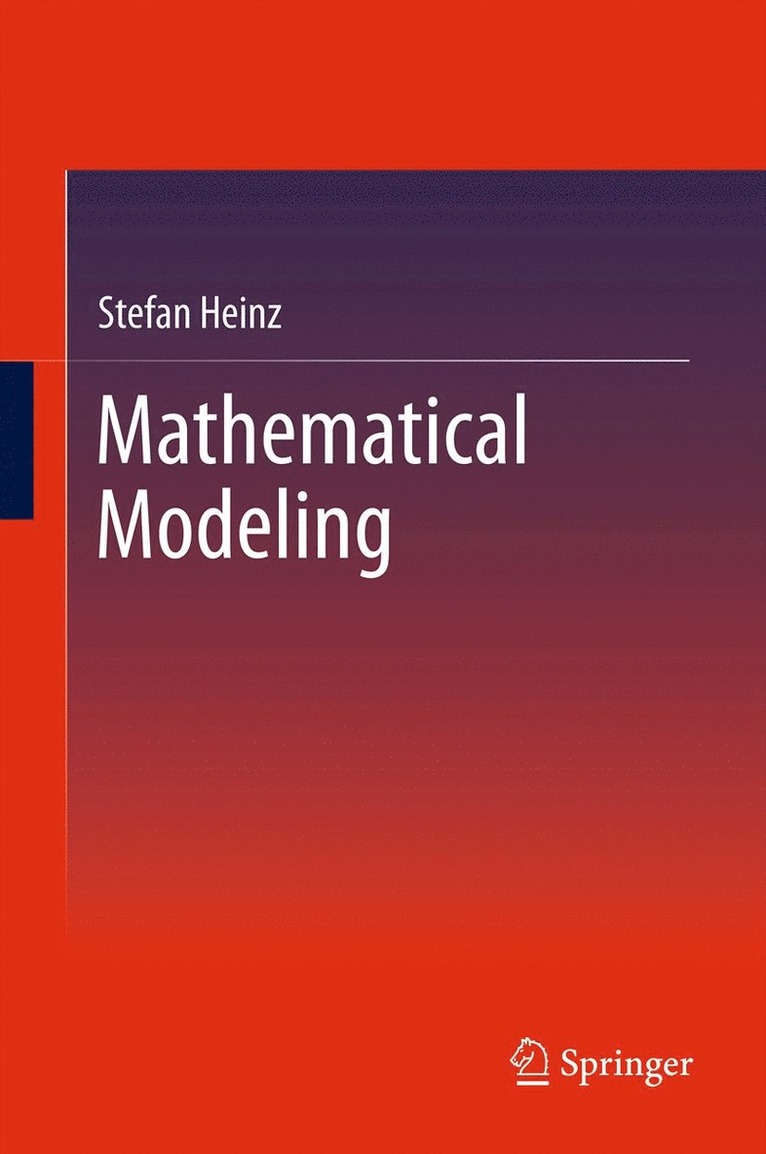

Du kanske också är intresserad av
Requisiten
Joanna Olchawa, Kathi Loch, Sascha Förster, Birgit Wiens, Astrid Schenka, Andrew Sofer, Julia Saviello, Michael Kleine, Roman Lemberg, Thomas Pöpper, Stefan Heinz, Miriam Volmert, Max Böhner, Antje Krause-Wahl, Joanna Olchawa, Julia Saviello
Inbunden, 2023
809 kr
- Nyhet