
Del i serien Routledge Research in Digital Humanities
Mapping Space, Sense, and Movement in Florence
Historical GIS and the Early Modern City
Inbunden, Engelska, 2016
3 309 kr
Beställningsvara. Skickas inom 10-15 vardagar. Fri frakt för medlemmar vid köp för minst 249 kr.
Mapping Space, Sense, and Movement in Florence explores the potential of digital mapping or Historical GIS as a research and teaching tool to enable researchers and students to uncover the spatial, kinetic and sensory dimensions of the early modern city. The exploration focuses on new digital research and mapping projects that engage the rich social, cultural, and artistic life of Florence in particular. One is a new GIS tool known as DECIMA, (Digitally-Encoded Census Information and Mapping Archive), and the other is a smartphone app called Hidden Florence. The international collaborators who have helped build these and other projects address three questions: how such projects can be created when there are typically fewer sources than for modern cities; how they facilitate more collaborative models for historical research into social relations, senses, and emotions; and how they help us interrogate older historical interpretations and create new models of analysis and communication. Four authors examine technical issues around the software programs and manuscripts. Five then describe how GIS can be used to advance and develop existing research projects. Finally, four authors look to the future and consider how digital mapping transforms the communication of research results, and makes it possible to envision new directions in research. This exciting new volume is illustrated throughout with maps, screenshots and diagrams to show the projects at work. It will be essential reading for students and scholars of early modern Italy, the Renaissance and digital humanities.
Produktinformation
- Utgivningsdatum2016-02-11
- Mått156 x 234 x 22 mm
- Vikt600 g
- FormatInbunden
- SpråkEngelska
- SerieRoutledge Research in Digital Humanities
- Antal sidor220
- FörlagTaylor & Francis Ltd
- ISBN9781138184893
Tillhör följande kategorier
Hoppa över listan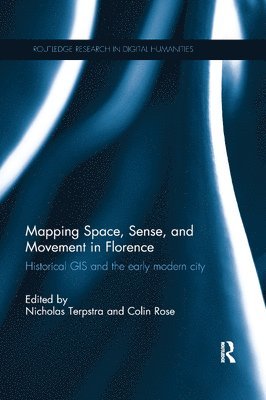


Du kanske också är intresserad av
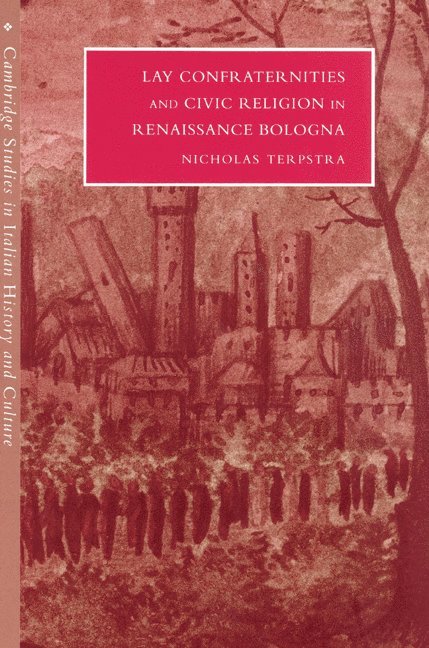
Lay Confraternities and Civic Religion in Renaissance Bologna
Nicholas Terpstra, Gigliola Fragnito, Cesare Mozzarelli
Häftad, 2002
829 kr
Sex, Gender and Sexuality in Renaissance Italy
Jacqueline Murray, Nicholas Terpstra
Häftad, 2019
969 kr
Del 6
Sex, Gender and Sexuality in Renaissance Italy
Jacqueline Murray, Nicholas Terpstra
Inbunden, 2019
3 309 kr