
Del 22
Del 7 i serien Inorganic Chemistry: A Textbook Series
Main Group Chemistry
Häftad, Engelska, 2000
2 869 kr
Beställningsvara. Skickas inom 5-8 vardagar. Fri frakt för medlemmar vid köp för minst 249 kr.
Lately, there has been much interest in the chemistry of Main Group elements with novel compounds being synthesised both in academia and industry. This book examines their synthesis, structure and how they behave chemically.The second edition follows the same structure as the first except that the biochemistry section has been removed to allow for the inclusion of a wide range of new material. This includes:* complexation and the stabilization of unstable species;* new elements and isotopes;* discussion of, for example, pye-bonding in compounds of the heavier main group elements, electronegativity of F, bonding in sulfur and phosphorus oxo-anions;* examples of new compounds developed around traditional models; for example, compounds in which multiply-bonded C is replaced by Si and pentavalent organo-derivatives of Group 15All other information is fully revised and updated in the light of more recent data. Where relevant, the author indicates where gaps exist in current knowledge and offers non-typical examples which are at the limits of current research.The new edition is aimed at Honors and postgraduate students as well as researchers interested in Main Group elements and their compounds.On the first edition -"This is a book I would recommend as background reading for undergraaduates and postgraduates" Education in Chemistry, Chemistry in Britain"This is a sound and sensible book, coherently produced and well written" The Times Higher Educational Supplement
Produktinformation
- Utgivningsdatum2000-10-27
- Mått190 x 251 x 30 mm
- Vikt1 077 g
- FormatHäftad
- SpråkEngelska
- SerieInorganic Chemistry: A Textbook Series
- Antal sidor544
- Upplaga2
- FörlagJohn Wiley & Sons Inc
- ISBN9780471490395
Tillhör följande kategorier
Hoppa över listan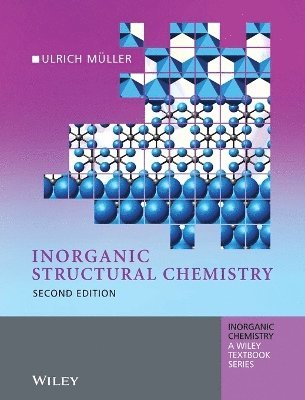
Mer från samma serie
Del 24
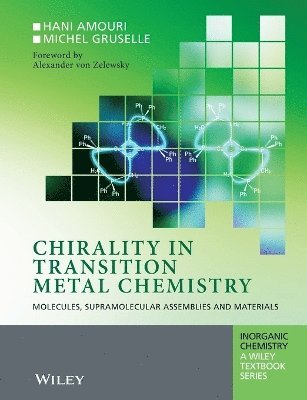
Chirality in Transition Metal Chemistry
Hani Amouri, Michel Gruselle, J Derek Woollins, David A Atwood, Robert H Crabtree, Gerd Mayer
Häftad, 2008
1 109 kr
Mass Spectrometry of Inorganic and Organometallic Compounds
William Henderson, J. Scott McIndoe
Häftad, 2005
1 059 kr
Del 35
Structural Methods in Molecular Inorganic Chemistry
D. W. H. Rankin, Norbert Mitzel, Carole Morrison
Häftad, 2013
969 kr
Del 3
Del 10
Del 14
Hoppa över listan

Du kanske också är intresserad av
- Nyhet
Del 3
Del 15
Del 3
- Nyhet
Del 4
Mass Spectrometry of Inorganic and Organometallic Compounds
William Henderson, J. Scott McIndoe
Inbunden, 2005
2 299 kr
- Nyhet
- Nyhet
Del 11
Chirality in Transition Metal Chemistry
Hani Amouri, Michel Gruselle, J Derek Woollins, David A Atwood, Robert H Crabtree, Gerd Mayer
Inbunden, 2008
2 399 kr
Del 22