
Del i serien Cultures of History
Long Partition and the Making of Modern South Asia
Refugees, Boundaries, Histories
Häftad, Engelska, 2010
389 kr
Beställningsvara. Skickas inom 5-8 vardagar. Fri frakt för medlemmar vid köp för minst 249 kr.
Finns i fler format (1)
Nation-states often shape the boundaries of historical enquiry, and thus silence the very histories that have sutured nations to territorial states. "India" and "Pakistan" were drawn onto maps in the midst of Partition's genocidal violence and one of the largest displacements of people in the twentieth century. Yet this historical specificity of decolonization on the very making of a nationalized cartography of modern South Asia has largely gone unexamined. In this remarkable study based on more than two years of ethnographic and archival research, Vazira Fazila-Yacoobali Zamindar argues that the combined interventions of the two postcolonial states were enormously important in shaping these massive displacements. She examines the long, contentious, and ambivalent process of drawing political boundaries and making distinct nation-states in the midst of this historic chaos. Zamindar crosses political and conceptual boundaries to bring together oral histories with north Indian Muslim families divided between the two cities of Delhi and Karachi with extensive archival research in previously unexamined Urdu newspapers and government records of India and Pakistan.She juxtaposes the experiences of ordinary people against the bureaucratic interventions of both postcolonial states to manage and control refugees and administer refugee property. As a result, she reveals the surprising history of the making of the western Indo-Pak border, one of the most highly surveillanced in the world, which came to be instituted in response to this refugee crisis, in order to construct national difference where it was the most blurred. In particular, Zamindar examines the "Muslim question" at the heart of Partition. From the margins and silences of national histories, she draws out the resistance, bewilderment, and marginalization of north Indian Muslims as they came to be pushed out and divided by both emergent nation-states. It is here that Zamindar asks us to stretch our understanding of "Partition violence" to include this long, and in some sense ongoing, bureaucratic violence of postcolonial nationhood, and to place Partition at the heart of a twentieth century of border-making and nation-state formation.
Produktinformation
- Utgivningsdatum2010-03-31
- Mått152 x 229 x 17 mm
- Vikt426 g
- FormatHäftad
- SpråkEngelska
- SerieCultures of History
- Antal sidor304
- FörlagColumbia University Press
- ISBN9780231138475
Tillhör följande kategorier
Hoppa över listan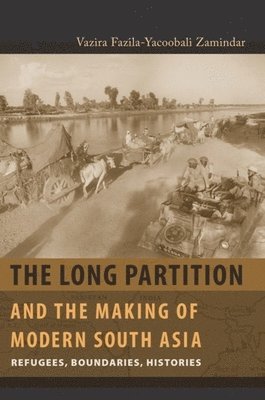
Du kanske också är intresserad av
Long Partition and the Making of Modern South Asia
Vazira Fazila-Yacoobali Zamindar
Inbunden, 2007
1 579 kr