
Linking Species & Ecosystems
Häftad, Engelska, 2012
2 159 kr
Beställningsvara. Skickas inom 10-15 vardagar. Fri frakt för medlemmar vid köp för minst 249 kr.
Finns i fler format (1)
I was asked to introduce this volume by examining "why a knowledge of ecosys tem functioning can contribute to understanding species activities, dynamics, and assemblages." I have found it surprisingly difficult to address this topic. On the one hand, the answer is very simple and general: because all species live in ecosystems, they are part of and dependent on ecosystem processes. It is impossible to understand the abundance and distribution of populations and the species diversity and composition of communities without a knowledge of their abiotic and biotic environments and of the fluxes of energy and mat ter through the ecosystems of which they are a part. But everyone knows this. It is what ecology is all about (e.g., Likens, 1992). It is why the discipline has retained its integrity and thrived, despite a sometimes distressing degree of bickering and chauvinism among its various subdisciplines: physiological, be havioral, population, community, and ecosystem ecology.
Produktinformation
- Utgivningsdatum2012-10-08
- Mått155 x 235 x 23 mm
- Vikt616 g
- FormatHäftad
- SpråkEngelska
- Antal sidor387
- FörlagSpringer-Verlag New York Inc.
- ISBN9781461357148
Tillhör följande kategorier
Hoppa över listan
Mer från samma författare
Ecosystem Function in Heterogeneous Landscapes
Gary M. Lovett, Clive G. Jones, Monica G. Turner, Kathleen C. Weathers
Inbunden, 2005
2 159 kr
Ecosystem Function in Heterogeneous Landscapes
Gary M. Lovett, Clive G. Jones, Monica G. Turner, Kathleen C. Weathers
Häftad, 2005
2 159 kr
Microbial Mediation of Plant-Herbivore Interactions
Pedro A. Barbosa, Pedro Barosa, Pedro Barbosa, Vera A. Krischik, Clive G. Jones
Inbunden, 1991
7 339 kr
Hoppa över listan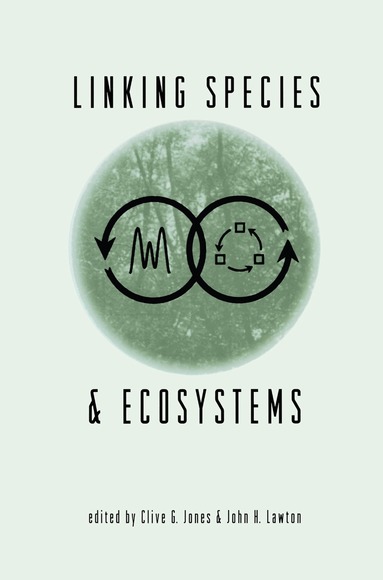



Du kanske också är intresserad av
Ecosystem Function in Heterogeneous Landscapes
Gary M. Lovett, Clive G. Jones, Monica G. Turner, Kathleen C. Weathers
Inbunden, 2005
2 159 kr
Ecosystem Function in Heterogeneous Landscapes
Gary M. Lovett, Clive G. Jones, Monica G. Turner, Kathleen C. Weathers
Häftad, 2005
2 159 kr
Microbial Mediation of Plant-Herbivore Interactions
Pedro A. Barbosa, Pedro Barosa, Pedro Barbosa, Vera A. Krischik, Clive G. Jones
Inbunden, 1991
7 339 kr
- Nyhet
Del 3
- Nyhet
Del 6
- Nyhet
Del 11
- Nyhet