
Linear Model Methodology
Inbunden, Engelska, 2009
3 509 kr
Beställningsvara. Skickas inom 10-15 vardagar. Fri frakt för medlemmar vid köp för minst 249 kr.
Given the importance of linear models in statistical theory and experimental research, a good understanding of their fundamental principles and theory is essential. Supported by a large number of examples, Linear Model Methodology provides a strong foundation in the theory of linear models and explores the latest developments in data analysis.After presenting the historical evolution of certain methods and techniques used in linear models, the book reviews vector spaces and linear transformations and discusses the basic concepts and results of matrix algebra that are relevant to the study of linear models. Although mainly focused on classical linear models, the next several chapters also explore recent techniques for solving well-known problems that pertain to the distribution and independence of quadratic forms, the analysis of estimable linear functions and contrasts, and the general treatment of balanced random and mixed-effects models. The author then covers more contemporary topics in linear models, including the adequacy of Satterthwaite’s approximation, unbalanced fixed- and mixed-effects models, heteroscedastic linear models, response surface models with random effects, and linear multiresponse models. The final chapter introduces generalized linear models, which represent an extension of classical linear models.Linear models provide the groundwork for analysis of variance, regression analysis, response surface methodology, variance components analysis, and more, making it necessary to understand the theory behind linear modeling. Reflecting advances made in the last thirty years, this book offers a rigorous development of the theory underlying linear models.
Produktinformation
- Utgivningsdatum2009-10-21
- Mått156 x 234 x 31 mm
- Vikt1 200 g
- FormatInbunden
- SpråkEngelska
- Antal sidor562
- FörlagTaylor & Francis Inc
- ISBN9781584884811
Tillhör följande kategorier
Hoppa över listan
Mer från samma författare
Del 319
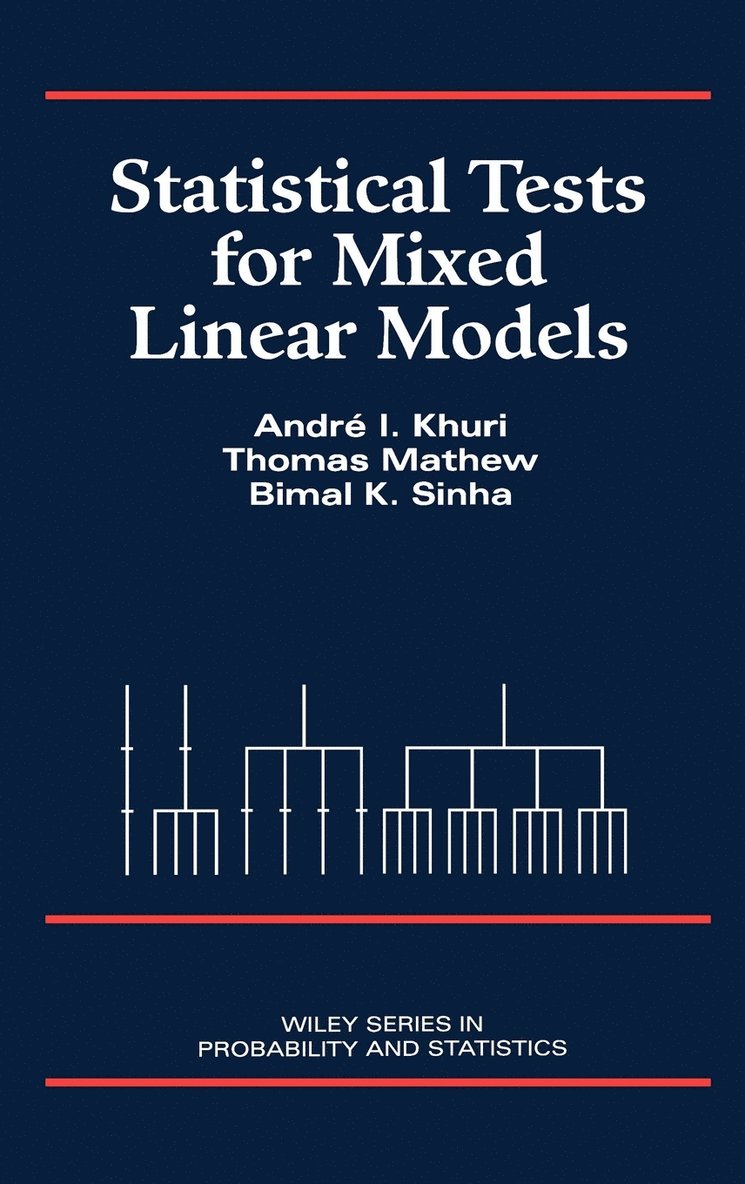
Statistical Tests for Mixed Linear Models
André I. Khuri, Thomas Mathew, Bimal K. Sinha
Inbunden, 1998
3 099 kr
Del 360
Hoppa över listan


Du kanske också är intresserad av
Del 360
Del 319
Statistical Tests for Mixed Linear Models
André I. Khuri, Thomas Mathew, Bimal K. Sinha
Inbunden, 1998
3 099 kr
- Nyhet
Del 3
- Nyhet
Del 11
Del 1