
Liberty and the Politics of the Female Voice in Early Stuart England
Inbunden, Engelska, 2022
1 979 kr
Beställningsvara. Skickas inom 5-8 vardagar. Fri frakt för medlemmar vid köp för minst 249 kr.
Finns i fler format (1)
The female voice was deployed by male and female authors alike to signal emerging discourses of religious and political liberty in early Stuart England. Christina Luckyj's important new study focuses critical attention on writing in multiple genres to show how, in the coded rhetoric of seventeenth-century religious politics, the wife's conscience in resisting tyranny represents the rights of the subject, and the bride's militant voice in the Song of Songs champions Christ's independent jurisdiction. Revealing this gendered system of representation through close analysis of writings by Elizabeth Cary, Aemilia Lanyer, Rachel Speght, Mary Wroth and Anne Southwell, Luckyj illuminates the dangers of essentializing female voices and restricting them to domestic space. Through their connections with parliament, with factional courtiers, or with dissident religious figures, major women writers occupied a powerful oppositional stance in relation to early Stuart monarchs and crafted a radical new politics of the female voice.
Produktinformation
- Utgivningsdatum2022-03-03
- Mått158 x 235 x 21 mm
- Vikt560 g
- FormatInbunden
- SpråkEngelska
- Antal sidor292
- FörlagCambridge University Press
- ISBN9781108845090
Tillhör följande kategorier
Hoppa över listan
Mer från samma författare
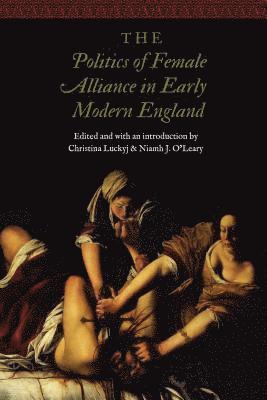
Politics of Female Alliance in Early Modern England
Christina Luckyj, Niamh J. O'Leary
Inbunden, 2017
1 179 kr
Hoppa över listan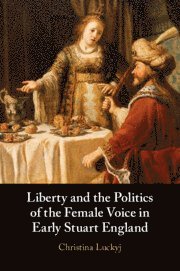




Du kanske också är intresserad av
Liberty and the Politics of the Female Voice in Early Stuart England
Christina Luckyj
Häftad, 2024
599 kr
Politics of Female Alliance in Early Modern England
Christina Luckyj, Niamh J. O'Leary
Inbunden, 2017
1 179 kr
- Nyhet
Del 3
- Nyhet
Del 11
Del 1
- Nyhet
Del 6
- Nyhet
Del 4