
Del 4
Del 8 i serien Eastern Africa Series
Land, Governance, Conflict and the Nuba of Sudan
Inbunden, Engelska, 2010
1 589 kr
Beställningsvara. Skickas inom 5-8 vardagar. Fri frakt för medlemmar vid köp för minst 249 kr.
The conflict in the Nuba Mountains in central Sudan illustrates how state policies concerning the control of land can cause local conflicts to escalate into large scale wars, which become increasingly difficult to manage or resolve.The conventional perspective on Sudan's recent civil war (1983-2005) - one of the longest and most complex conflicts in Africa - emphasises ethnicity as the main cause. This study, on the contrary, identifies the land factor as aroot cause that is central to understanding Sudan's local conflicts and large-scale wars.Land rights are about relationships between and among persons, pertaining to different economic and ritual activities. Rights toland are intimately tied to membership in specific communities, from the family to the nation-state. Control over land in Africa has been, and still is, used as a means of defining identity and belonging, an instrument to control, and a source of, political power. Membership of these communities is contested, negotiable, and changeable over time. For national governments land is a national economic resource for public and private development, but the interests and rights of rural majorities and their sedentary or nomadic subsistence forms of life are often difficult to harmonise with land policies pursued by national governments. The state's exclusionary land policies and politicsof limiting or denying communities their land rights play a crucial role in causing local conflicts that then can escalate into large-scale wars. Land issues increase the complexity of a conflict, thereby reducing the possibilityof managing, resolving, or ultimately transforming it. The conflict in the Nuba Mountains in central Sudan, the regional focus in this study, is living proof of this transformation.Guma Kunda Komey is Assistant Professor of Human Geography, Juba University, Sudan.
Produktinformation
- Utgivningsdatum2010-12-18
- Mått138 x 216 x 23 mm
- Vikt472 g
- FormatInbunden
- SpråkEngelska
- SerieEastern Africa Series
- Antal sidor272
- FörlagJames Currey
- ISBN9781847010261
Tillhör följande kategorier
Hoppa över listan

Mer från samma serie
Del 6
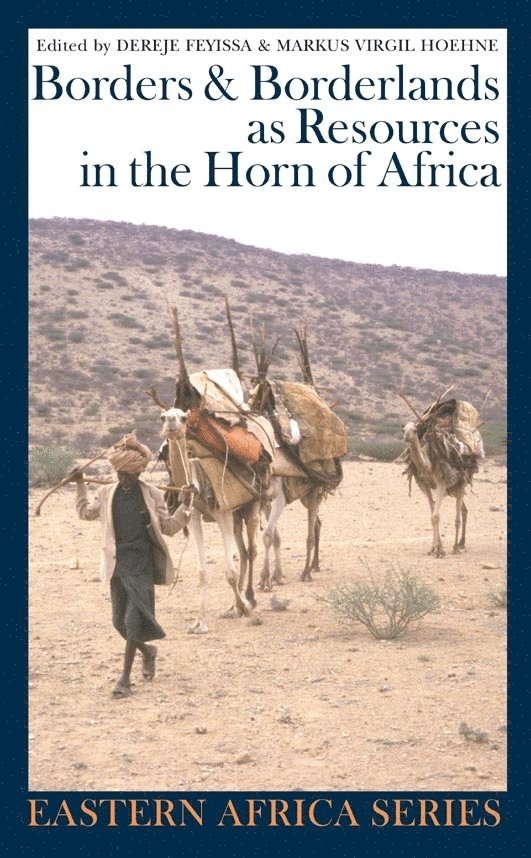
Borders and Borderlands as Resources in the Horn of Africa
Markus Virgil Hoehne, Dereje Feyissa, Markus Virgil Hoehne
Inbunden, 2010
1 429 kr
Del 9
Del 11
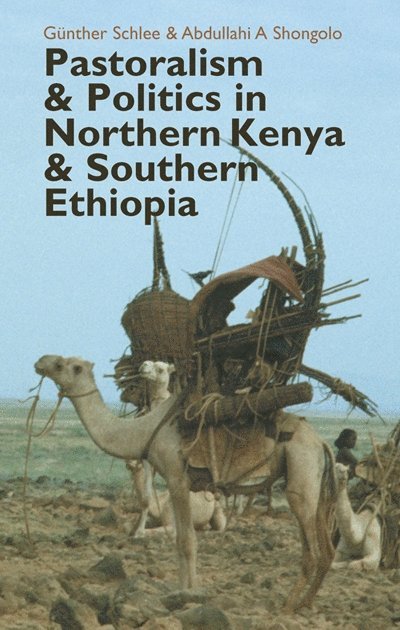
Pastoralism and Politics in Northern Kenya and Southern Ethiopia
Günther Schlee, Abdullahi A. Shongolo
Inbunden, 2012
1 429 kr
Del 10
Del 12
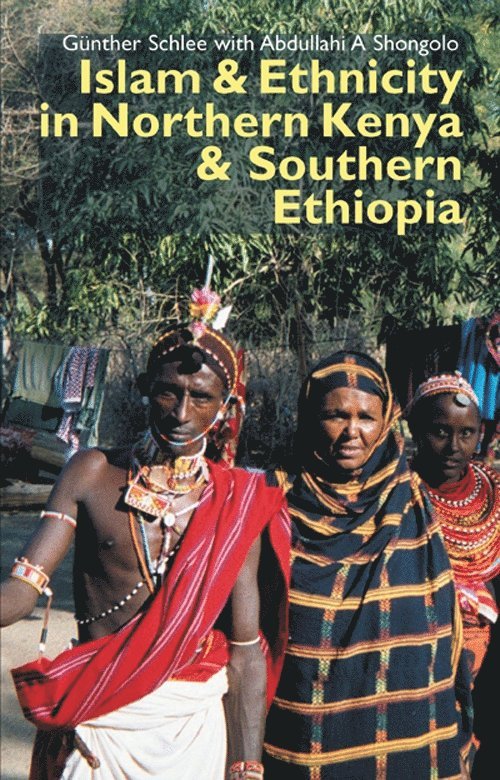
Islam and Ethnicity in Northern Kenya and Southern Ethiopia
Günther Schlee, Abdullahi A. Shongolo
Inbunden, 2012
1 429 kr
Del 17
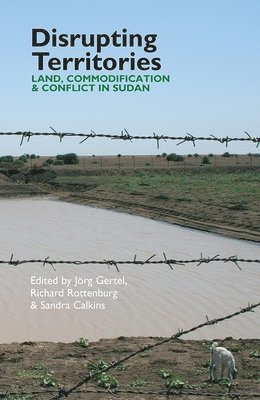
Disrupting Territories
Richard Rottenburg, Sandra Calkins, Jörg Gertel, Richard Rottenburg, Sandra Calkins
Inbunden, 2014
1 589 kr
Del 14
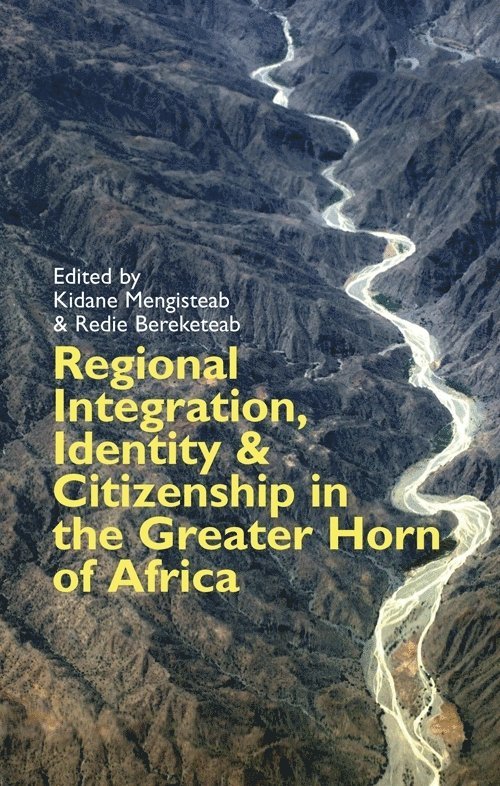
Regional Integration, Identity and Citizenship in the Greater Horn of Africa
Kidane Mengisteab, Redie Bereketeab
Inbunden, 2012
1 569 kr
Del 15
Del 18
Hoppa över listan









Du kanske också är intresserad av
- Nyhet
Del 3
- Nyhet
- Nyhet
Del 6
- Nyhet
- Nyhet
Del 11
- Nyhet
Del 1
- Nyhet
- Nyhet
Del 4
Del 3