
Knowledge and Persuasion in Economics
Häftad, Engelska, 1994
939 kr
Beställningsvara. Skickas inom 5-8 vardagar. Fri frakt för medlemmar vid köp för minst 249 kr.
Finns i fler format (1)
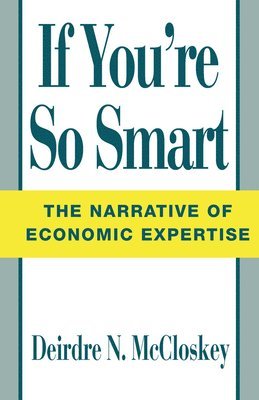
Is economics a science? Deidre McCloskey says 'Yes, but'. Yes, economics measures and predicts, but - like other sciences - it uses literary methods too. Economists use stories as geologists do, and metaphors as physicists do. The result is that the sciences, economics among them, must be read as 'rhetoric', in the sense of writing with intent. McCloskey's books, The Rhetoric of Economics(1985) and If You're So Smart(1990), have been widely discussed. In Knowledge and Persuasion in Economics he converses with his critics, suggesting that they too can gain from knowing their rhetoric. The humanistic and mathematical approaches to economics, says McCloskey, fit together in a new 'interpretive' economics. Along the way he places economics within the sciences, examines the role of mathematics in the field, replies to critics from the left, right and centre, and shows how economics can again take a leading place in the conversation of humankind.
Produktinformation
- Utgivningsdatum1994-05-05
- Mått154 x 228 x 30 mm
- Vikt740 g
- FormatHäftad
- SpråkEngelska
- Antal sidor464
- FörlagCambridge University Press
- ISBN9780521436038
Tillhör följande kategorier
Hoppa över listan

Mer från samma författare
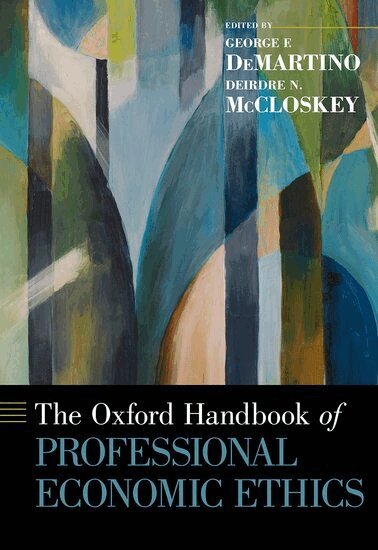
The Oxford Handbook of Professional Economic Ethics
George F. DeMartino, Deirdre N. McCloskey
Inbunden, 2016
3 459 kr
Hoppa över listan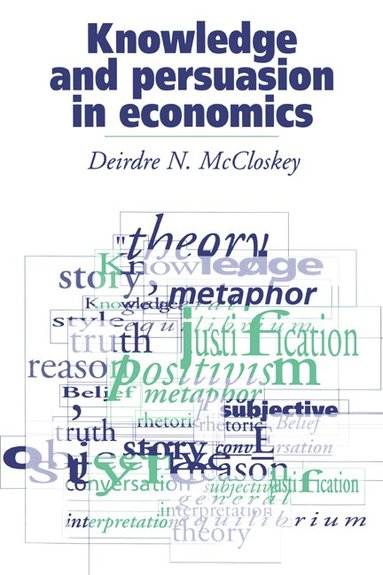

Du kanske också är intresserad av
The Oxford Handbook of Professional Economic Ethics
George F. DeMartino, Deirdre N. McCloskey
Inbunden, 2016
3 459 kr