
Kitan Language and Script
Inbunden, Engelska, 2008
3 989 kr
Beställningsvara. Skickas inom 5-8 vardagar. Fri frakt för medlemmar vid köp för minst 249 kr.
The Kitans established the Liao dynasty in northern China, which lasted for over two centuries (916-1125). In this survey the reader will find what is currently known about the Kitan language and scripts.The language was very likely distantly related to Mongolian, with two quite different scripts in use. A few generations after their state was defeated, almost all trace of the Kitan spoken and written languages disappeared, except a few words in Chinese texts. Over the past few decades, however, inscriptions from the tombs of the Liao emperors and the Kitan aristocracy have been at least partially deciphered, resulting in a significant increase of our knowledge of the Kitan lexicon, morphology and syntax.
Produktinformation
- Utgivningsdatum2008-12-17
- Mått160 x 240 x 23 mm
- Vikt695 g
- FormatInbunden
- SpråkEngelska
- SerieHandbook of Oriental Studies. Section 8 Uralic & Central Asian Studies
- Antal sidor306
- FörlagBrill
- ISBN9789004168299
Tillhör följande kategorier
Hoppa över listan









Mer från samma författare
Del 1
Brain Boosting Facts for Curious Minds, A Trivia Book for Adults & Teens
Daniel Kane
Häftad, 2023
179 kr
Del 2
Del 3
At Home On The Throne Bathroom Reader, A Trivia Book for Adults & Teens
Daniel Kane
Häftad, 2023
179 kr
Hoppa över listan



Mer från samma serie
Del 14
Del 16
Del 17
Del 21
Del 22
Del 24
Del 25
Del 26
Del 27
Del 29
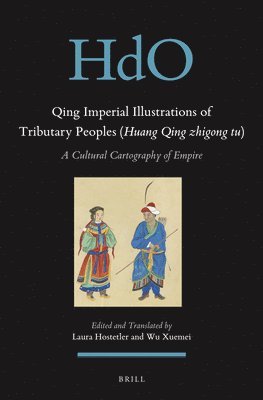
Qing Imperial Illustrations of Tributary Peoples (Huang Qing zhigong tu)
Laura Hostetler
Inbunden, 2022
4 479 kr
Hoppa över listan
Du kanske också är intresserad av
Del 2
Del 1
Brain Boosting Facts for Curious Minds, A Trivia Book for Adults & Teens
Daniel Kane
Häftad, 2023
179 kr
Del 3
At Home On The Throne Bathroom Reader, A Trivia Book for Adults & Teens
Daniel Kane
Häftad, 2023
179 kr