
Del i serien Oxford Studies in Early Empires
King of Kings
The Struggles of the Parthians and Romans to Dominate Western Asia
Inbunden, Engelska, 2027
1 709 kr
Kommande
This book draws on a wide variety of evidence to reevaluate the rapidly changing international environment of Western Asia from the 110s to the 50s BCE, challenging traditional Rome-centric perspectives of the geopolitical developments of this period to emphasize the agency and actions of the powerful kings and kingdoms in Western Asia. Although the Parthians and Romans emerged as hegemons over their respective international environments in the second century BCE, with the Parthian Empire centered on the Iranian plateau and the Roman Empire of the Republic centered on the Mediterranean, the bounds of their geopolitical interests and international perspectives began to overlap in Western Asia in the 90s BCE. In the 80s BCE, the Kingdom of Pontus, under the leadership of Mithridates VI, suddenly emerged as an aggressive hegemonic rival to Rome in the West, and the Kingdom of Armenia, under the leadership of Tigranes II, suddenly emerged as an aggressive hegemonic rival to Parthia in the East.Overtoom completely reconsiders the interactions of Parthia, Rome, Pontus, and Armenia in the chaotic, violent, and evolving international environment of Western Asia in this period, where the Parthians and Romans struggled to maintain authority within their separate spheres of influence into the 70s and 60s BCE. Furthermore, this study demonstrates that, in the 90s to the 60s BCE, the Parthians and Romans rarely interacted, preferring informal and distant relations that were neither combative nor collaborative.
Produktinformation
- Utgivningsdatum2027-04-15
- Mått156 x 235 x undefined mm
- FormatInbunden
- SpråkEngelska
- SerieOxford Studies in Early Empires
- Antal sidor464
- FörlagOUP USA
- ISBN9780197806012
Tillhör följande kategorier
Hoppa över listan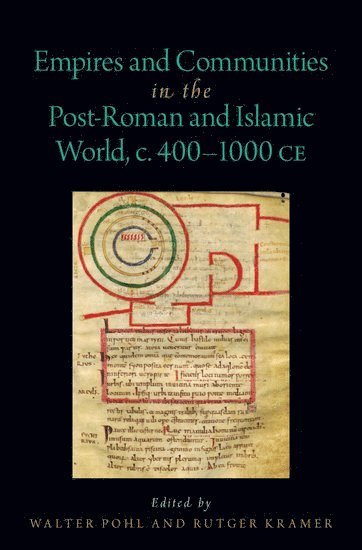


Mer från samma serie
Empires and Communities in the Post-Roman and Islamic World, C. 400-1000 CE
Rutger Kramer, Walter Pohl
Inbunden, 2021
1 839 kr
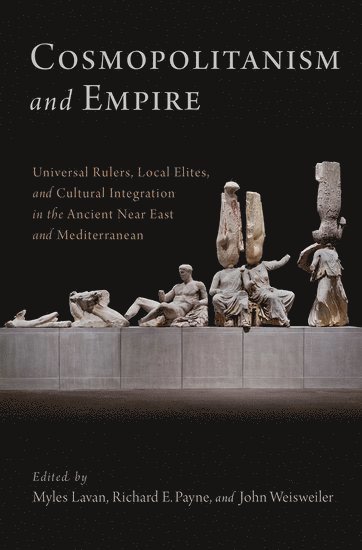
Cosmopolitanism and Empire
Myles Lavan, Richard E. Payne, Myles Lavan, Richard E. Payne, John Weisweiler
Inbunden, 2016
2 759 kr
Hoppa över listan

Du kanske också är intresserad av
Roman and Local Citizenship in the Long Second Century CE
Myles Lavan, Myles Lavan, Clifford Ando
Inbunden, 2022
2 479 kr