
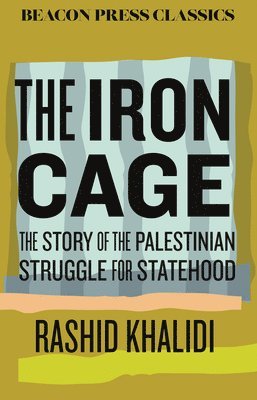
Iron Cage
The Story of the Palestinian Struggle for Statehood
Häftad, Engelska, 2015
439 kr
Beställningsvara. Skickas inom 5-8 vardagar. Fri frakt för medlemmar vid köp för minst 249 kr.
Finns i fler format (1)
At a time when a lasting peace between Palestinians and Israelis seems virtually unattainable, understanding the roots of the longest-running conflict in the Middle East is an essential step in restoring hope to the region. In The Iron Cage, Rashid Khalidi, one of the most respected historians and political observers of the Middle East, examines the Palestinian’s struggle for statehood, presenting a succinct and insightful history of the people and their leadership throughout the twentieth century.Ranging from the Palestinian struggle against colonial rule and the establishment of the State of Israel to the current rivalry between Hamas and Fatah, this is an unflinching and sobering critique of the Palestinian failure to achieve statehood, as well as a balanced account of the odds ranged against them. Lucid yet challenging, Rashid Khalidi’s engrossing narrative of this tortuous history is required reading for anyone concerned about peace in the Middle East.
Produktinformation
- Utgivningsdatum2015-05-07
- Mått140 x 216 x undefined mm
- FormatHäftad
- SpråkEngelska
- Antal sidor328
- FörlagOneworld Publications
- ISBN9781780748085
Tillhör följande kategorier
Hoppa över listan

Mer från samma författare
Hundraårskriget mot Palestina : bosättningskolonialism och motstånd 1917-2024
Rashid Khalidi
Inbunden, 2024
319 kr
Origins of Arab Nationalism
Rashid Khalidi, Lisa Anderson, Muhammad Y. Muslih, Reeva Spector Simon
Häftad, 1991
859 kr
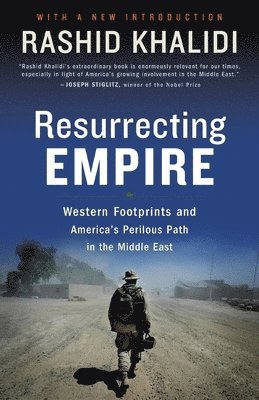
Resurrecting Empire: Western Footprints and America's Perilous Path in the Middle East
Rashid Khalidi
Häftad, 2005
499 kr
Hoppa över listan


Du kanske också är intresserad av
The Iron Cage: The Story of the Palestinian Struggle for Statehood
Rashid Khalidi
Inbunden, 2026
389 kr
Resurrecting Empire: Western Footprints and America's Perilous Path in the Middle East
Rashid Khalidi
Häftad, 2005
499 kr
Palästina - Hundert Jahre leere Versprechen
Tariq Dana, Nur Arafeh, Vijay Prashad, Nasser al-Kidwa, Salah Abdel-Shafi, Omar Barghouti, Richard Falk, Roger Heacock, Rashid Khalidi, Miko Peled, Ludwig Watzal, Petra Wild, Fritz Edlinger
Häftad
339 kr
Del 4