
Del i serien Critical Human Rights
Inside Rwanda's Gacaca Courts
Seeking Justice After Genocide
Häftad, Engelska, 2018
329 kr
Beställningsvara. Skickas inom 5-8 vardagar. Fri frakt för medlemmar vid köp för minst 249 kr.
Finns i fler format (1)
After the 1994 genocide in Rwanda, victims, perpetrators, and the country as a whole struggled to deal with the legacy of the mass violence. The government responded by creating a new version of a traditional grassroots justice system called gacaca. Bert Ingelaere, based on his observation of two thousand gacaca trials, offers a comprehensive assessment of what these courts set out to do, how they worked, what they achieved, what they did not achieve, and how they affected Rwandan society.Weaving together vivid firsthand recollections, interviews, and trial testimony with systematic analysis, Ingelaere documents how the gacaca shifted over time from confession to accusation, from restoration to retribution. He precisely articulates the importance of popular conceptions of what is true and just. Marked by methodological sophistication, extraordinary evidence, and deep knowledge of Rwanda, this is an authoritative, nuanced, and bittersweet account of one of the most important experiments in transitional justice after mass violence.
Produktinformation
- Utgivningsdatum2018-07-30
- Mått152 x 229 x 13 mm
- Vikt350 g
- FormatHäftad
- SpråkEngelska
- SerieCritical Human Rights
- Antal sidor256
- FörlagUniversity of Wisconsin Press
- ISBN9780299309749
Tillhör följande kategorier
Hoppa över listan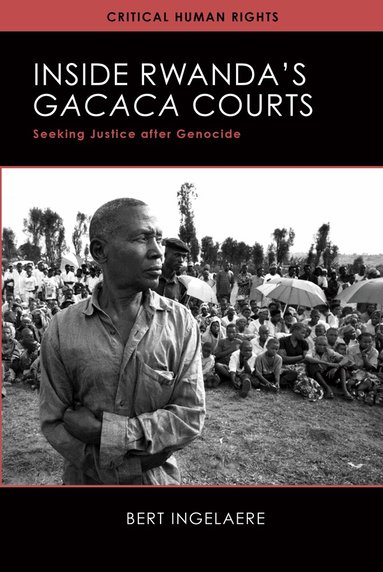

Du kanske också är intresserad av
Constitutions and the Dialectics of Human Rights in Malawi and Kenya
Eunice N. Sahle
Inbunden, 2026
1 169 kr
- Nyhet
Del 3