
Insecure Spaces
Peacekeeping, Power and Performance in Haiti, Kosovo and Liberia
Inbunden, Engelska, 2009
1 639 kr
Beställningsvara. Skickas inom 10-15 vardagar. Fri frakt för medlemmar vid köp för minst 249 kr.
Finns i fler format (1)
In recent times, the Blue Berets have become markers of peace and security around the globe. Yet, the iconoclastic symbol of both the Blue Beret and the Blue Helmet continue to engage the international political imagination in ways that downplay the inconsistent effects of peacekeeping missions on the security of local people.In this book, Paul Higate and Marsha Henry develop critical perspectives on UN and NATO peacekeeping, arguing that these forms of international intervention are framed by the exercise of power. Their analysis of peacekeeping, based on fieldwork conducted in Haiti, Liberia and Kosovo, suggests that peacekeeping reconfigures former conflict zones in ways that shape perceptions of security. This reconfiguration of space is enacted by peacekeeping personnel who 'perform' security through their daily professional and personal practices, sometimes with unanticipated effects.Insecure Spaces' interdisciplinary analysis sheds great light on the contradictory mix of security and insecurity that peace operations create.
Produktinformation
- Utgivningsdatum2009-05-14
- Mått138 x 216 x 16 mm
- Vikt425 g
- FormatInbunden
- SpråkEngelska
- Antal sidor208
- FörlagBloomsbury Publishing PLC
- ISBN9781842778869
Tillhör följande kategorier
Hoppa över listan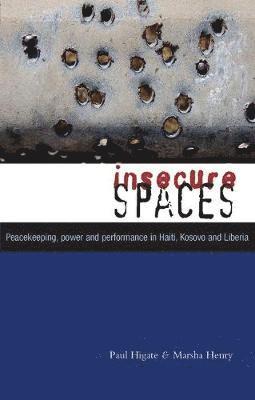







Du kanske också är intresserad av
- Nyhet
Del 3
- Nyhet
Del 11
- Nyhet
Del 6
- Nyhet
Del 4
Del 3
Del 1
Del 2